
Table of contents
How to Build a No Code Startup Without Writing Any Code

Written by
Blaze Team

Reviewed by
Justyna Wojcik
Expert Verified
For over a decade, I’ve worked with no-code startups, helping founders build apps without coding. Here’s my review of the 11 best startups that began using no-code tools, their pros and cons, and how you can create your own.
11 Best No-Code Startups: At a Glance
Some of these startups built their companies entirely on no-code tools. Others, like Blaze, are the no-code platforms that startups actually use for development.
1. Blaze: Best No-Code App Builder for Startups Overall
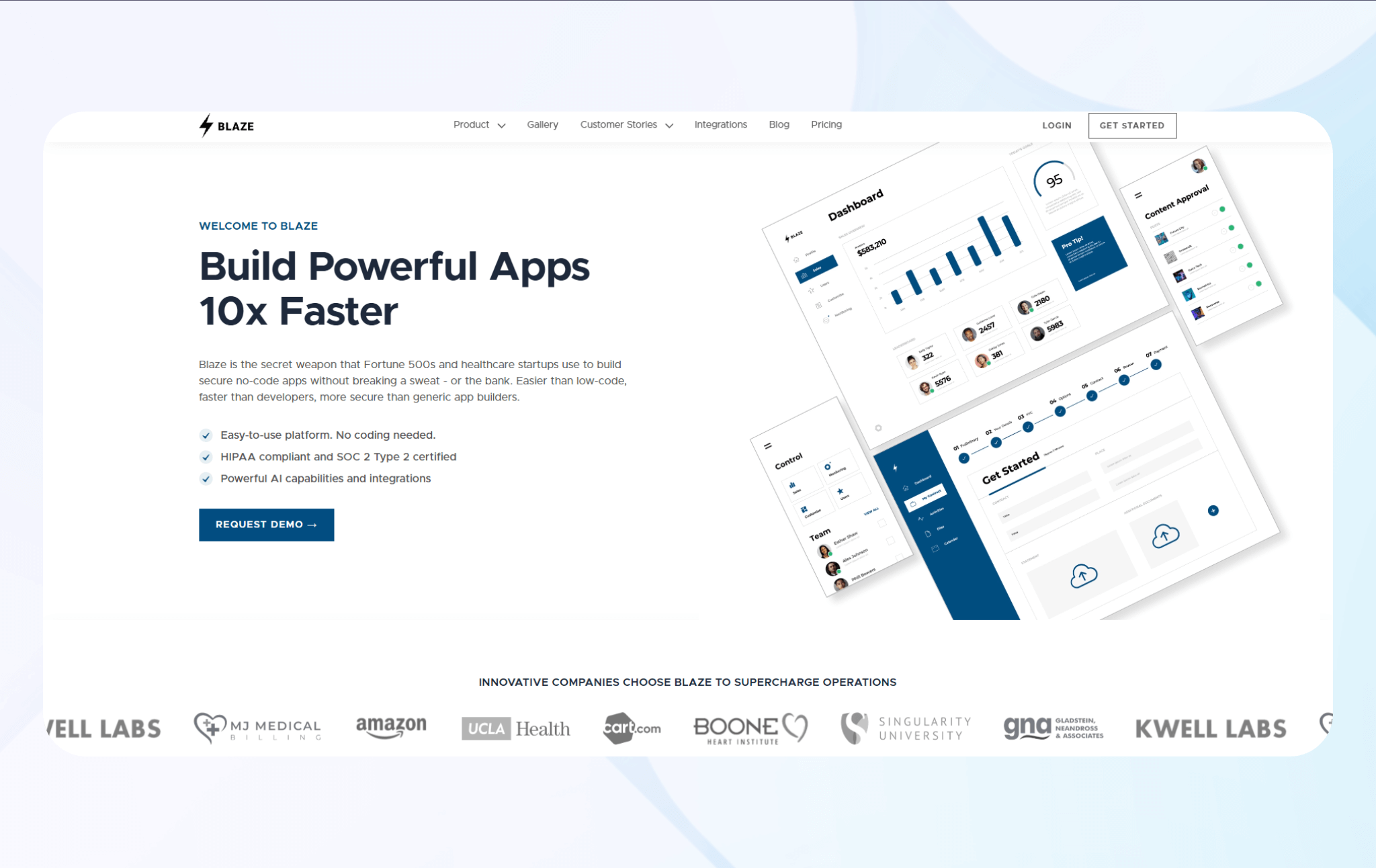
What it does: Blaze is a no-code app builder that creates secure, scalable web applications, such as dashboards, inventory management systems, and client portals. Unlike the other companies on this list, Blaze wasn’t built with no-code — but it is a no-code platform that you can use to create your startup.
Who it’s for: We created Blaze for mid- to large-sized companies that require advanced security, such as HIPAA or SOC 2 compliance, across industries like finance, healthcare, and manufacturing. 2 of the no-code startups on this list use Blaze to build their applications.
Key Features
- Visual builder for database and frontends: Build your own internal tools and customer portals with drag-and-drop components and a database builder.
- Integrations: Connect your apps to Stripe, Slack, Airtable, and Google Sheets to centralize data management.
- Enterprise Security: If you’re in healthcare or finance, you can build HIPAA and SOC2-compliant apps with secure features to handle sensitive customer or patient data.
Pros
- Scalable: The platform lets you create an unlimited number of apps with unlimited storage, supporting your business’s growth.
- Support: Blaze's team will walk you through the building interface and help you publish your first app. They’ll also maintain your apps after publishing.
Cons
- No mobile-native apps: Blaze focuses on web-based apps for internal business functions, so it does not suit startups prioritizing native mobile functionality.
Bottom Line
Blaze is ideal for growing businesses and enterprises that need to build secure, compliant apps. Its hands-on onboarding, HIPAA and SOC 2 security, and AI automation make it a strong platform for scalable growth.
2. Dividend Finance: Best for Solar Financing
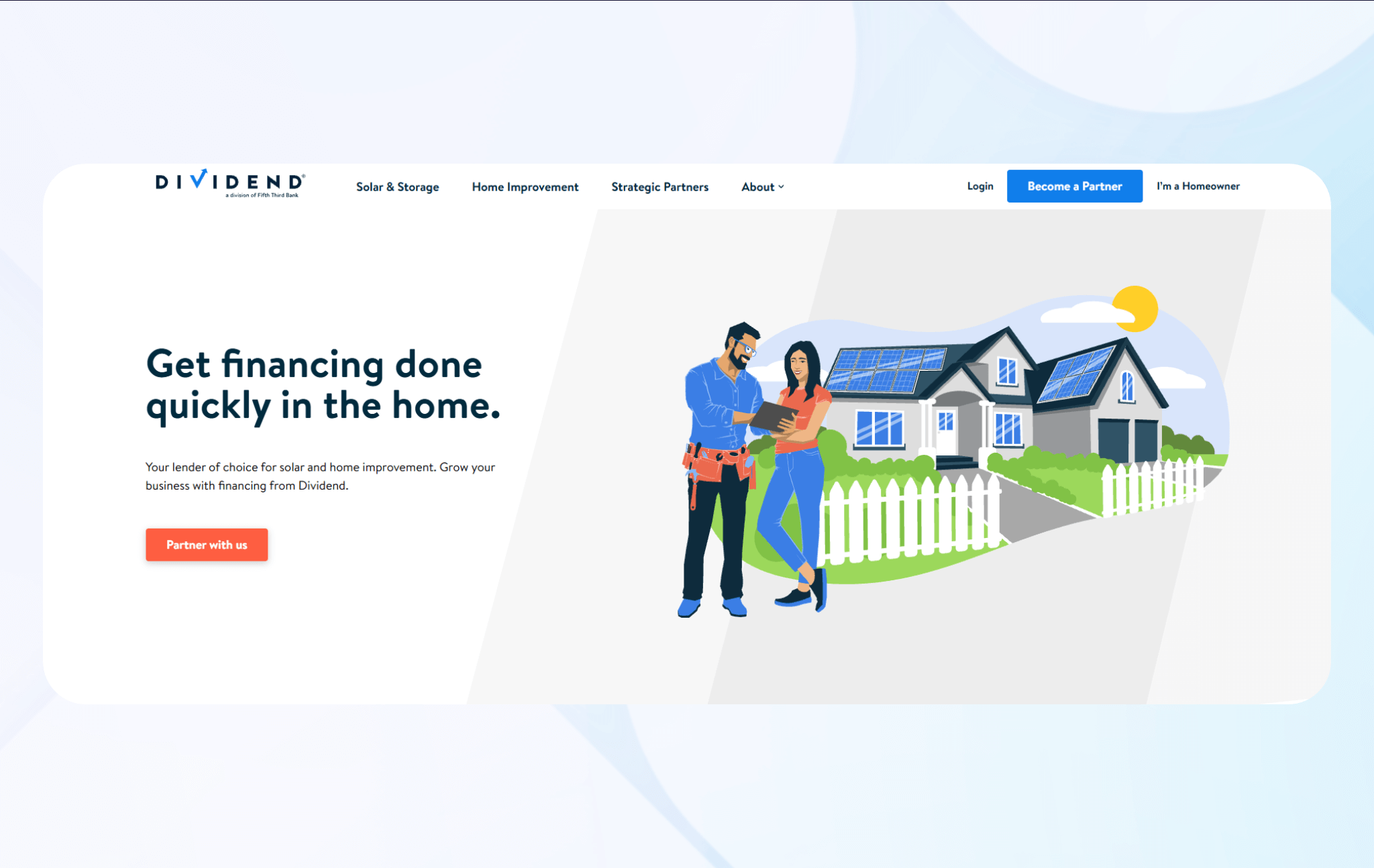
What it does: Dividend Finance, a platform built on Bubble, offers homeowners solar and home improvement financing by providing affordable loans and flexible payment plans.
Who it's for: The startup offers homeowners easy financing options to fund energy-efficient upgrades or renewable energy installations, with long-term payment flexibility. Dividend also matches solar installation companies with homeowners seeking upgrades.
Key Features
- Solar loan programs: Access to secured loans for solar installations, covering equipment, labor, and permitting costs.
- Partner network integration: Works directly with vetted contractors and solar installers, providing them with tools to offer customers financing options and quick approvals.
- Quick digital application process: Allows homeowners to apply online, receive instant credit decisions, and manage their loans through a user-friendly web portal.
Pros
- Fast approvals: The application process delivers quick credit decisions, helping homeowners avoid long waiting periods.
- Transparent terms: Clear interest rates and payment schedules enable customers to fully understand repayment obligations.
Cons
- Credit requirements: Approval depends on creditworthiness, which may exclude some applicants with low credit scores from accessing preferred financing terms.
Bottom Line
Dividend Finance helps homeowners secure loans for solar installations while providing a platform for installation companies to connect with clients.
3. LetterHunt: Best for Newsletter Discovery
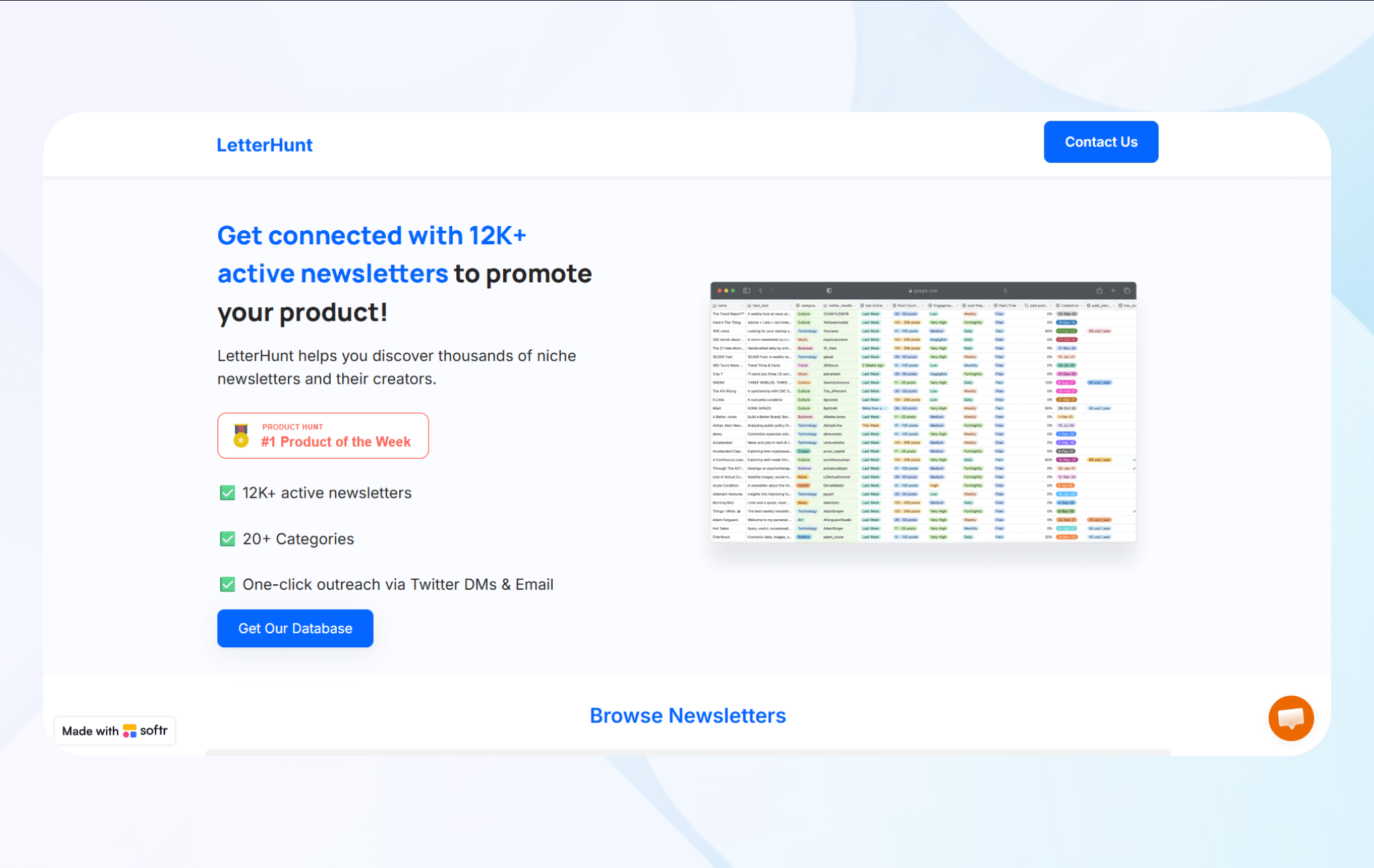
What it does: LetterHunt is a searchable database that lets users discover newsletters across 20 different categories, with over 12,000 newsletters. The founders created the platform using Softr.
Who it's for: For professionals and hobbyists looking to discover newsletters across various topics.
Key Features
- Enormous newsletter database: Access thousands of active newsletters categorized by niche, audience size, and topic.
- Detailed newsletter profiles: Evaluate each newsletter using provided data, including audience demographics, engagement stats, and growth channels, before subscribing.
- Competitor comparison tool: Compares newsletters by analyzing performance metrics and content positioning.
Pros
- Excellent search capabilities: You can combine multiple filters to discover newsletters that match specific audience goals or sponsorship criteria.
- Community-created database: The listing system encourages user submissions to keep the directory updated with diverse newsletter options across industries.
Cons
- No direct analytics integration: LetterHunt lacks the analytics capabilities for verifying engagement or subscriber data.
Bottom Line
LetterHunt is perfect for anyone seeking newsletters. Its strong filtering, growing database, and intuitive design make it a helpful discovery tool for audience growth.
4. Serenity Forge: Best for Creative Game Development

What it does: Serenity Forge is a hybrid game development and publishing studio that creates games for Xbox, Nintendo, and PlayStation. The company used Blaze to create a project management app.
Who it's for: The company targets independent developers and creative studios seeking publishing support or game production services.
Key Features
- Game development services: Provides coding, art, and storytelling development across multiple genres, offering immersive player experiences.
- Publishing and distribution: Receive product and publishing support to reach a larger audience.
- Narrative-focused design: Specializes in emotionally engaging storytelling, integrating art, music, and interactivity.
Pros
- Collaborative ecosystem: The studio’s hybrid model supports partnerships with indie teams and fosters creativity.
- Broad distribution reach: Offers both digital and physical game releases, giving creators access to larger audiences.
Cons
- High artistic standards: Serenity Forge focuses on storytelling and user experience, so it may not align with developers aiming for fast-paced or purely commercial game experiences.
Bottom Line
Serenity Forge is ideal for indie developers seeking meaningful, story-driven game production and publishing support.
5. Flexiple: Best for Hiring Vetted Freelancers and Developers
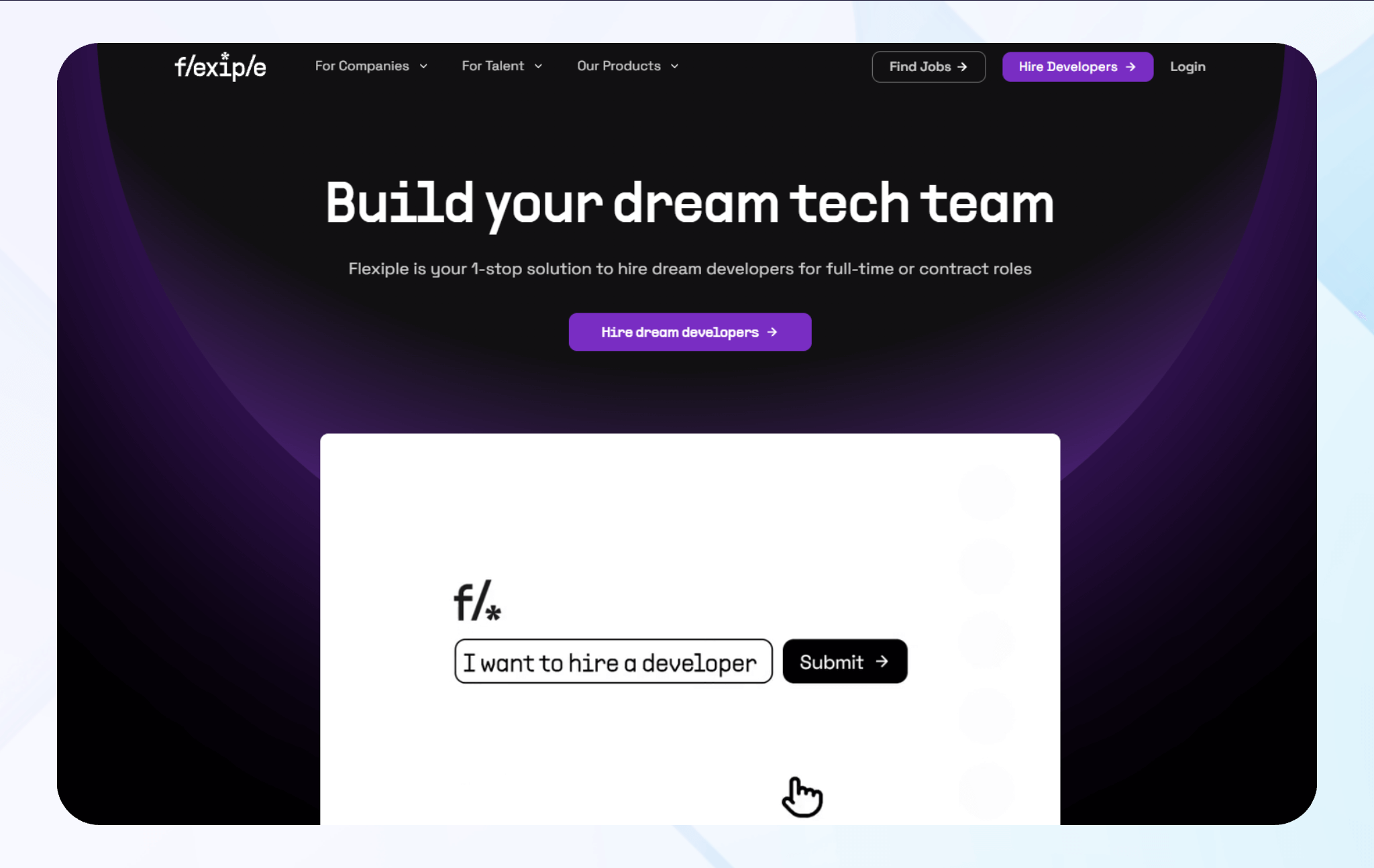
What it does: Flexiple connects startups and businesses with pre-vetted freelance developers and designers for short-term or long-term projects.
Who it's for: Built on Bubble, Airtable, and Webflow, Flexiple helps businesses hire skilled freelancers for app development projects.
Key Features
- Personalized talent matching: Matches your company with freelancers whose skill sets align with your project needs and goals.
- Flexible hiring models: Offers hourly, part-time, and full-time options.
- Dedicated client support: Account managers provide onboarding and performance support throughout the project.
Pros
- Highly curated freelancers: Flexiple maintains strict vetting standards, so you’ll work with professionals experienced in real-world environments.
- Transparent process: You’ll receive clear project timelines, rates, and engagement terms, creating confidence in budgeting and hiring decisions.
Cons
- Limited industry diversity: Flexiple primarily focuses on software development and design, offering fewer options for non-tech or marketing-related roles.
Bottom Line
Flexiple is ideal for startups and companies needing vetted freelance developers fast, offering flexible hiring and transparent processes.
6. TicketRev: Best for Sports and Entertainment Companies
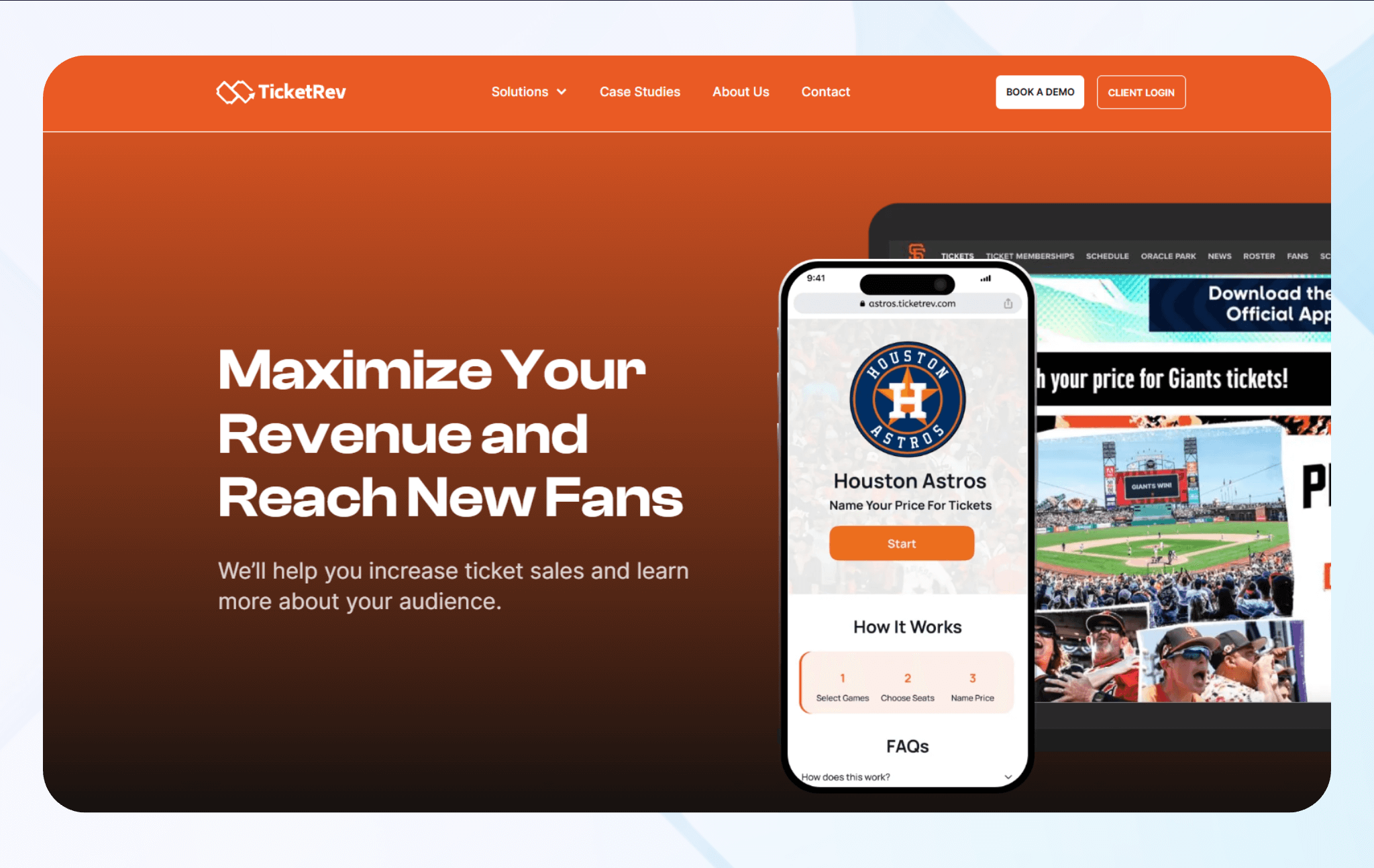
What it does: TicketRev is a bidding platform that lets teams or venues auction tickets for preferred seating at live events.
Who it’s for: Ideal for sports teams and entertainment venues looking to liquidate seats or increase sales.
Key Features
- Name-your-price bidding: Teams and venues allow fans to choose their seat locations and prices, and other buyers can make higher bids.
- Real-time fan data and insights: The system tracks buyer preferences, budgets, and seating demand to improve pricing and fan engagement.
- White-label integration: The platform connects with existing ticketing systems. Venues and teams can run TicketRev under their own brand using its marketplace tools.
Pros
- Improved conversion: Teams and venues can increase ticket sales and revenue by expanding their buyer pools.
- Data-driven value for organizations: Ticket sellers use demand data to refine pricing and manage inventory better.
Cons
- Focused on event and venue use cases: The platform supports sports teams and arenas, not individual sellers or general ticket marketplaces.
Bottom Line
For companies managing a venue, sports team, or live events, TicketRev offers a solution to fill seats or liquidate tickets.
7. Bloom Institute of Technology: Best for Coding Education

What it does: BloomTech, built with Webflow, Airtable, and Typeform, delivers online coding bootcamps where you can learn full-stack web development and data science.
Who it's for: Career changers, aspiring developers, and professionals who want to learn coding or data analysis. It’s also an option for companies that want to provide ongoing training for their team.
Key Features
- Intensive full-stack curriculum: Covers front-end and back-end web development, including JavaScript, React, Node.js, and data structures, to prepare students for entry-level software engineering roles.
- Live and project-based learning: Students work in teams, code in real time, and complete hands-on projects that mirror real industry workflows.
- Career support: Offers one-on-one career coaching, interview training, and a tuition refund guarantee if goals aren’t met.
Pros
- High job placement focus: Designed around employer needs with practical skills that directly translate to full-time developer jobs.
- Beginner-friendly: Ideal for learners with no coding experience, especially non-technical startup founders looking to bridge the gap between no-code and traditional development.
Cons
- High time demand: The program requires significant weekly hours, which can be challenging for you if you’re working full-time.
Bottom Line
BloomTech is a strong choice for aspiring developers or data analysts. It delivers a solid curriculum, helps find a job, and provides structured career support.
8. ShipDudes: Best for eCommerce Logistics

What it does: Built on Blaze, ShipDudes provides third-party logistics (3PL) and fulfillment services for e-commerce companies.
Who it's for: ShipDudes helps eCommerce founders, no-code startups, and online retailers manage logistics.
Key Features
- Shopify, WooCommerce, and BigCommerce integration: ShipDudes syncs store data for real-time order updates, automated shipping, and inventory tracking.
- Custom packaging and branding: By supporting branded unboxing with customizable packaging, inserts, and labels, ShipDudes strengthens brand identity.
- Real-time tracking dashboard: The dashboard provides live visibility into orders, shipment status, and inventory performance.
Pros
- Scalable logistics solution: ShipDudes scales with businesses from startups to large enterprises as order volume grows.
- Easy e-commerce integration: The plug-and-play setup connects instantly with major store platforms.
Cons
- No advanced forecasting: Built-in analytics show cost, order, and shipment data, but advanced forecasting needs external tools or a custom setup.
Bottom Line
ShipDudes appeals to startups and e-commerce companies that need scalable and straightforward fulfillment software.
9. Teal: Best for Career Development

What it does: Teal, built with Bubble, helps job seekers manage their career search with AI resume tools, keyword optimization, and job tracking.
Who it's for: Teal suits job seekers who want to tailor their resumes to fit the unique requirements of different job postings.
Key Features
- AI resume builder: Teal creates professional, Applicant Tracking System (ATS) optimized resumes that highlight achievements. It formats them for different roles and industries.
- Resume keyword scanner: The tool compares your resume with job descriptions to identify missing keywords and improve visibility.
- Resume summary generator: The AI generates concise, personalized summaries aligned with specific job titles and industries.
Pros
- Strong keyword-matching support: The scanner is designed to identify skills gaps, highlight matched keywords from job descriptions, and support ATS compatibility.
- Job search management: Teal combines resume optimization, job tracking, and application organization into a single interface to save time.
Cons
- Customization constraints: Teal offers less design flexibility than document editors like Google Docs or Microsoft Word.
Bottom Line
Teal helps job seekers who want a platform that uses AI for resume creation and job tracking without technical complexity.
10. Kidsbook: Best for Parents

What it does: Kidsbook provides a searchable directory that lets parents easily find, book and share kids’ activities across one platform. The company built Kidsbook with Bubble.
Who it's for: The company created the platform for Australian parents who want to find kids’ classes, camps, and activities on one easy platform.
Key Features
- Activity search and booking: Parents search by age, location, or category, read reviews, and book classes, camps, or lessons instantly from verified providers.
- Provider verification system: The platform vets every provider for safety and compliance through background checks and qualification reviews to ensure parent confidence.
- Inclusive activity options: Kidsbook supports children of all abilities by featuring programs that include special needs and National Disability Insurance Scheme (NDIS)-supported activities.
Pros
- Strong safety assurance: Verified providers help parents choose programs that meet strict quality and safety standards.
- Wide variety of activities: The platform offers sports and music to education and creative arts.
Cons
- Limited to Australia: The service serves only Australian users, limiting access for international families.
Bottom Line
Kidsbook gives parents a trusted, all-in-one platform to book verified kids’ activities quickly and confidently without managing multiple providers.
11. Comet: Best for Hiring Freelance Developers
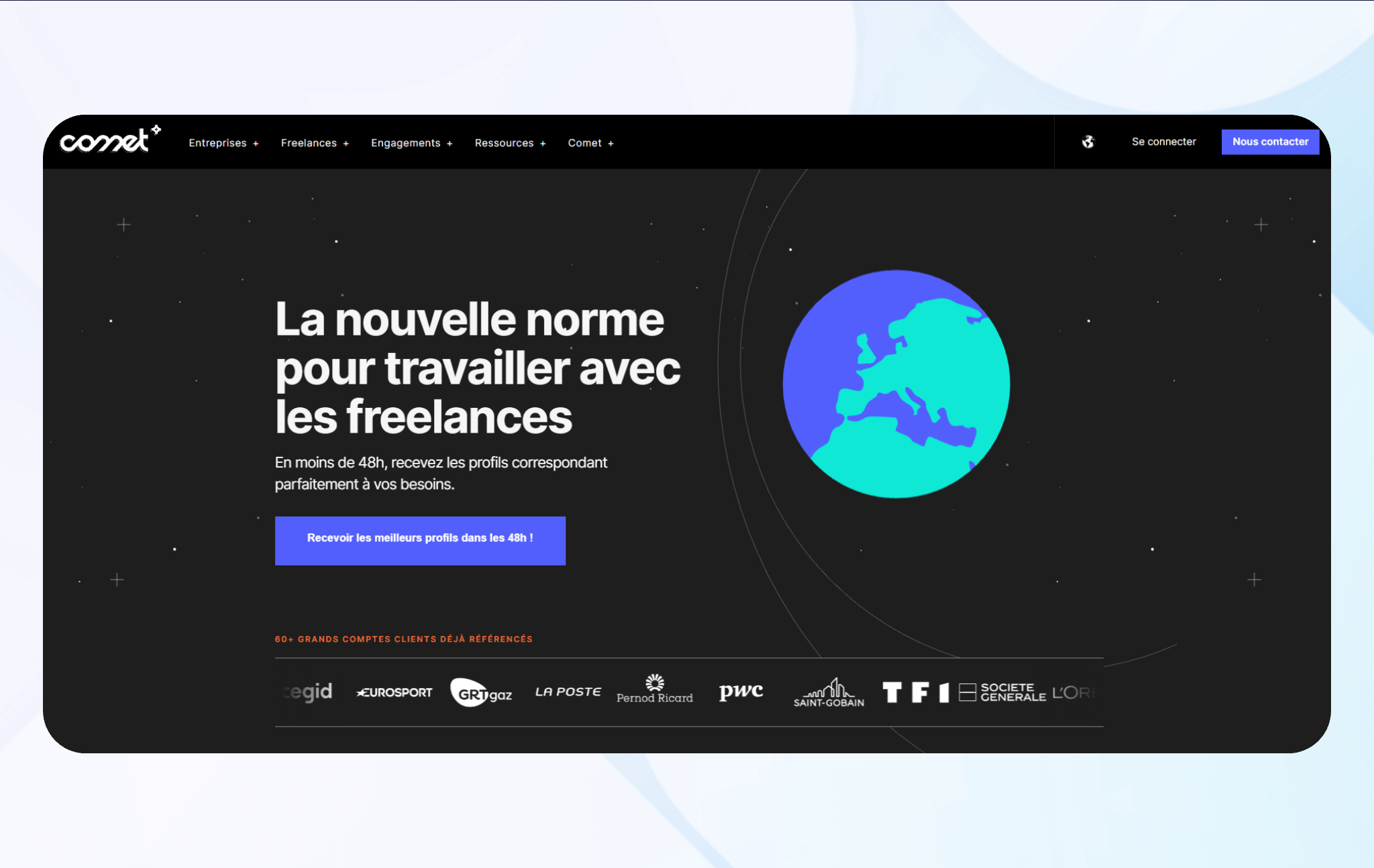
What it does: Comet connects businesses with verified freelance developers and data experts through AI-powered talent matching. The platform’s founders built it with Bubble.
Who it’s for: If you’re a business of any size aiming to hire freelance tech talent for web app development, data, or IT projects, connect with Comet to build your team.
Key Features
- AI Talent Matching: The platform uses machine learning to match companies with the best freelance developers, designers, and engineers, finding a match in about 48 hours.
- Verified Freelancers: Comet vets every freelancer for skills, reliability, and experience.
- Dedicated Account Management: You’ll work with a personal manager to oversee recruitment, billing, and project coordination.
Pros
- Reliability in delivery: Comet’s vetting process minimizes risk and helps you complete projects on time by providing dependable professionals with proven track records.
- Operational flexibility: The platform’s business model lets you hire enough developers to meet demands. You can scale development capacity up or down in just a few days, adapting to shifting project needs.
Cons
- Limited to freelancing model: Comet focuses on contract-based work, not full-time hiring or in-house developer teams.
Bottom Line
Whether you’re a small startup or an enormous enterprise, Comet can help you find freelance developers quickly.
How I Researched These No-Code Startups
Starting with a list of 25 no-code startups, I investigated each one to find the top-performers by evaluating the following:
- User experience and design quality: By clicking through each startup’s app, I evaluated the interface, responsiveness, navigation, and usability to determine whether the startup offered a polished product experience.
- Operational limitations: I identified where each startup’s bottleneck was, such as slowed performance or customization limits, and how it worked around these constraints.
- Scalability: By reviewing user volume, peak-hour performance, and traffic patterns, I assessed how well each startup’s no-code build handled growth.
All 11 no-code startups demonstrated these 3 capabilities, making them stand out from all the others on my list.
My Final Verdict: How to Turn These No-Code Startups Into Your Own Roadmap
If you’re considering launching your own no-code startup, follow these steps that I learned while researching and evaluating the 11 from my list:
- Know exactly what you want to build: Define the problem your startup solves and the core features your first version needs.
- Pick the right no-code app builder: Choose platforms that can create your product type. For instance, if you’re building a marketplace, you’ll need a full-stack builder, not just a platform that creates a backend only.
- Start with a single core workflow: Pinpoint the one action your product must do well, like booking, messaging, or data entry. Only build this workflow first, perfect it, and then move on to another. Focusing on one area at a time helps you perfect your app.
- Plan for scalability from day one: Review how your no-code platform handles traffic, storage, and API calls. Preparing early enables your startup to perform reliably as your user base grows.
Overall, developing your own no-code startup is a marathon, not a sprint. By defining your app’s purpose and developing it feature by feature, you’ll set your startup up for long-term success.
Get Started with Blaze
Aiming to build or scale a no-code startup? Choose Blaze. It’s a secure, enterprise-ready app builder that helps founders launch powerful web applications fast.
Here’s how Blaze supports growing startups:
- No-code app builder: Create apps like scheduling tools, project management tools, dashboards, or client portals using an intuitive drag-and-drop editor without any coding.
- Built-in integrations: Connect your Blaze app to Stripe, Airtable, Google Sheets, or Slack to automate workflows and sync data.
- Enterprise-grade security: Blaze includes single sign-on (SSO), role-based permissions, and audit logs to support HIPAA and SOC 2 compliance.
From onboarding to deployment, Blaze’s team helps you design, publish, and maintain your app so you can focus on scaling.
Schedule a free demo and see how Blaze can help with your no-code startup today.
Frequently Asked Questions
What are no-code startups?
No-code startups are companies that create applications and software to support operations with a platform that doesn’t require programming. They use visual builders like Blaze or Bubble to design workflows, manage data, and launch products. No-code tools help companies build faster and cut costs by removing the need for engineering teams.
Can a startup scale with no-code tools?
Yes, a startup can scale with no-code tools such as secure databases, integrations, and features that support high memory capacity. Scalability depends on database capacity and API performance, as well as the platform’s ability to manage user and data growth.
What are examples of apps built without code?
Examples of no-code apps include ShipDude’s ecommerce management platform and LetterHunt’s newsletter database. These founders built their platforms without programming, using Blaze and Bubble.
The Secure No-Code & AI Platform
Supercharge your team's operations and performance with better apps and tools.
Create custom apps fast
Secure & HIPAA compliant
Streamline complex workflows

The Secure No-Code Platform
Build apps with best-in-class security.
Related Articles
Discover related guides on healthcare no-code development, HIPAA compliance, security, integrations, and launching apps faster.
.png)
17 Top Customer Service Platform: 2026 (Tested & Compared)
Shopping for a customer support platform portal and need some inspiration? I reviewed the top 17, shared features, pricing details, and my verdict.
%20(1).png)
8 Healthcare Dashboard Examples (2026)
Explore healthcare dashboard examples for hospital operations, revenue, and compliance. Discover what each dashboard tracks and how to build one.
%20(1).png)
Healthcare Claims Automation: How It Works (2026)
Healthcare claims automation connects systems to reduce repetitive work. Explore the 9 workflow stages that show how eligibility, validation, and payments move.