
Table of contents
The 6 Best HIPAA-Compliant Databases in 2026

Written by
Blaze Team

Reviewed by
Nanxi Liu
Expert Verified
The Best HIPAA-Compliant Databases in 2026: At a Glance
After evaluating 15 HIPAA-aligned databases across encryption, audit logging, and BAA support, I narrowed it to the 6 best options for 2026.
HIPAA Compliance Requirements for Databases
HIPAA compliance extends to the databases that healthcare organizations use for data storage and management. To help keep ePHI secure and private, HIPAA outlines four crucial areas for database solutions:
Administrative Safeguards: Setting the Rules
These are written policies that define your organization's approach to patient data. They include risk assessments to identify security vulnerabilities, access controls to limit data visibility based on job roles, data breach response plans, and employee training on HIPAA regulations.
Physical Safeguards: Securing the Hardware
Physical safeguards focus on the physical security of the database servers. HIPAA mandates restricted access to the server room with robust security measures, proper environmental controls for server function, and secure disposal procedures for electronic devices that previously stored ePHI.
Technical Safeguards: Protecting the Data Itself
These involve technical measures within the database to safeguard ePHI. Key requirements include encrypting data while stored (at rest) and during transmission, access controls that restrict user permissions based on their role, and detailed audit logs that track all access attempts and modifications made to patient data.
Organizational Requirements: Shared Responsibility
Organizational requirements ensure accountability across the healthcare ecosystem. HIPAA mandates Business Associate Agreements (BAAs) with any third-party vendors who access ePHI, outlining their responsibilities in protecting the data. Additionally, organizations must maintain comprehensive compliance documentation, including copies of policies, risk assessments, and audit logs.
1. Blaze.tech
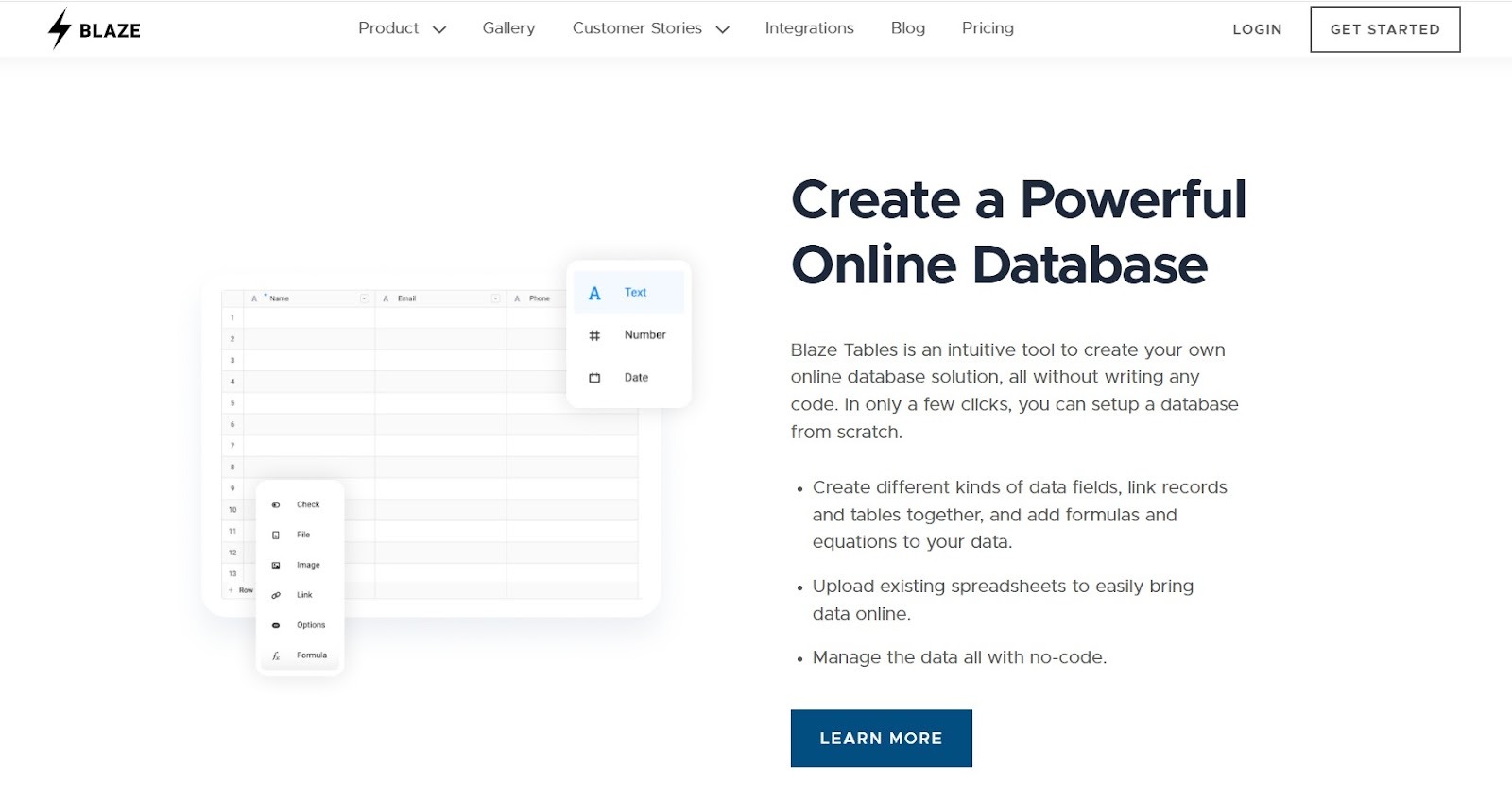
Blaze is a no-code platform designed to build customizable online databases and apps easily and quickly. Its drag-and-drop builder lets teams create internal tools without coding, which can reduce the need for a full engineering team. Blaze also includes AI tools to create agents, test data, and set up workflows.
Features
- Create a powerful online database without code: Blaze eliminates the need for coding, allowing you to create powerful databases designed for patient information and managing Electronic Health Records (EHR) securely.
- Customizable forms, filters, advanced search, dashboards, and reports: Design user-friendly forms for data collection, filter information easily, and leverage advanced search functions. Gain valuable insights with customizable dashboards and reports, which allow you to visualize patient trends, track key metrics, and make data-driven decisions for improved care delivery.
- Automated workflows for team collaboration: Blaze automates routine tasks and workflows, using AI to trigger actions, route data, and support real-time decisions based on patient and operational inputs. Built-in collaboration tools keep everyone aligned and improve communication across your organization.
- Customer portals for data and user management: Blaze’s customer portals provide a secure and user-friendly interface for clients to access and interact with their data. This integration allows for smooth data management and improves the user experience.
- Integration with external data sources and real-time syncing: Blaze supports a wide range of out-of-the-box and custom integrations with any REST API, allowing you to connect with external data sources. Real-time syncing ensures that your data is always up-to-date, enabling better decision-making and operational efficiency.
Security and Compliance
When dealing with sensitive patient information, security is paramount. Blaze understands this and goes the extra mile to ensure your healthcare data remains protected. Here's how:
- HIPAA compliance and enterprise security features: Blaze comes with features to meet HIPAA regulations, but to remain compliant, you must maintain your system and conduct regular audits, and hold ongoing training.
- Secure infrastructure with 2FA, SSO, and audit logs: Blaze’s security infrastructure includes two-factor authentication (2FA) and single sign-on (SSO). Additionally, audit logs track all data access and changes, providing complete transparency and accountability.
- Role-based access controls and data encryption: Role-based access controls secure sensitive information. Blaze allows you to assign specific roles and permissions. For instance, a doctor can view their patient's complete health data for personalized guidance, while a nutritionist might only have access to specific data about recommendations for calorie intake.
2. Microsoft SQL Server
Microsoft SQL Server is a familiar name in the database world, known for its reliability and robust security features. For healthcare organizations prioritizing data security, SQL Server offers a solid foundation for managing sensitive patient information, which is HIPAA compliant when used with Azure.
But it's important to keep in mind that SQL Server requires a certain level of technical expertise for setup and maintenance.
It might be a good fit for organizations with an existing IT team comfortable with traditional database management systems.
Features
- Smart search for AI apps: SQL Server now includes built-in tools for meaning-based search, so it can find results based on what users mean, not just exact words. It also connects with AI tools like Azure OpenAI and other services.
- Integration capabilities with various healthcare systems: SQL Server can integrate with various healthcare systems. This allows data to flow smoothly between different platforms used in hospitals or clinics, potentially streamlining workflows — though depending on the specific systems involved, additional configuration might be needed.
- Audit logging and activity tracking: HIPAA requires healthcare organizations to maintain a detailed record of who accessed patient data and what changes were made. SQL Server has comprehensive audit logging and activity tracking features.
It's important to note that analyzing and understanding these audit logs might require some technical expertise. For organizations with a dedicated IT team that is comfortable with SQL Server, this shouldn't be an issue. However, for smaller teams or those unfamiliar with the system, using these logs effectively could require additional training or support.
Security and Compliance
- HIPAA compliance and data protection: For healthcare organizations prioritizing data security and HIPAA compliance, SQL Server offers encryption and role-based access. These features help support compliance when correctly implemented.
- Regular security updates and compliance certifications: Microsoft keeps SQL Server up-to-date with security patches and regularly checks to make sure it meets HIPAA compliance standards. This helps healthcare providers feel confident that their patient data is protected.
3. Oracle Database
Oracle Database is a popular choice for large healthcare organizations, known for its scalability and security. The Oracle Database 23ai adds many new AI features that support meaning-based search, smarter data analysis, and tools for building AI apps. These updates help teams work with clinical and operational data more effectively.
However, its power translates to a steeper learning curve, and it often requires a dedicated team of database specialists for setup, maintenance, and ongoing optimization.
Features
- Advanced security features, including encryption and access controls: Oracle Database offers thorough security measures to protect data. In 23ai, these capabilities are extended to support secure AI and vector workloads alongside traditional relational data.
- High availability and disaster recovery options: Downtime can be a major concern in healthcare. Oracle Database is designed for high availability, meaning minimal disruptions and near-constant access to critical patient information. In case of unexpected issues, disaster recovery options help get things back up and running quickly.
- Integration with various healthcare applications and systems: Healthcare often involves different tools and software. Oracle Database can connect seamlessly with multiple healthcare applications and systems, allowing data to flow smoothly between them.
Security and Compliance
- HIPAA-compliant configurations and security measures: Oracle Database comes with HIPAA security features, providing the tools that help support HIPAA compliance. Teams must consistently monitor and update these configurations to maintain compliance.
- Audit and monitoring capabilities: Oracle Database offers extensive audit and monitoring tools, enabling healthcare organizations to track who accesses and modifies data. This transparency supports compliance efforts and ensures data integrity.
4. Amazon Web Services (AWS) Aurora
AWS Aurora is a cloud-native relational database service that can be used for healthcare workloads when configured as a HIPAA‑eligible service under an AWS Business Associate Addendum (BAA).
Unlike traditional databases that require physical servers on-site, cloud-based services like Aurora reside on remote servers managed by a cloud provider like Amazon Web Services (AWS).
Features
- High performance and scalability for large healthcare applications: Aurora is built for speed, providing more processing capacity for large clinical applications.
- Built-in encryption and access controls: Like the other solutions, Aurora participates in AWS’s HIPAA‑eligible services program, but customers must configure and operate it correctly under a BAA to meet HIPAA requirements.
- Integration with other AWS services for better functionality: Aurora integrates with a wide range of other AWS services. This allows healthcare organizations to access data analytics and machine learning tools.
Security and Compliance
- HIPAA-compliant infrastructure: AWS Aurora can run in HIPAA-aligned environments, giving teams a secure way to handle sensitive healthcare data. Teams often use AWS Key Management Service (KMS) to encrypt data at rest, along with IAM access controls and database roles to limit who can access patient data.
- Third-party audits and compliance documentation: AWS provides third-party audit reports and compliance documents, like SOC reports and ISO certifications, that healthcare teams use during security reviews. The controls are beneficial when teams deploy and configure them correctly in AWS.
5. Google Cloud SQL

Google Cloud SQL is a managed database service from Google that can support HIPAA-aligned environments when configured properly.
It includes near-zero-downtime maintenance options and advanced backup and restore features. The platform also supports scaling read-heavy workloads with options like read replicas and separate read endpoints for regulated environments.
Features
- Easy-to-use interface and integration with Google Cloud services: Similar to AWS Aurora, Google Cloud SQL integrates seamlessly with other Google Cloud services. This means you can connect your database to tools for data analytics, artificial intelligence, and more.
- Advanced security features, including encryption and access controls: The service includes advanced security features such as encryption to protect data at rest and in transit, along with robust access controls to ensure that only authorized users can access sensitive information.
- Automated backups and disaster recovery options: Its backup features let you restore data to an earlier point in time if something gets deleted. It also supports secure backup storage that stays protected from changes or attacks, which helps improve disaster recovery and compliance.
Security and Compliance
- HIPAA-compliant configurations: Google Cloud SQL is designed with configurations that meet HIPAA standards to help handle patient data securely and help protect your system from security breaches and unauthorized access.
- Regular compliance checks and certifications: Regular, independent audits help Google Cloud SQL meet HIPAA regulations for protecting patient information. Google Cloud SQL maintains up-to-date certifications, further supporting its commitment to data security.
6. Healthie
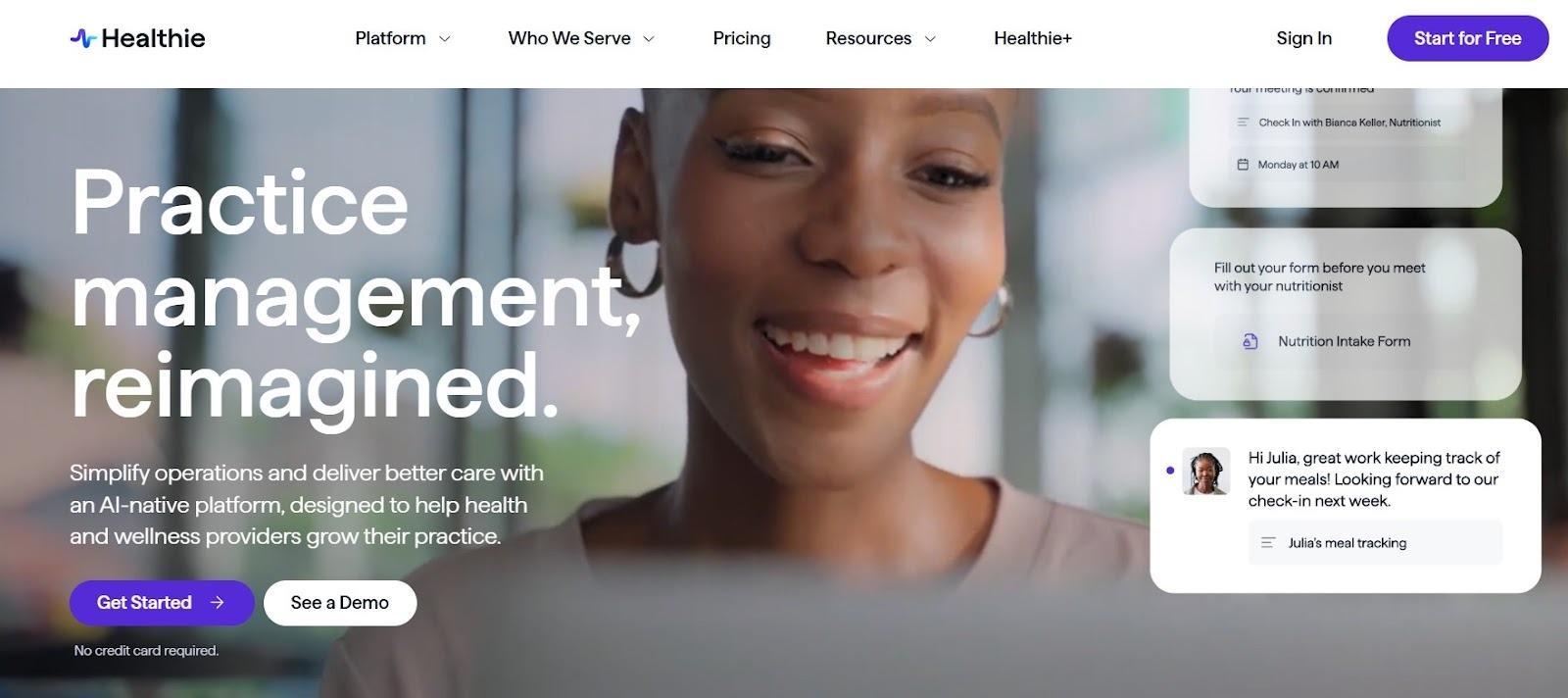
Healthie is a cloud-based solution designed for healthcare organizations, offering a user-friendly platform for managing patient data and records. Its capabilities include clinical documentation, prescribing, and reporting features, while providing BAAs to support HIPAA compliance.
Healthie integrates with various healthcare applications and services, allowing providers to build a comprehensive ecosystem for managing their practice. This is particularly valuable for organizations delivering virtual-first care, where a user-friendly and integrated system is crucial.
Features
- User-friendly interface for managing patient data and records: Healthie provides an intuitive interface that simplifies patient information management. This ease of use provides providers with simple charting experiences and an AI scribe for fast documentation.
- Integration with various healthcare applications and systems: The platform integrates with a wide range of healthcare applications and systems, like Apple Health and Fitbit, for smooth data exchange and interoperability.
- Mobile tools for virtual care: Healthie added mobile e-prescribing, medication management, and better insurance tools and dashboards. These features help teams provide telehealth care more easily.
Security and Compliance
- Supports HIPAA requirements: Healthie is designed with built-in HIPAA compliance, providing healthcare organizations with a secure environment for handling patient data, as long as your organization implements the features correctly.
- Audit logging and activity tracking: Healthie provides extensive audit logging and activity tracking features. These capabilities allow healthcare organizations to monitor access and changes to patient data. The features provide transparency, supporting compliance with regulatory requirements.
Build Powerful HIPAA-Compliant Applications with Blaze
Blaze allows healthcare organizations to take control of their data without the need for complex coding.
Our leading no-code platform simplifies HIPAA compliance and database management, allowing you to focus on what matters most — innovative patient care.
Choosing a HIPAA-compliant database like Blaze gives you a powerful, user-friendly solution designed with healthcare compliance in mind.
- HIPAA-compliant capabilities: Blaze includes features such as audit logs and role-based permissions to support HIPAA and SOC 2 compliance requirements, though actual compliance depends on how each organization configures and uses the platform.
- Dedicated support and expertise in healthcare applications: Blaze offers dedicated support and expertise specifically for healthcare applications and can provide guidance and assistance to ensure your database meets all necessary compliance standards.
- Faster development and deployment with pre-built compliance features: Our pre-built compliance features enable you to develop and deploy apps much faster than traditional methods. You can quickly create a functional, compliant app without extensive coding or configuration.
Learn more about how Blaze can help your healthcare organization with HIPAA-compliant databases.
Frequently Asked Questions
When Is a Database HIPAA-Compliant?
A database is HIPAA compliant when it meets strict requirements for protecting electronic protected health information (ePHI). This includes encryption, access controls, audit logs, secure infrastructure, and signed Business Associate Agreements (BAAs) with any third-party vendors.
Which HIPAA-Compliant Database Is Best For Non-Technical Healthcare Teams?
Blaze is the best option for non-technical teams because it offers a no-code visual builder, pre-made components like screens and charts, and features that support HIPAA compliance, such as role-based permissions and audit logs. Healthcare organizations can create secure applications, manage patient data, and automate workflows without developers.
How Do I Choose The Right HIPAA-Compliant Database For My Organization?
Choose the right HIPAA-compliant database by evaluating your team’s technical expertise, scalability needs, and required integrations. Non-technical teams may prefer no-code platforms like Blaze, while organizations with IT resources may want solutions like Oracle. Always pick a database provider that offers onboarding services so you can launch smoothly.
Sources
1. U.S. Department of Health & Human Services. “Summary of the HIPAA Security Rule.” HHS.gov. https://www.hhs.gov/hipaa/for-professionals/security/laws-regulations/index.html
2. U.S. Department of Health & Human Services. “Security Rule Guidance Material.” HHS.gov. https://www.hhs.gov/hipaa/for-professionals/security/guidance/index.html
3. National Institutes of Health: StatPearls. “Health Insurance Portability and Accountability Act (HIPAA) Compliance.” NCBI. https://www.ncbi.nlm.nih.gov/books/NBK500019/
The Secure No-Code & AI Platform
Supercharge your team's operations and performance with better apps and tools.
Create custom apps fast
Secure & HIPAA compliant
Streamline complex workflows

The Secure No-Code Platform
Build apps with best-in-class security.
Related Articles
Discover related guides on healthcare no-code development, HIPAA compliance, security, integrations, and launching apps faster.
%20(1).png)
Cerner vs. Epic: Which EHR System Is Better? (2026)
I compared Cerner vs. Epic across clinical features, usability, interoperability, implementation, and cost. See which EHR better fits your organization.
%20(1).png)
Mendix vs. Appian: Which Low-Code Platform Is Better? (2026)
I compared Mendix vs. Appian across app development, process automation, integrations, scalability, and pricing. Find out which platform fits your needs.
%20(1).png)
8 Best Base44 Alternatives and How to Pick (2026)
After comparing 8 Base44 alternatives, I found clear differences in code access and mobile deployment. See which platform best matches your project needs.