
Table of contents
Top 10 HIPAA-Compliant Messaging Apps in 2026

Written by
Blaze Team

Reviewed by
Nanxi Liu
Expert Verified
The best HIPAA-compliant chat platforms are Blaze, which lets you build your own messaging app without coding, TigerConnect for large practices that need enterprise tools to communicate with patients across locations, and OhMD for combining new patient intake and scheduling.
HIPAA-compliant messaging apps allow medical professionals to discuss procedures with patients, answer their questions, and offer medical advice. I chose the top 10 for integrations and ease of use, so you can pick the right one for your clinic.
| Tool | Best For | Video/Voice | EHR Integration | Pricing |
|---|---|---|---|---|
| Blaze | Custom HIPAA-compliant apps without coding | Optional via integrations | Yes | Custom quote |
| TigerConnect | Enterprise-grade clinical communication | Yes | Yes | Custom quote |
| OhMD | Patient texting and intake | Yes | Yes | $300/month |
| Spruce | All-in-one communication hub | Yes | Yes | $24/user/month |
| Paubox | HIPAA-compliant encrypted email | No | Yes | From $32/month |
| Klara | Patient engagement messaging | Yes | Yes | Custom quote |
| symplr | Care team coordination across large health systems | Yes | Yes | Custom quote |
| Luma Health | Automated scheduling and outreach | Yes | Yes | Custom quote |
| Weave | Front desk communication workflows | Yes | Limited | Custom quote |
| QliqSOFT | Large practice messaging and telehealth | Yes | Yes | Custom quote |
How I Researched and Tested These HIPAA-Compliant Messaging Apps
Security and simplicity are essential for any provider adopting a HIPAA-compliant messaging app. So, I looked at each tool across the following criteria:
- Security and compliance: Protecting patient data under HIPAA requires strong security measures. With more rigorous cybersecurity requirements on the horizon, having a reliable, up-to-date tool is the difference between secure patient communication and costly data breaches. I tested each tool for encryption, access controls, and audit logging.
- Ease of adoption: A tool loses value if teams struggle to use it. To determine how intuitive each tool felt, I evaluated onboarding speed, clarity of training materials, and responsiveness of live support.
- Integration with clinical systems: Communication tools must work with existing EHR systems, scheduling, and billing. To test this, I evaluated how well each platform’s API and prebuilt connectors synced patient data from third-party platforms like EHRs.
- Compliance: I assessed how each platform maintained HIPAA compliance beyond basic encryption. This included reviewing audit logs, role-based access controls, and secure data storage policies.
- Scalability: I evaluated how well each tool could adapt to increasing patient loads, multiple locations, and expanding service lines. Scalable platforms support additional users, integrate with new systems, and handle higher message volumes without performance issues.
Every platform met basic security and compliance standards. The difference came down to setup time and how well each tool handled my workflow sample and setup effort.
#1. Blaze.tech: Best for Customized Messaging and Software
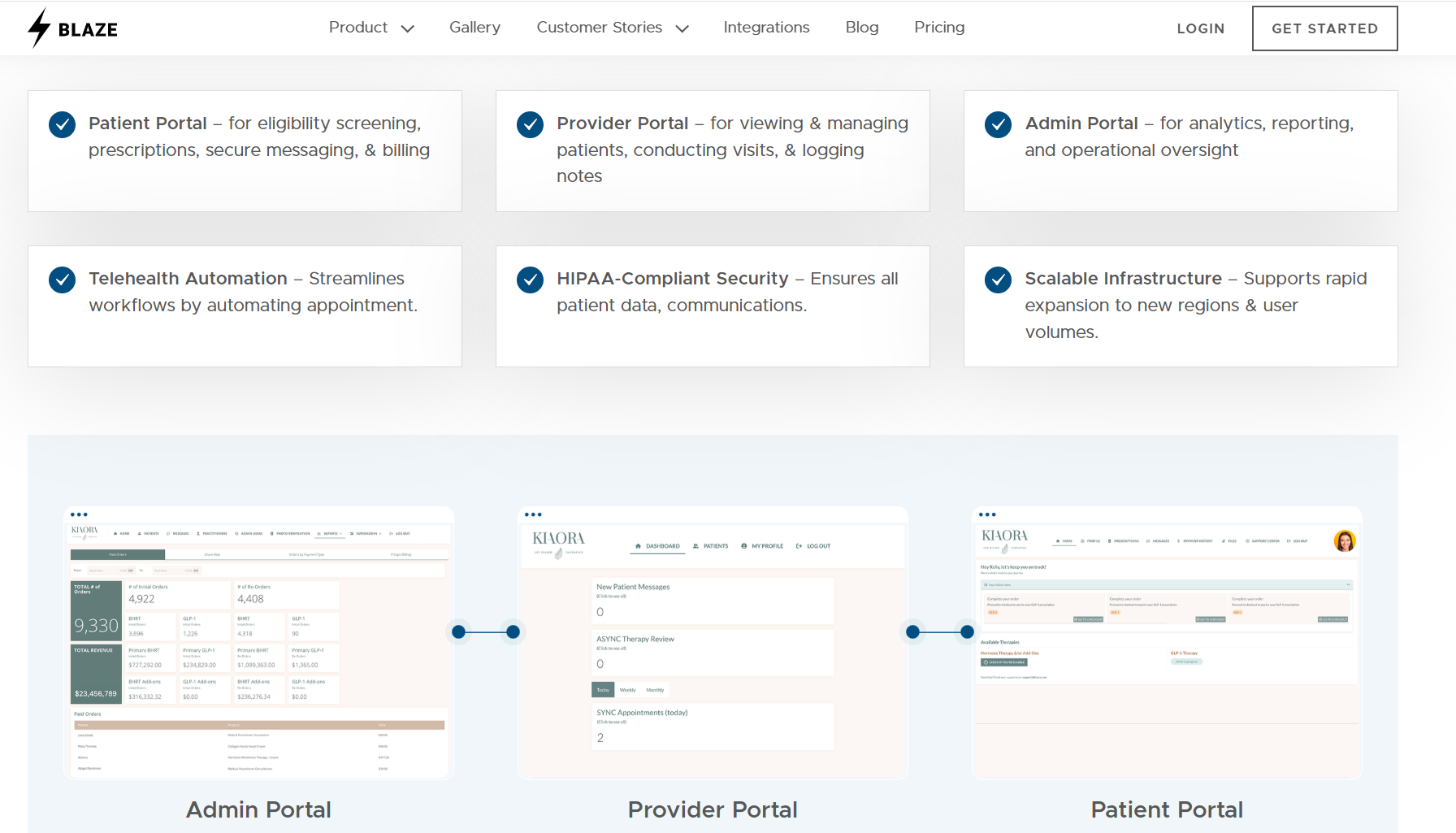
What it does: Blaze is a no-code development platform for building web applications, with the option for a done-for-you service with their own expert engineers. You can create, or have created by them, medical messaging apps, scheduling systems, healthcare inventory trackers, and data dashboards. And it’s all on HIPAA-enabling, HITRUST e1 certified infrastructure.
Who it’s for: Mid to large-sized healthcare organizations managing custom workflows who want to build their own HIPAA-compliant messaging app without developers.
I tested Blaze by building a secure messaging app using Blaze Texts. Patients could send messages about symptoms or medicine dosages, and providers could answer questions quickly in specific care team channels. But when I built the video messaging tool, I needed to integrate third-party video messaging software, which required some API knowledge.
Features
- No-code drag-and-drop builder: Blaze’s no-code drag-and-drop interface lets you design your HIPAA-compliant messaging platform without coding. You assemble your app like building a PowerPoint presentation. Place components, rearrange layouts, and add features visually.
- AI features: Blaze integrates with OpenAI (ChatGPT) to deliver AI-driven text generation, summarization, and feedback. You can create patient-facing messages, summarize medical information, and suggest engagement strategies.
- Database and EHR integrations: You can connect your apps, software, and internal databases to your Blaze-made HIPAA-compliant messaging app. Its API integrations automate data exchange, synchronize patient records, and reduce manual entry.
- Guided onboarding and support: When you sign up for the enterprise plan, Blaze’s implementation team guides you through its HIPAA-compliant builder interface step-by-step. They help configure your messaging platform, publish it, and provide ongoing support.
Pros
- Broad functionality beyond messaging: The platform supports creating advanced workflows like patient intake forms, secure document sharing, asset tracking, and automated alerts.
- Custom HIPAA-compliant app creation without coding: Healthcare providers and administrators alike can create apps using Blaze’s no-code interface. This gives your team control over designs, workflows, and data without developers. It allows faster launches, flexible changes, and lower long-term costs.
- Scalability: Blaze offers nearly unlimited data space and allows users to create as many apps as needed.
Cons
- Upfront planning requirement: Building with Blaze requires clear internal processes from the start. Teams must define their workflows, data requirements, and integration needs to take full advantage of the platform.
- No built-in video: Blaze doesn’t offer its own video messaging software, so you’ll need to integrate with a third-party platform.
What Users Say
Pro: “[The] flexibility of Blaze makes it simple to set up and easy to use. We created simple no-code solutions for intake forms for our business.” Shelley S., Capterra
Con: “There was a slight learning curve initially, but after we figured out how to get everything integrated, we were off to the races.” - Landon M., Software Advice
Pricing
Blaze’s HIPAA-compliant app builder has customized pricing, so contact the Blaze team to learn more.
The Bottom Line
Blaze suits teams that want their own custom-built HIPAA-compliant messaging apps with specialized messaging logic that mirrors how their operations actually run. Teams that only need basic patient texting with zero customization may prefer a plug-and-play tool like Klara.
#2. TigerConnect: Best for Enterprise-Grade Clinical Messaging
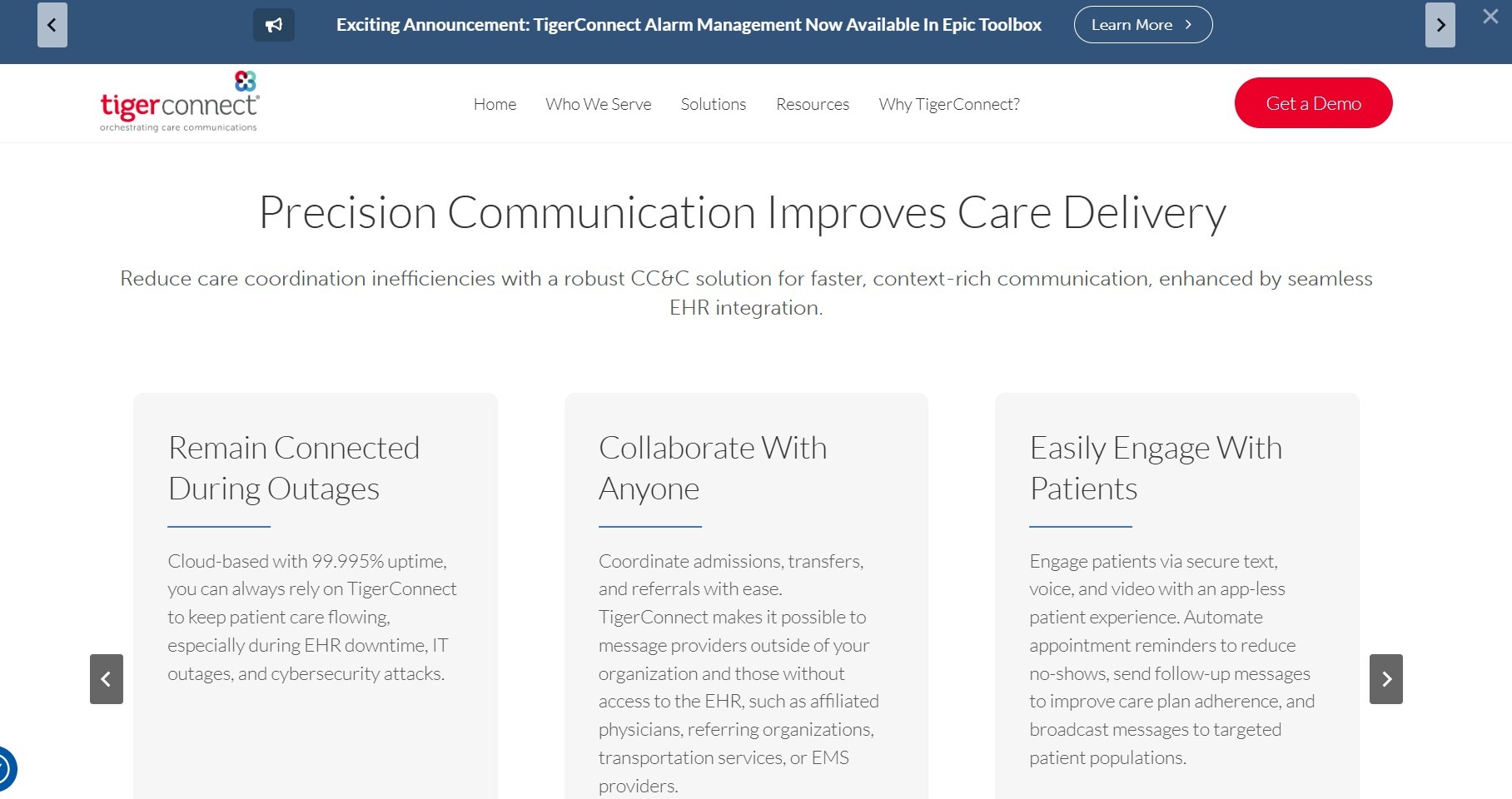
What it is: TigerConnect is a HIPAA-compliant messaging and clinical collaboration platform that supports secure texting, voice, and video communication among care teams and patients.
Who it’s for: Designed for mid-sized and larger healthcare organizations.
I tested TigerConnect’s EHR integration by pulling sample patient data directly into an active message thread. The patient record came up alongside conversations without requiring a separate login or system toggle, which gave providers quick access to patient data. At times, the record panel opened blank and required a refresh before the new data showed up.
Features
- HITRUST-certified: The platform meets strict data protection standards and includes controls like PIN locks, biometric access, remote lockout, message recall, auto-deletion, and audit logs.
- Onboarding and support: TigerConnect offers training modules, user guides, and live onboarding to help teams adopt the platform quickly. It also provides 24/7 customer service via phone, chat, and help desk.
- Integrations: The platform integrates with EHRs, nurse call systems, scheduling tools, and cloud storage apps like Box and Google Drive. These connections enable continuous data syncing between systems, reducing manual work.
Pros
- Onboarding and 24/7 support: Users receive round-the-clock support via phone, chat, and help desk. TigerConnect also offers onboarding resources, such as training modules and user guides.
- Strong security and compliance: TigerConnect is HITRUST CSF certified and offers access controls, message recall, and audit logs for compliance and security.
Cons
- Rigid workflow assumptions: Care teams that use unusual escalation steps often have to work around the system’s built-in rules.
- Overwhelming for basic communication needs: The platform’s advanced feature set is more than teams need when they only require basic messaging and file sharing.
What Users Say
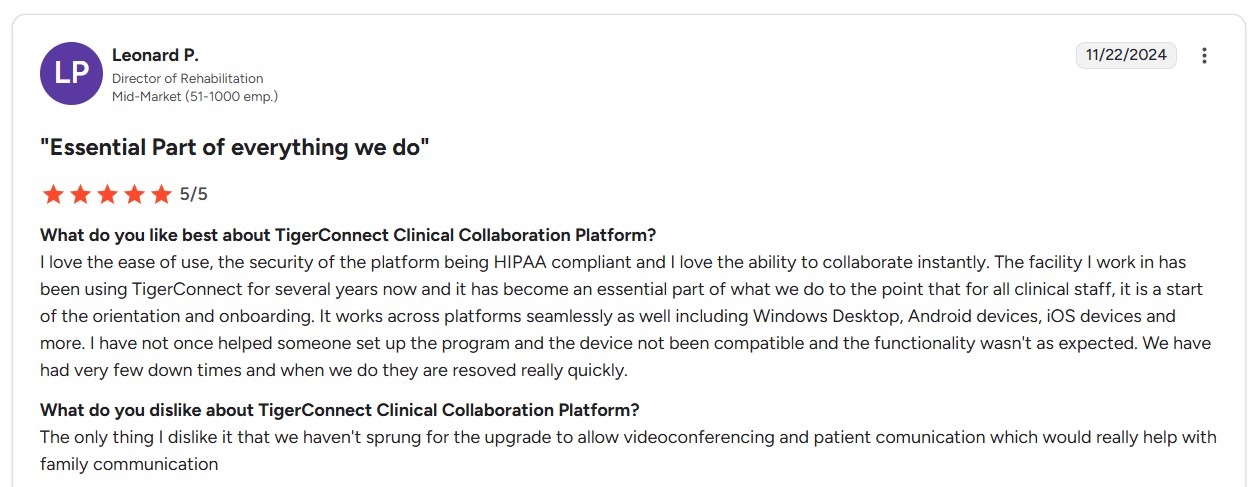
Pro: “I love the ease of use, the security of the platform being HIPAA compliant, and I love the ability to collaborate instantly.” - Leonard P., G2
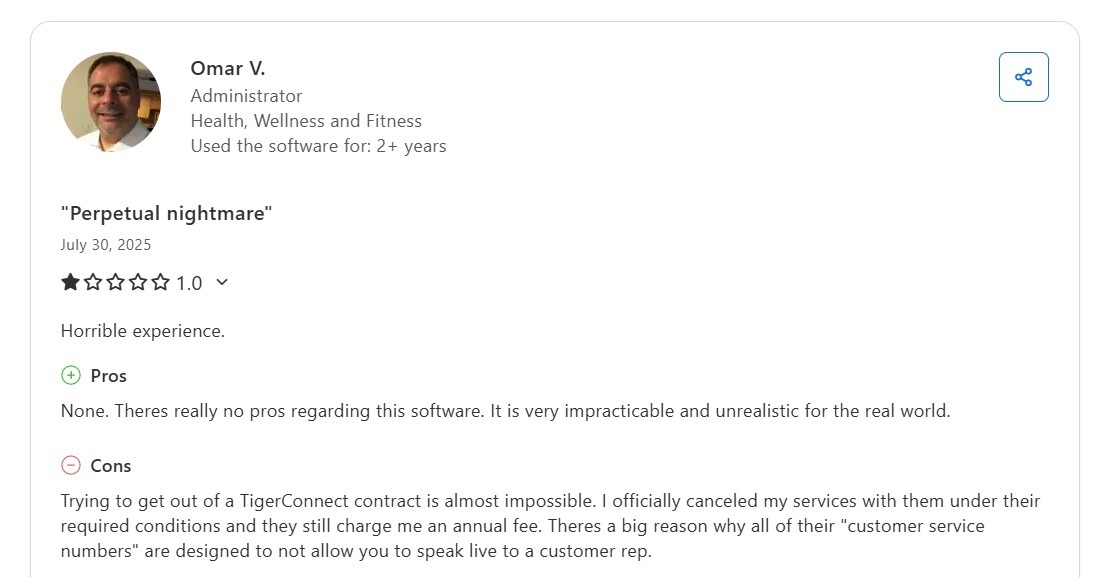
Con: “Trying to get out of a TigerConnect contract is almost impossible. I officially canceled my services with them under their required conditions, and they still charge me an annual fee.” - Omar V., Capterra
Pricing
Tiger doesn’t publish pricing info, so you’ll need to book an appointment with their sales team to learn more.
The Bottom Line
TigerConnect makes sense when teams handle complex, multi-department escalations and need clear message accountability. If your workflows focus on patient communication, OhMD can often solve that need faster without the extra setup.
#3. OhMD: Best for Patient Texting and Intake
What it is: OhMD is a HIPAA-compliant messaging and patient engagement platform that enables secure two-way texting, voice, and video communication, all from your practice’s phone number.
Who it’s for: The platform simplifies communication between healthcare providers, staff, and patients. It has plans for clinics of all sizes, from small practices to large hospitals.
I tested OhMD by using the patient-facing channel to send messages to test users. Although it provided a consistently easy experience for patients to log in and communicate, the internal care team messaging system took a long time to load, and switching between conversations required several clicks.
Features
- Scalable communication tools: OhMD supports organizations from solo practices to large, multi-location healthcare systems. Features include broadcast messaging, live HIPAA-compliant website chat, and automated appointment reminders.
- EHR integrations: The platform connects with major EHR systems, including Epic, Cerner, Athenahealth, and Allscripts. These integrations enable automatic data exchange, improved documentation, and a reduction of manual entry.
- Dual focus on staff and patient engagement: By offering secure team chats and file sharing, OhMD strengthens internal collaboration. Patients can use SMS texting for quick responses, receive appointment reminders, and access telemedicine services directly.
Pros
- Supports both staff and patient communication: OhMD allows healthcare teams to collaborate internally while staying connected to patients through secure SMS texting, appointment reminders, and telemedicine access.
- Scales for any practice size: OhMD supports communication workflows for solo practices and multi-location healthcare organizations. Features like broadcast messaging, HIPAA-compliant website chat, and automated reminders help providers handle high patient communication volumes without sacrificing security.
Cons
- EHR 2-way sync requires manual entry: EHR two-way sync still requires manual data entry because conversations are saved as messy documents instead of organized clinical fields.
- Limited advanced analytics tools: OhMD’s reporting and analytics features are not as extensive as those of some competitors. Practices looking for deep data insights into patient engagement trends or communication performance may need to use additional tools.
What Users Say
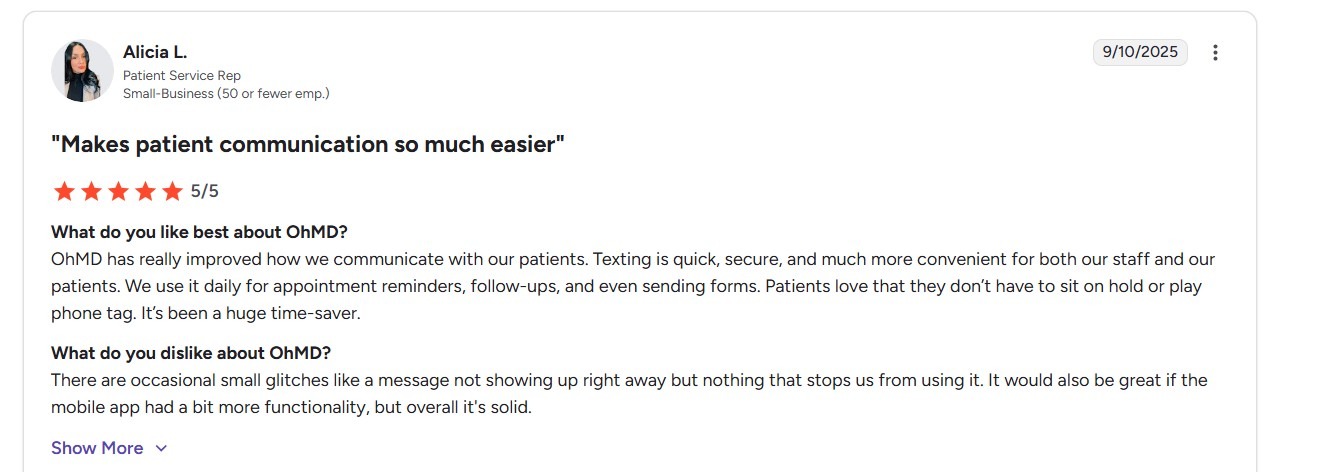
Pro: “OhMD has really improved how we communicate with our patients. Texting is quick, secure, and much more convenient for both our staff and our patients.” - Alicia L., G2
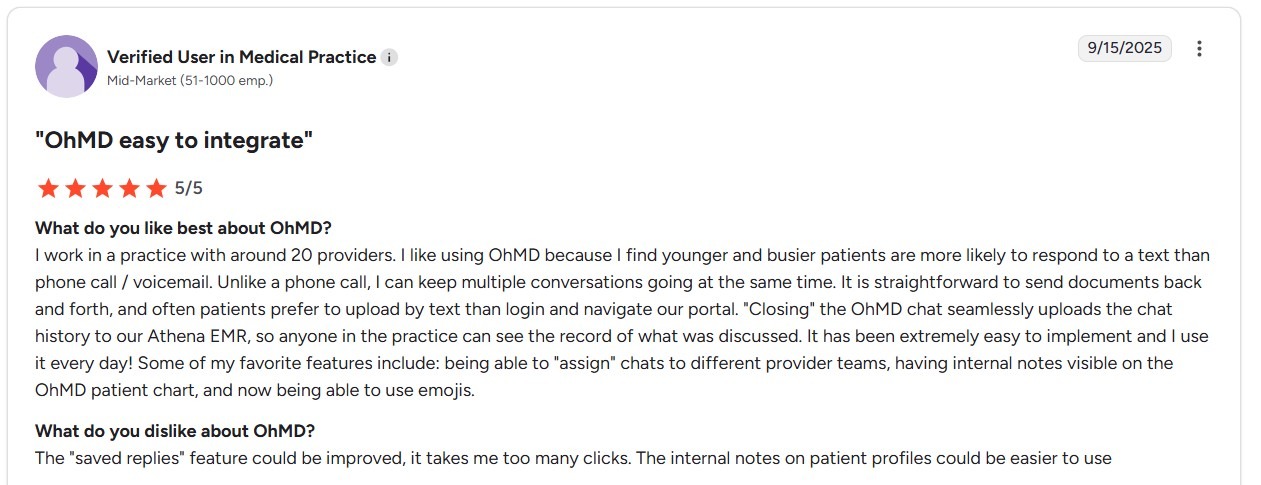
Con: “The 'saved replies' feature could be improved; it takes me too many clicks. The internal notes on patient profiles could be easier to use.” - Anonymous Medical Professional, G2
Pricing
The free version provides basic chat features between your team and patients. Paid plans start at $300/month and allow for website chat and EHR integrations.
The Bottom Line
OhMD is a scalable messaging platform for patient engagement and staff communication with strong integration capabilities. Teams that need internal clinical coordination and patient messaging in one system will find Spruce more helpful.
#4. Spruce: Best for an All-In-One Communication Hub
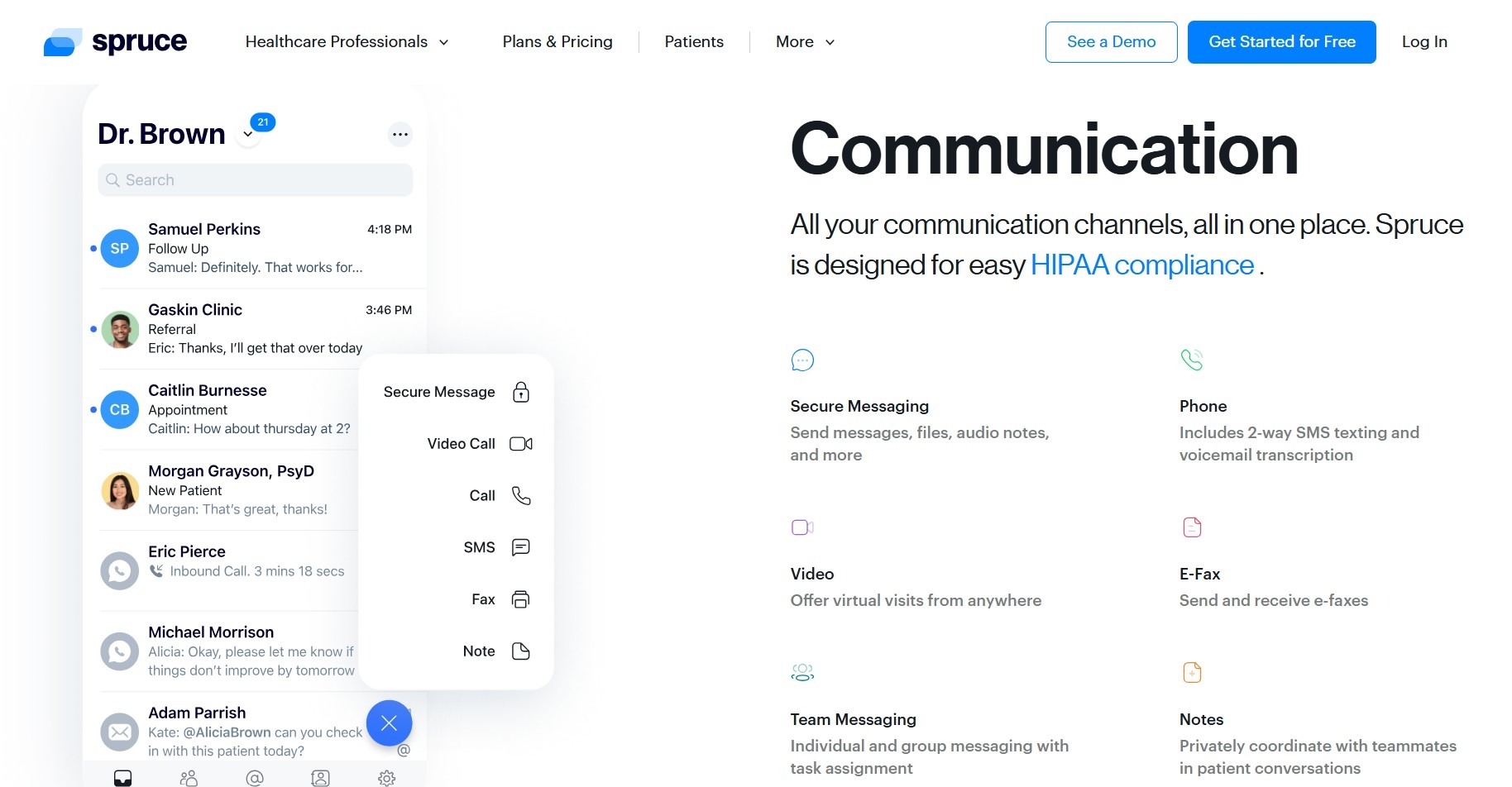
What it is: Spruce is a HIPAA-compliant communication platform designed to unify secure messaging, phone calls, fax, video, and telehealth in a single app.
Who it’s for: The platform suits small to mid-sized practices.
I tested Spruce by routing inbound patient calls, texts, and voicemails through a single shared team inbox. Everything flowed into a single inbox, which cut out channel switching. Triage still relies on staff or routing rules like auto-tagging. But customizing routing controls, especially to different departments or specialized teams, proved difficult.
Features
- Scalable for small to mid-sized clinics: It can scale from a technical standpoint with a design that fits small to mid-sized clinics.
- Affordable per-user pricing: Pay with a per-user pricing model that makes it budget-friendly for small clinics with only a few providers.
- Free trial and onboarding support: New users get a 14-day free trial with onboarding assistance via in-app messaging and email.
Pros
- Affordability: With its per-user pricing model, Spruce allows small clinics to provide HIPAA-compliant communication and telemedicine services without breaking the budget.
- Simple onboarding: New users benefit from in-app onboarding assistance and email support. The platform’s intuitive interface is simple to understand, letting teams transition smoothly from their existing systems.
Cons
- Single unified inbox: Spruce uses a unified team inbox by default, which can become challenging to manage for multi-department practices as they scale.
- Potential cost growth with expansion: Costs can rise quickly as more staff members join. Larger organizations scaling rapidly may find the monthly subscription total approaching or exceeding that of enterprise-level competitors.
Pricing
Spruce pricing starts at $24/user per month.
What Users Say
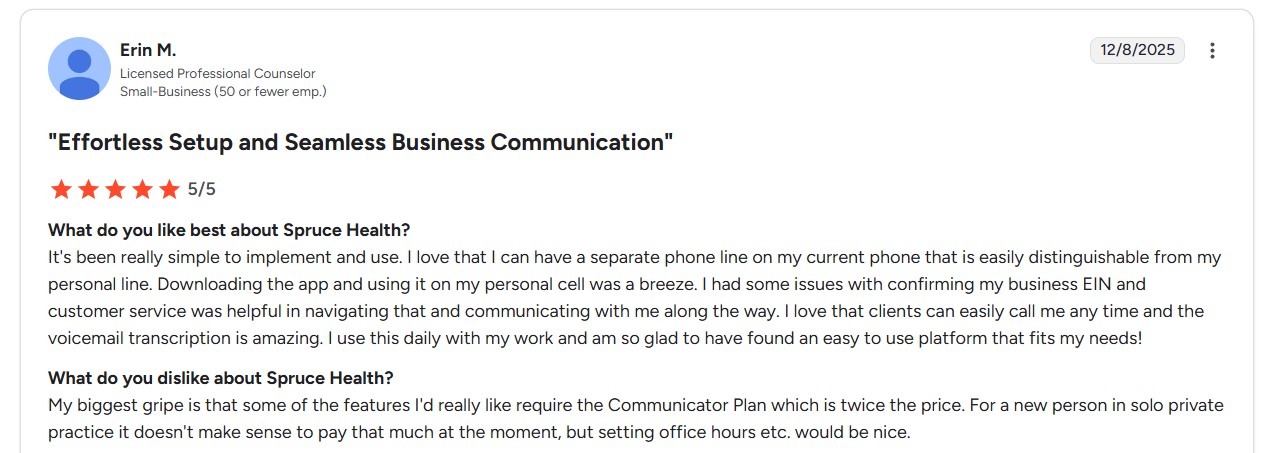
Pro: “It's been really simple to implement and use. I love that I can have a separate phone line on my current phone that is easily distinguishable from my personal line. Downloading the app and using it on my personal cell was a breeze.” - Erin M., G2
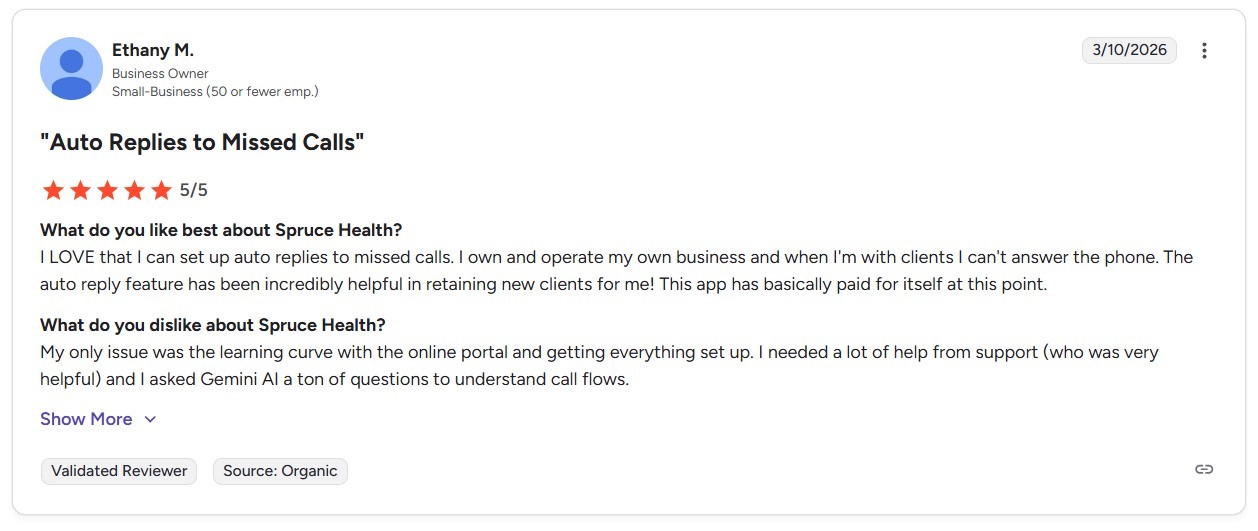
Con: “My only issue was the learning curve with the online portal and getting everything set up. I needed a lot of help from support (who was very helpful), and I asked Gemini AI a ton of questions to understand call flows.” - Ethany M., G2
The Bottom Line
Spruce delivers a HIPAA-compliant messaging and communication platform with secure patient engagement and team collaboration features. If you’re looking for hands-on onboarding and great customer support, try Blaze.
#5. Paubox: Best for Encrypted Email Made Easy
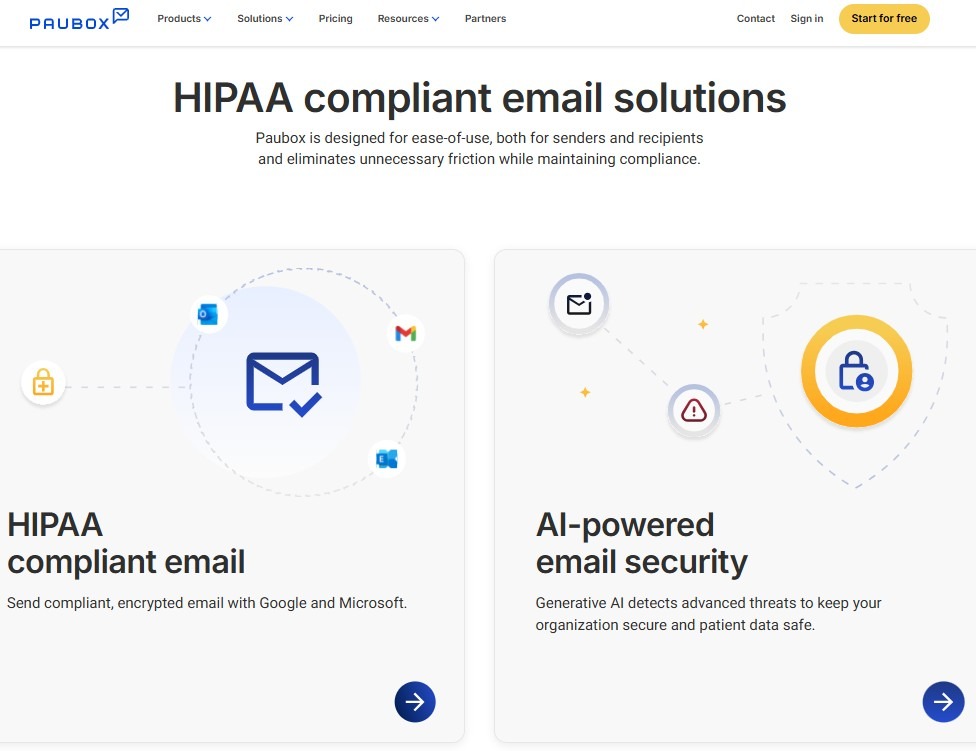
What it is: Paubox is a HIPAA-compliant email solution that enables providers to send encrypted, personalized emails directly to patients’ inboxes without portals or passwords.
Who it’s for: It serves healthcare organizations of all sizes. It’s especially valuable for teams that email digital files to patients, such as test results, medical images, and large billing statements.
I tested Paubox by sending lab results and care summaries to patients using standard Gmail and Outlook accounts. Every message arrived encrypted in the recipient's inbox without requiring a separate login or decryption step. But if you want more than just email, like two-way text messaging, appointment reminders, or intake automation, you’ll need a second solution.
Features
- Integrates with popular systems: Paubox works with Outlook, Gmail, and Office 365, and connects to EHRs and other healthcare software via its API.
- Provides onboarding resources: When you onboard, Paubox provides setup guides, training materials, and live support via chat, email, and phone.
- Delivers encrypted emails: Patients receive HIPAA-compliant encrypted emails directly in their standard inbox with no portals, passwords, or special apps required.
Pros
- Removes patient-side barriers: Patients receive encrypted emails directly in their standard inbox with no extra steps. This convenience increases message open rates, encourages patient engagement, and eliminates frustration.
- Offers responsive support and easy onboarding: Teams report fast onboarding and minimal learning curves, which allows healthcare providers to start sending HIPAA-compliant emails within days instead of weeks.
Cons
- No native messaging channel: Paubox only works with email and doesn't support SMS or in-app patient texting. Practices where patients respond faster to text than email will hit that wall immediately.
- Dependent on existing email infrastructure: Because Paubox integrates with Gmail, Outlook, and similar platforms, it relies on the stability and configuration of those systems.
What Users Say
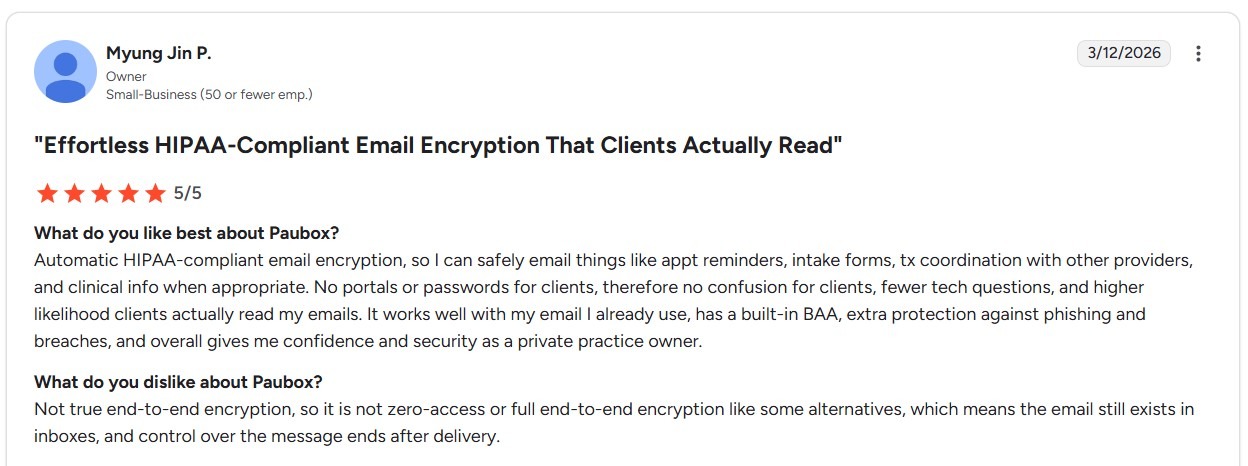
Pro: “Automatic HIPAA-compliant email encryption, so I can safely email things like appt reminders, intake forms, tx coordination with other providers, and clinical info when appropriate.” - Myung Jin P., Capterra
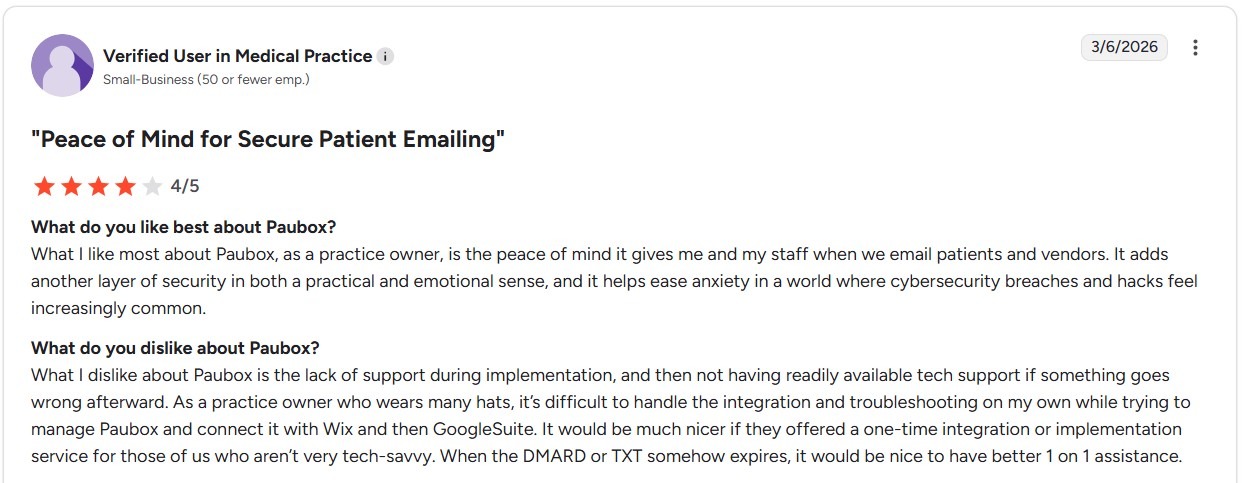
Con: “What I dislike about Paubox is the lack of support during implementation, and then not having readily available tech support if something goes wrong afterward.” - Medical Practice owner, G2
Pricing
The amount you pay monthly depends on the number of email senders you have, starting from $42/month for up to 5 senders.
The Bottom Line
Paubox makes the most sense when you have high clinical email volumes, and you don’t need a patient portal. For workflows centered on two-way patient engagement across text, voice, and intake, OhMD is a better choice.
#6. Klara: Best for Patient Engagement Messaging
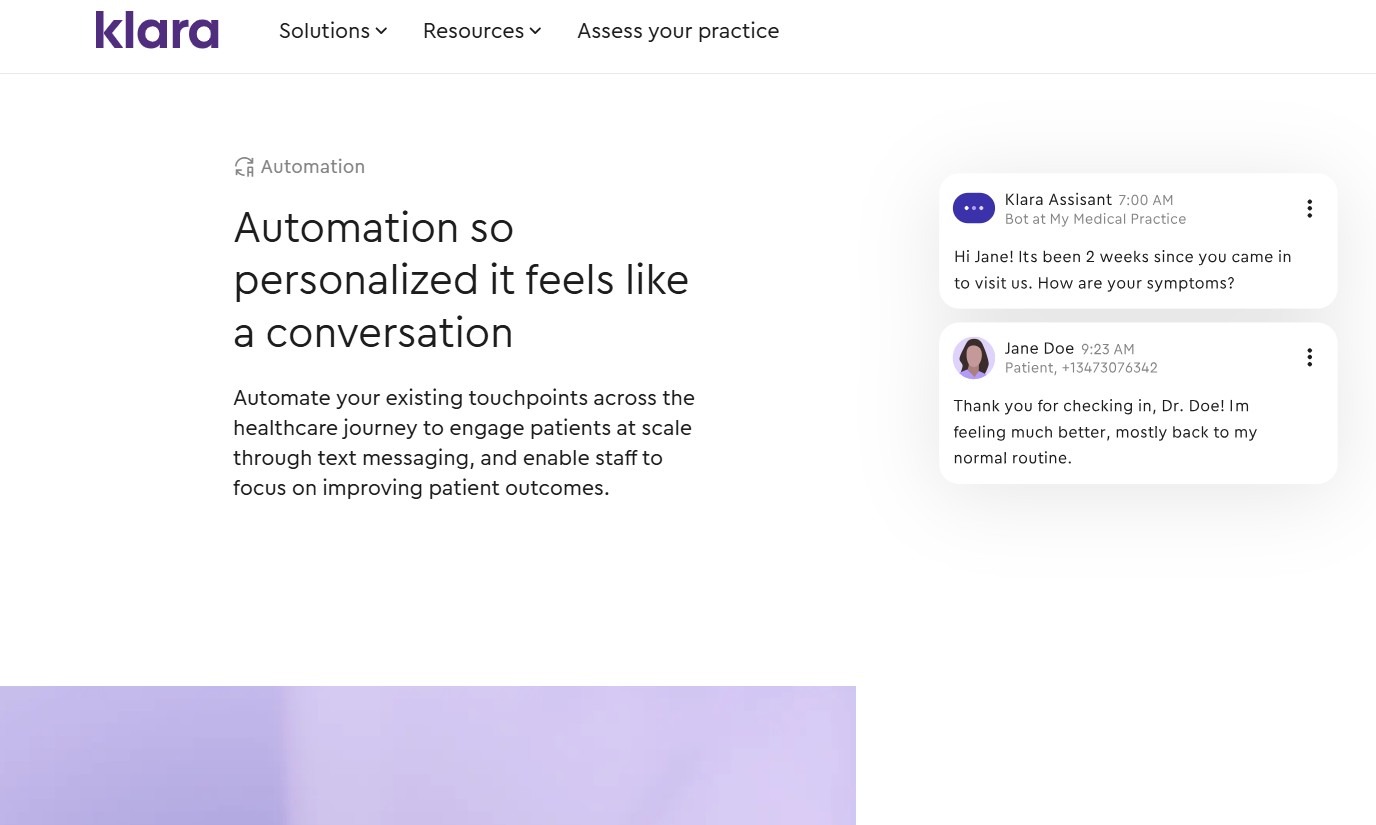
What it is: Klara is a HIPAA-compliant patient engagement and messaging platform with messaging, telemedicine, appointment reminders, eForms, and workflow automation.
Who it’s for: Specialty practices running high appointment volume.
I tested Klara by sending a pre-visit intake message after an appointment confirmation text. Sample patients received a link to fill out registration forms and basic medical history. This setup reduced front-desk check-in delays.
But larger practices with multiple specialties or complex schedules may need more time to manage intake flows. They often have to handle routing rules, different visit types, and multiple form templates.
Features
- Scalable cloud-based platform: Klara serves organizations ranging from solo practices to enterprise health systems. It automates routine outreach, such as appointment reminders, pre-visit instructions, and post-visit follow-ups.
- EHR integrations: The platform connects with multiple EHR systems to enable real-time updates, automated patient intake, and automatic syncing of forms and messages with patient records.
- Telemedicine integration: Video visits launch directly from the patient threads without switching platforms or sending separate links.
Pros
- Centralized communication dashboard: Klara centralizes all patient and staff communication in one dashboard, reducing time spent switching between platforms.
- Automation for patient engagement: The platform’s automation tools handle appointment reminders, intake forms, and follow-up messages without manual intervention.
Cons
- Limited internal clinical messaging: The platform is built for patient communication. Internal care team messaging exists, but isn’t a full replacement for dedicated clinical chat platforms.
- Platform dependency: Klara requires all patient communication to route through its platform, which can limit flexibility for providers who prefer to manage messages in native EHR portals or third-party communication tools.
Pricing
Klara doesn’t release pricing information. Schedule an appointment with their sales team for more info.
What Users Say
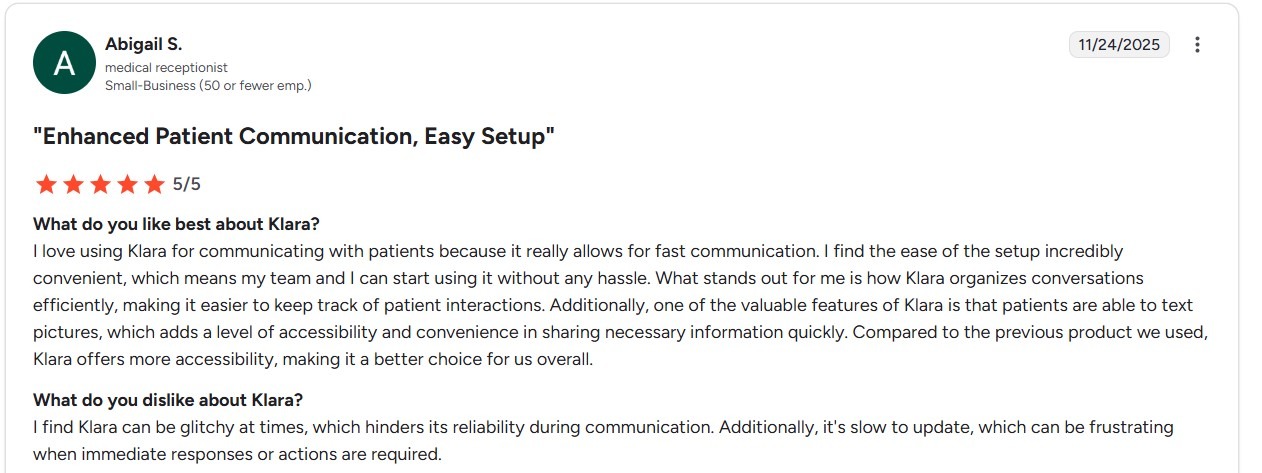
Pros: “I love using Klara for communicating with patients because it really allows for fast communication. I find the ease of the setup incredibly convenient, which means my team and I can start using it without any hassle.” - Abigail S., G2
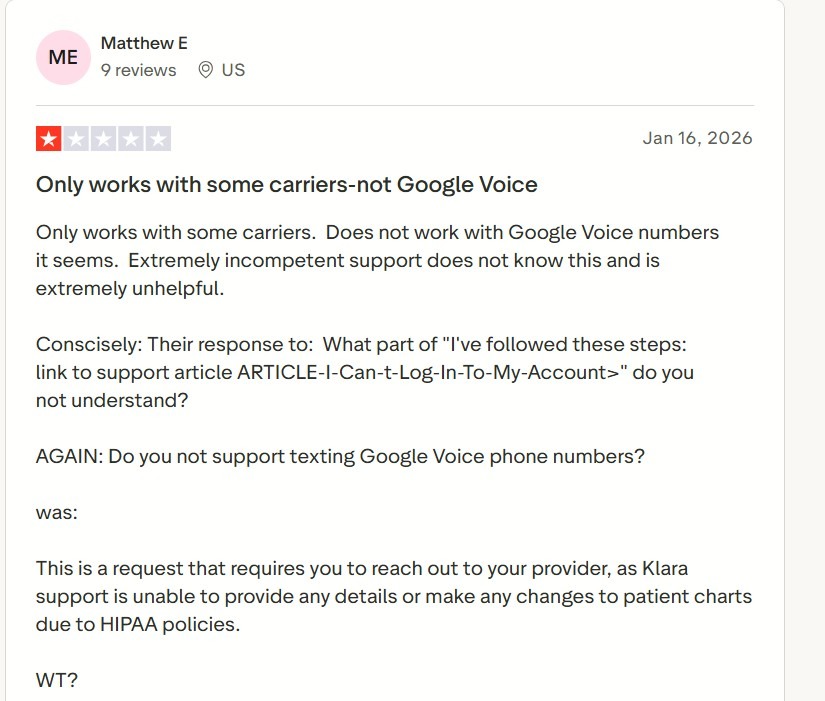
Cons: “Only works with some carriers. Does not work with Google Voice numbers it seems. Extremely incompetent support does not know this and is extremely unhelpful.” - Matthew E., Trustpilot
The Bottom Line
Klara works best for specialty practices with repeatable patient journeys and enough daily volume to benefit from automated intake and recall workflows. If your workflows focus on internal care team coordination or provider-to-provider messaging, TigerConnect handles that need well.
#7. symplr: For Care Team Coordination
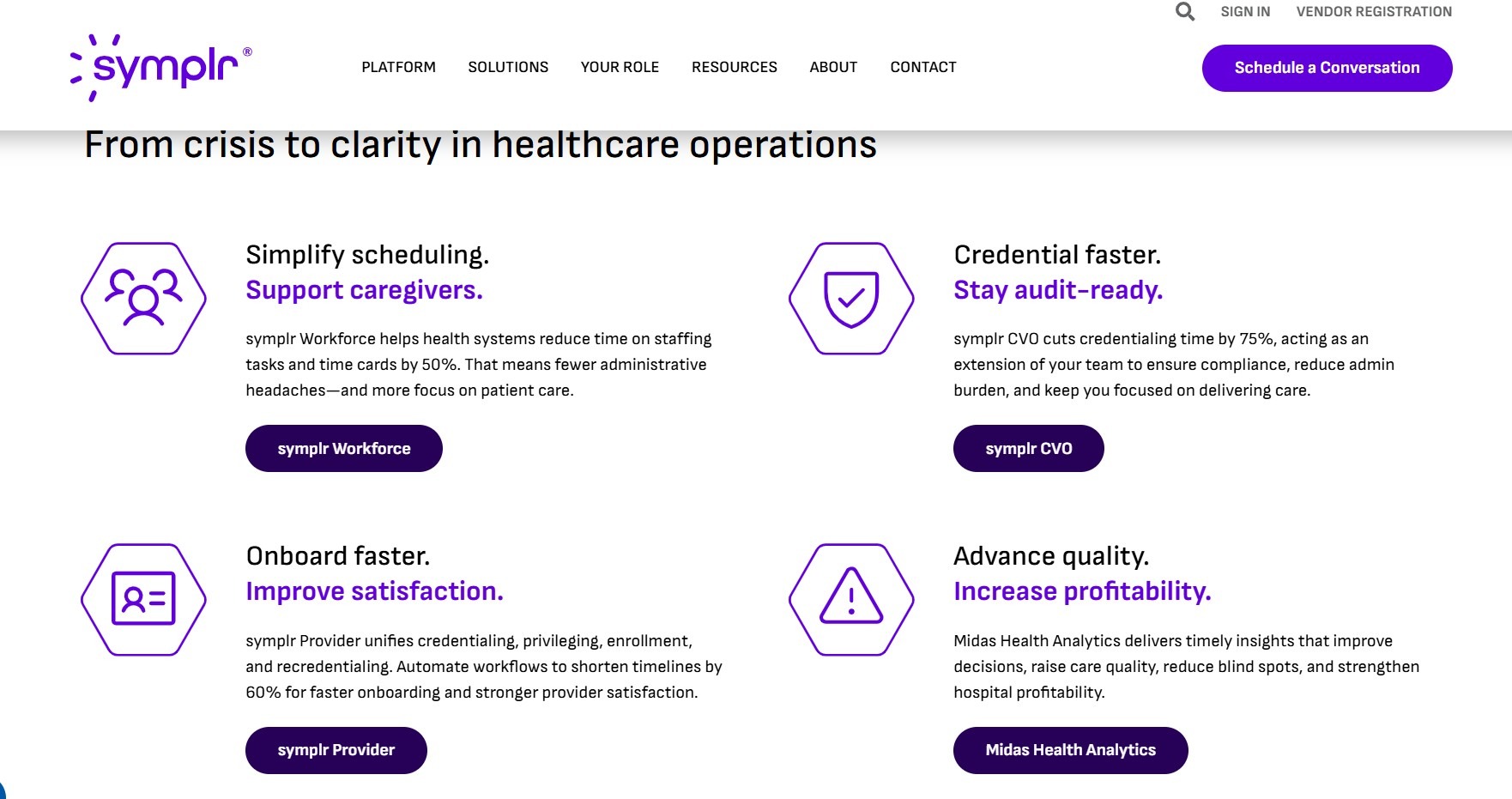
What it is: symplr is a HIPAA-compliant messaging and collaboration platform designed to unify clinical and administrative communication across healthcare organizations of all sizes.
Who it's for: Large health systems that need reliable care coordination across departments, shifts, and administrators.
I tested symplr by routing a sample care coordination message across nursing, pharmacy, and physician roles. Each role received the message based on its permissions, and billing staff couldn’t access the clinical thread, signaling that role-based access worked.
But small providers may struggle with the setup. They may not need to set these complex roles, permissions, or workflows, and managing them can take extra time.
Features
- 24/7 support: symplr provides guided onboarding, detailed user guides, and round-the-clock customer assistance to help organizations implement the platform quickly.
- Rich media support: symplr supports documents and photos in messages. But video and voice memos might be restricted due to HIPAA compliance.
- On-call schedule integration: symplr routes urgent messages to the active covering provider automatically based on live shift assignment data.
Pros
- Customizable workflows: symplr enables organizations to tailor workflows to specific departmental or organizational requirements.
- Strong support: The team offers round-the-clock support, making it easier to resolve issues whenever they arise.
Cons
- Patient-facing gap: The platform wasn't built for direct patient communication, so that channel requires a separate platform entirely.
- Integration limitations: Although symplr integrates with many EHRs and healthcare tools, it may not offer fully compatible connections with niche or highly specialized platforms.
What Users Say
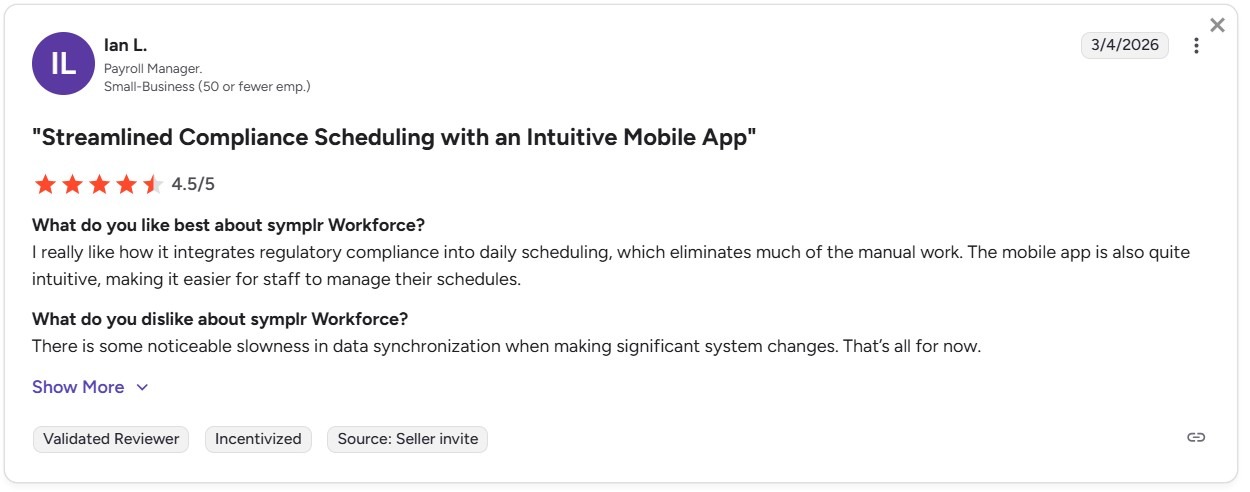
Pro: “I really like how it integrates regulatory compliance into daily scheduling, which eliminates much of the manual work. The mobile app is also quite intuitive, making it easier for staff to manage their schedules.” - Ian L., Capterra
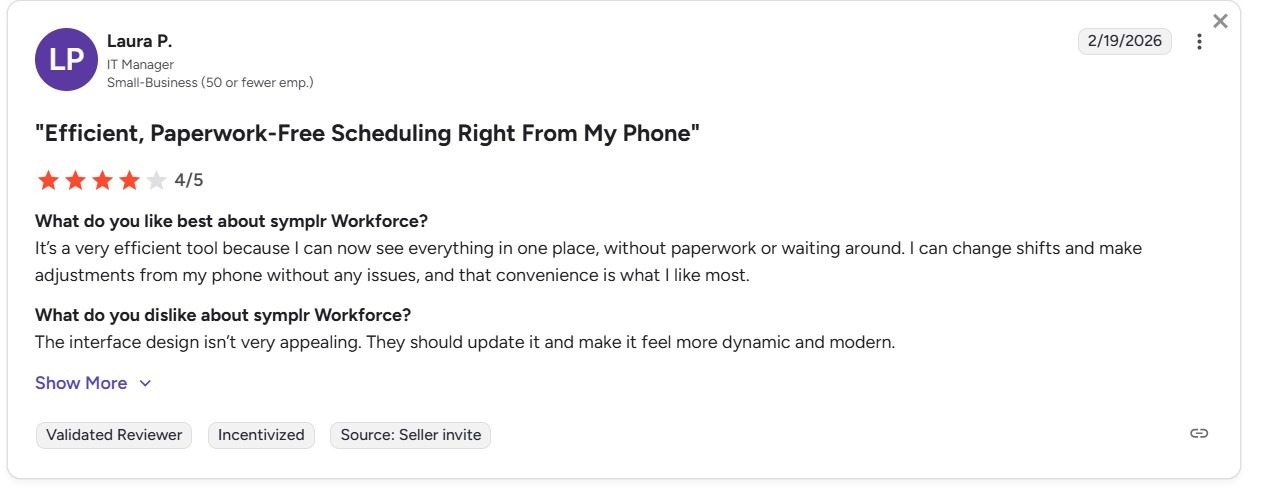
Con: “The interface design isn’t very appealing. They should update it and make it feel more dynamic and modern.” - Laura P., Capterra
Pricing
You’ll need to contact symplr to learn more about pricing.
The Bottom Line
The platform excels as a secure, scalable, and feature-rich option for large healthcare organizations, but it’s limited to large orgs. Smaller or mid-sized practices might find symplr cost-prohibitive and should try a tool like Spruce instead.
#8. Luma Health: Best for Automated Patient Scheduling
What it is: Luma Health is an AI-powered patient engagement platform with HIPAA-compliant secure messaging.
Who it's for: Multi-location practices managing high appointment volume.
I tested Luma by running an automated sample waitlist fill sequence after dummy patients canceled appointments. Luma identified eligible sample waitlisted patients and sent appointment confirmations, which could help keep schedules full and recover revenue.
Luma works best when your scheduling data stays clean and specific, with accurate appointment types, provider availability rules, and patient eligibility details.
Features
- EHR and practice management integration: The platform integrates with more than 70 EHR and practice management systems, allowing real-time scheduling, automated referral processing, and immediate data syncing.
- Automated appointment reminders and follow-ups: Built-in automation sends reminders by text, email, or voice, prompting patients to confirm or reschedule appointments. Post-visit follow-ups ensure continuity of care and help maintain compliance with treatment plans.
- Referral tracking and outreach: Moves inbound referrals through status stages and triggers patient contact at timed intervals until the appointment is confirmed.
Pros
- Central command for multi-site coordination: The platform serves as a central hub for communication and scheduling across multiple locations.
- Automation that fills calendars: Automated outreach tools handle appointment confirmations, recalls, and follow-ups. This keeps schedules full while freeing staff from time-consuming phone work.
Cons
- Integrations may demand technical support: The platform’s EHR integrations may require extra IT support during setup, slowing go-live timelines for teams without internal resources.
- Data quality dependency: Luma's AI automation produces accurate outreach only when underlying records are clean and consistently maintained. Practices with fragmented or incomplete patient data will see errors.
What Users Say
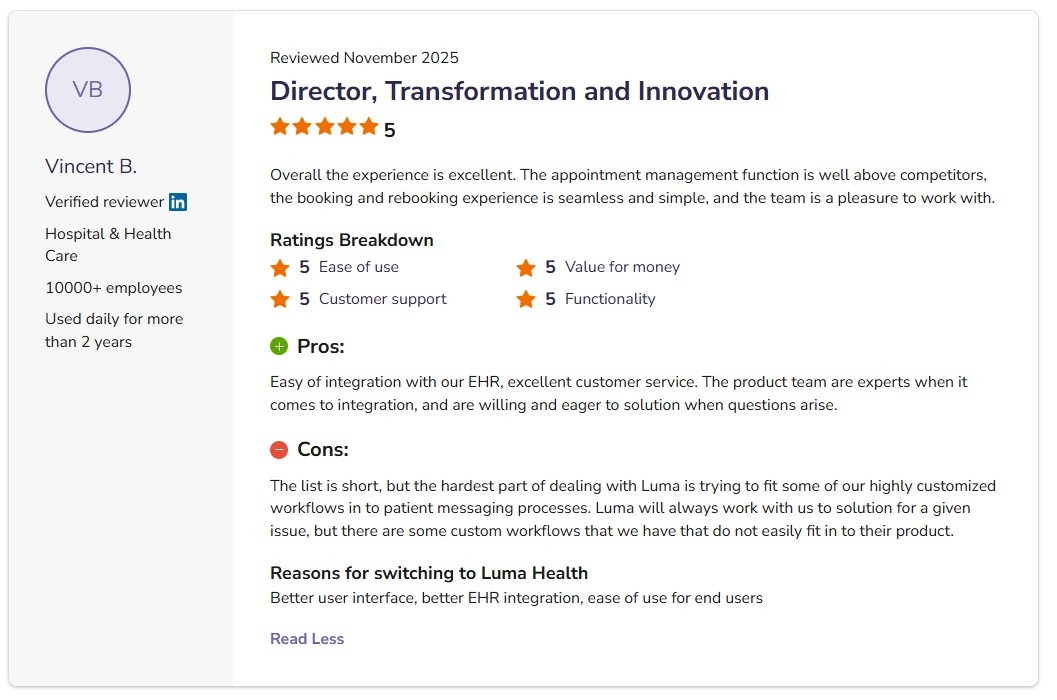
Pro: “Overall, the experience is excellent. The appointment management function is well above competitors, the booking and rebooking experience is seamless and simple, and the team is a pleasure to work with.” - Vincent B., Software Advice
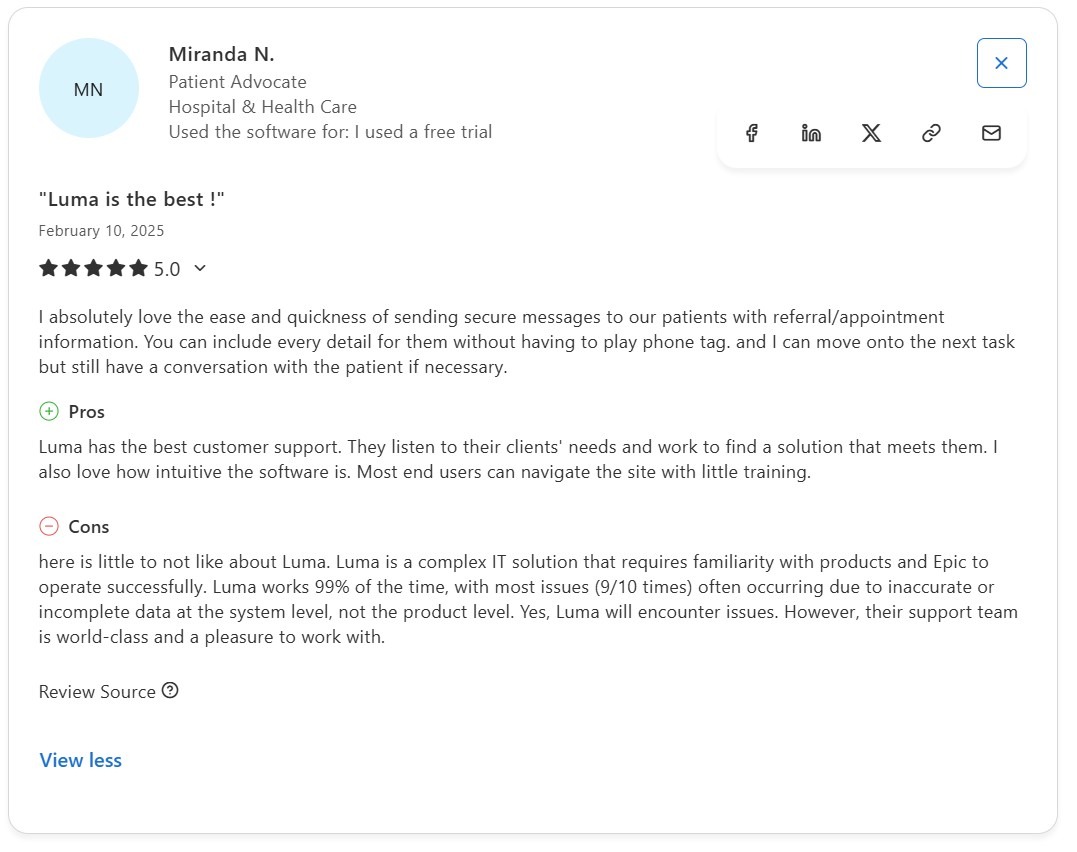
Con: “Luma is a complex IT solution that requires familiarity with products and Epic to operate successfully. Luma works 99% of the time, with most issues (9/10 times) often occurring due to inaccurate or incomplete data at the system level, not the product level.” - Miranda N., Capterra
Pricing
Luma doesn’t publish pricing, so you’ll need to book a demo for more information.
The Bottom Line
Luma suits multi-location operations and specialty practices looking to centralize scheduling and patient communication. For workflows centered on care team coordination or direct clinical messaging, TigerConnect is a good alternative.
#9. Weave: Best for Front Desk Workflows
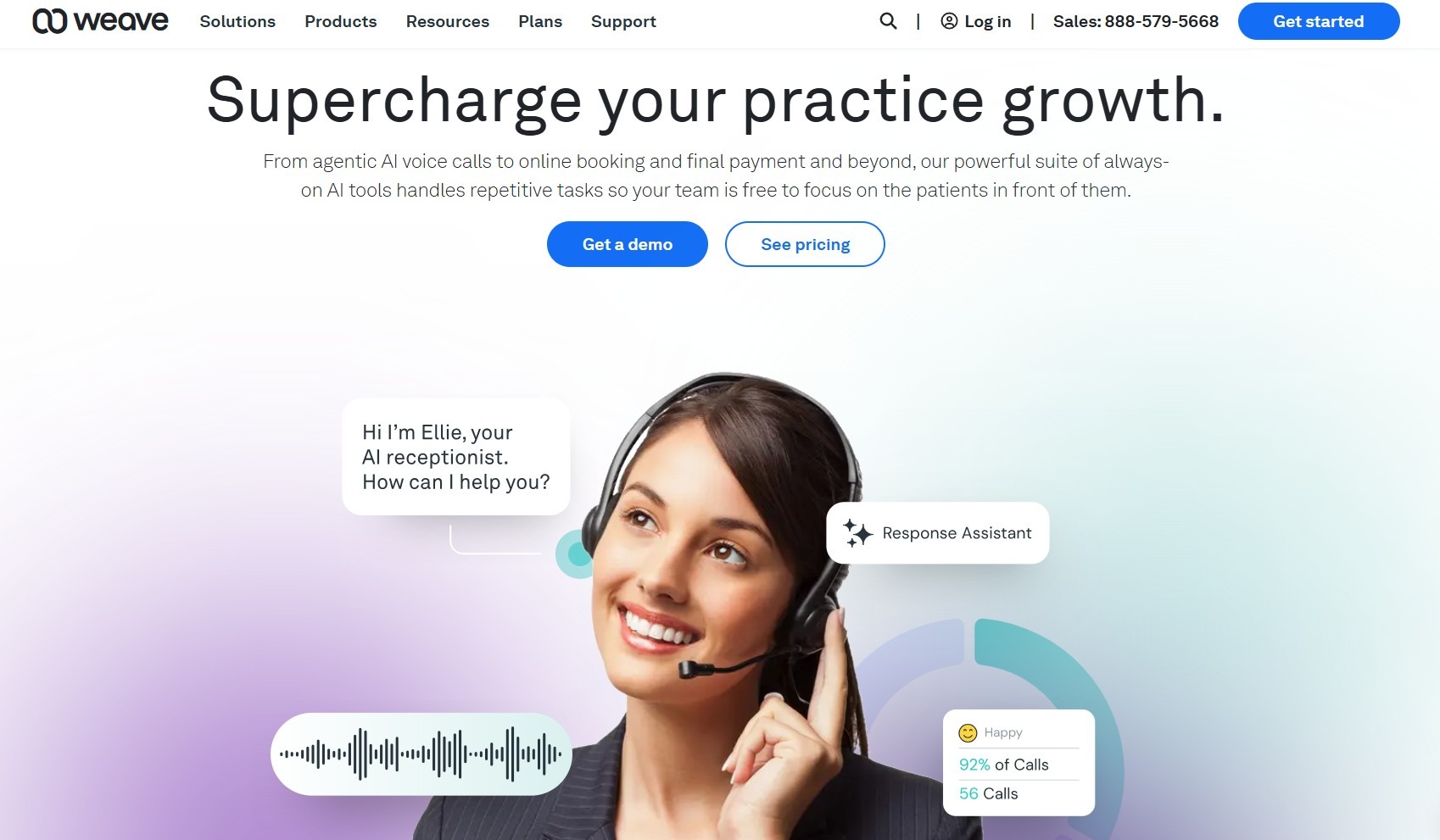
What it is: Weave is a HIPAA-compliant communication and practice growth platform combining a phone system with healthcare-focused AI tools.
Who it’s for: Small to mid-size practices with dedicated front desk staff managing calls, scheduling, and patient follow-up.
I tested Weave by running an inbound call scenario that pulled up sample patient appointment histories as soon as the phone rang. This feature could keep staff informed and shorten call times. However, Weave doesn’t offer a full suite of tools for clinical messaging or medical record management.
Features
- Automated appointment reminders: Customizable text, email, or phone reminders prompt patients to confirm or reschedule appointments. This feature reduces no-shows and keeps schedules full without extra staff work.
- Sentiment analysis of patient calls: Weave’s AI tools flag calls with negative sentiment, giving teams insight into potential patient concerns so they can address issues before they escalate.
Pros
- Unified communication hub: Weave replaces multiple disconnected tools with one platform. It puts calls, texts, scheduling, and billing in a single dashboard.
- AI insights for better service: Sentiment analysis and call tracking give practices actionable insights into patient satisfaction.
Cons
- Clinical messaging ceiling: Weave wasn't designed for provider-to-provider communication. The platform doesn’t provide clear routing rules or step-by-step handoffs.
- Limited customization: Practices with highly specialized scheduling or communication needs may find Weave’s premade workflows restrictive.
Pricing
Fill out a contact form on Weave’s homepage to get a quotation.
What Users Say
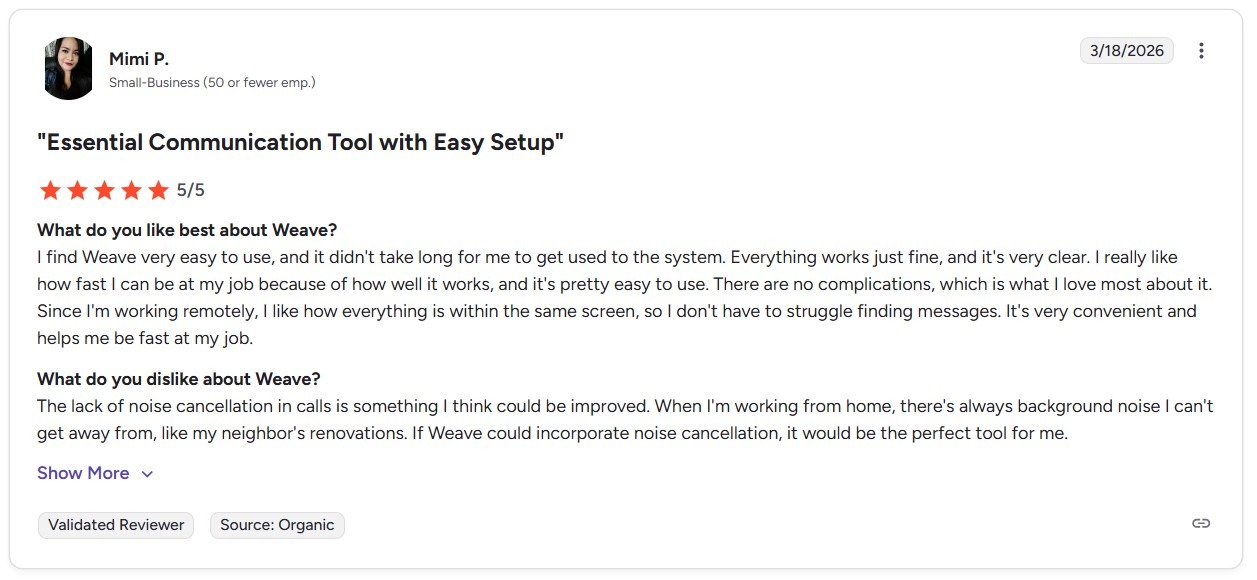
Pros: “I find Weave very easy to use, and it didn't take long for me to get used to the system. Everything works just fine, and it's very clear. I really like how fast I can be at my job because of how well it works, and it's pretty easy to use.” - Mimi P., G2
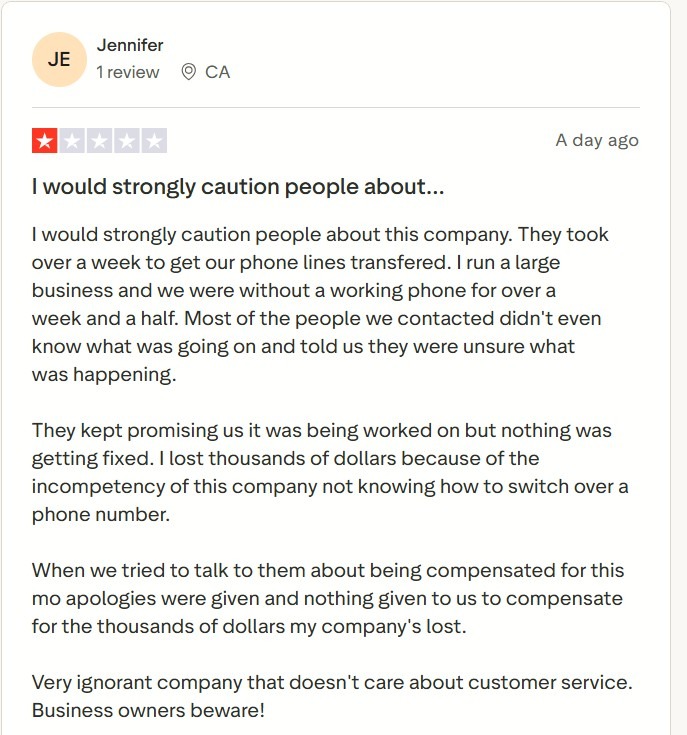
Cons: “I would strongly caution people about this company. They took over a week to get our phone lines transferred. I run a large business, and we were without a working phone for over a week and a half.” Jennifer, Trustpilot
The Bottom Line
Weave is well-suited for practices that want to combine phone, messaging, and payments into one platform. However, teams that need highly customized communication rules or more advanced patient engagement automation will likely be better served by Blaze.
#10. QliqSOFT: Best for Large Practices
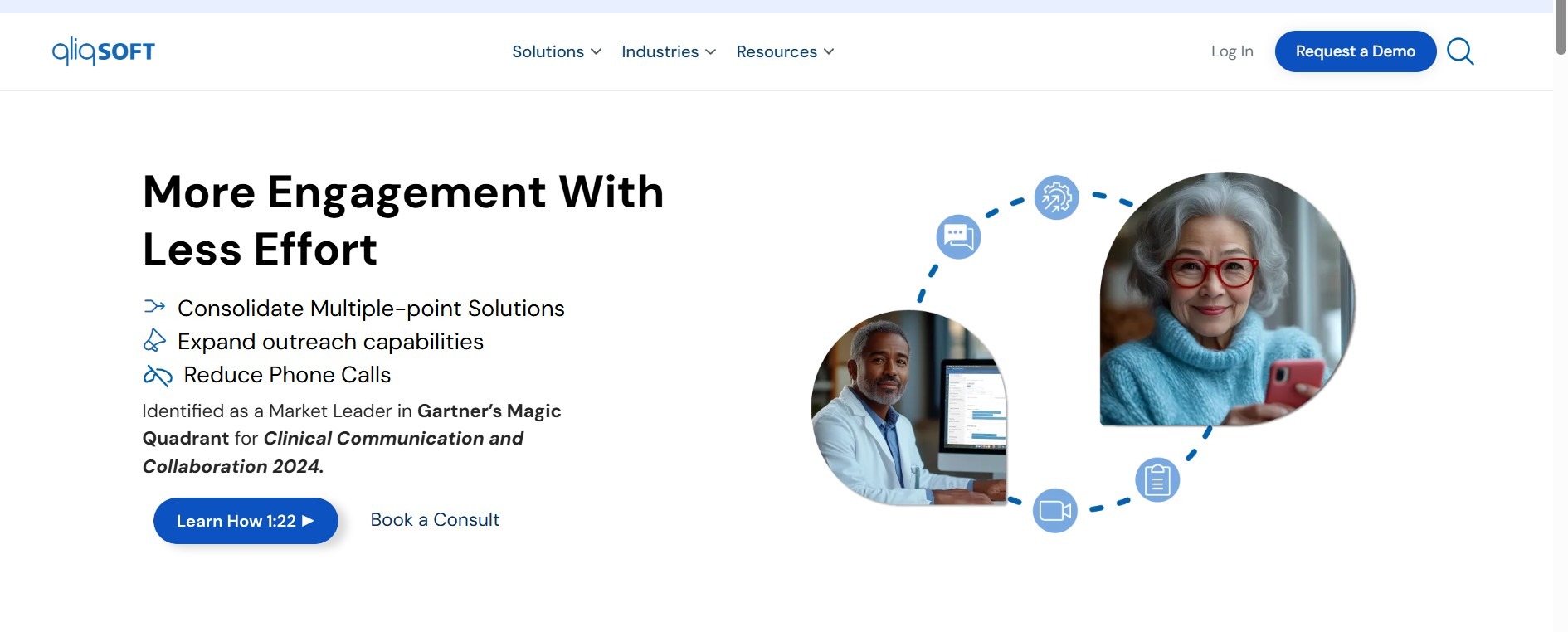
What it is: QliqSOFT is a HIPAA-compliant secure messaging and virtual care platform that supports patient-provider texting, telehealth, and advanced communication automation.
Who it’s for: Large practices managing high patient contact volume where manual intake and scheduling create daily operational backlogs.
I tested QliqSOFT by deploying its intake chatbot to handle pre-visit sample data collection. The bot collected sample insurance, symptoms, and consent responses without contacting anyone in other departments. However, setting up the bot requires backend integration knowledge, so non-technical staff will need to plan for a longer setup and onboarding process.
Features
- Broadcast and group messaging: Clinics can send mass updates about schedule changes, health alerts, or new services to targeted patient segments.
- EHR and system integrations: QliqSOFT connects with major EHR platforms, CRM tools, and scheduling systems.
- Telehealth integration: Launches HIPAA-compliant video visits directly from the patient messaging thread without redirecting to a separate platform.
Pros
- Communication hub: QliqSOFT combines secure messaging, telehealth, and broadcast communication in one platform, removing the need for separate tools.
- Automation that reduces staff burden: Features like intake chatbots and automated reminders free up the front desk and nursing staff.
Cons
- Adoption dependency: Qliq depends on patients using chatbot messages regularly for automation to work well. Patients less comfortable with technology often struggle.
- Learning curve: Large-scale implementation with multiple integrations can require significant onboarding and technical coordination.
What Users Say
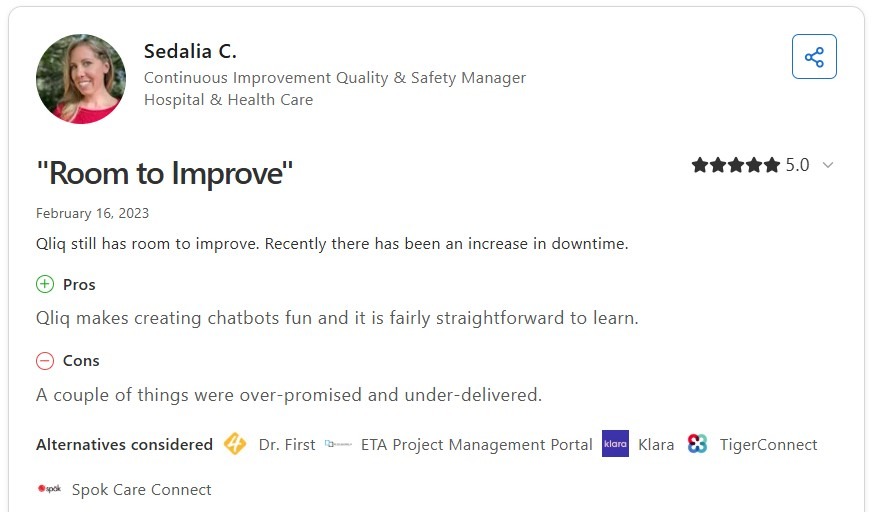
Pro: “Qliq makes creating chatbots fun, and it is fairly straightforward to learn.” - Sedalia C., Capterra
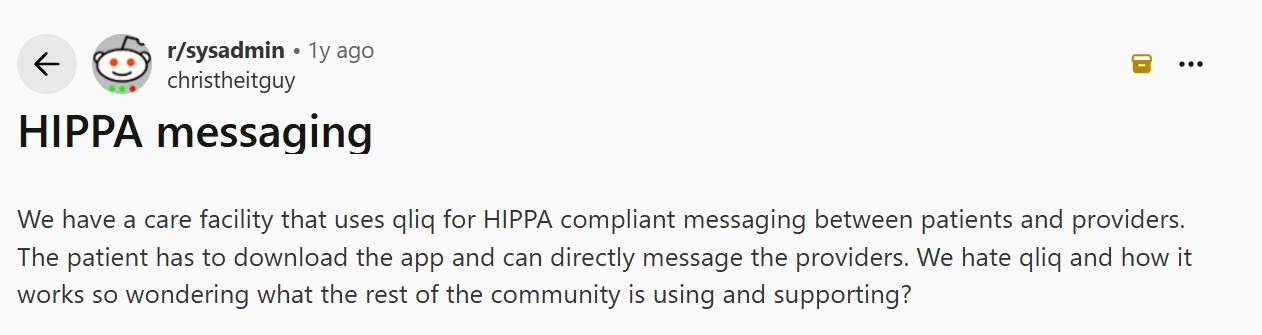
Con: “We hate qliq and how it works…” - System Admin., Reddit
Pricing
QliqSOFT doesn’t publish pricing, so visit their website for more information.
The Bottom Line
QliqSOFT makes sense for large practices that need intake, secure messaging, and telehealth in one system. If your workflows focus more on front desk tools than clinical features, Weave handles that faster without the extra setup.
Final Verdict: Which HIPAA-Compliant Messaging App Should You Choose?
You should choose a HIPAA-compliant messaging platform that meets your organization’s security, workflow, and communication needs. For example, a multi-location clinic might prioritize scalability and integrations with EHR systems.
Smaller specialty practices may instead focus on patient engagement features like automated appointment reminders and secure two-way texting.
Based on my analysis, these platforms stand out as the best fits for most users:
Choose Blaze If You:
Want to create your own customized HIPAA-compliant messaging app without code, allowing you to create apps that fit any workflow.
Choose TigerConnect If You:
Are a large clinic and need a secure communication platform to connect departments and locations.
Choose OhMD If You:
Run a high-volume outpatient practice and want two-way patient texting that works from your existing phone number without asking patients to download anything.
Choose Spruce If You:
Are a smaller practice ready to consolidate phone, fax, text, and voicemail into one inbox without involving an IT team.
Choose Paubox If You:
Want an encrypted email tool that patients can read directly in their inbox without accessing portals or inputting passwords.
Choose Klara If You:
Need a HIPAA-compliant messaging hub that simplifies all patient and staff communication, making it ideal for clinics that focus on telemedicine.
Choose symplr If You:
Operate a large health system and need message accountability and on-call routing across departments as daily requirements.
Choose Luma Health If You:
Manage multiple locations and need AI-driven automation to fill canceled appointment slots and track referrals.
Choose Weave If You:
Run a small to mid-size practice where the front desk handles calls, texts, scheduling, and payment collection.
Choose QliqSOFT If You:
Lead a large practice that needs intake automation, secure provider-to-patient texting, and telehealth running from a single platform.
When Should You Avoid These Tools?
You should only avoid HIPAA-specific messaging tools if your workflows never include PHI in electronic messages, whether internal or external. Confirm your workflow’s scope with a compliance lead before implementing.
Use Blaze to Develop Your Own HIPAA-Compliant Messaging App
Healthcare providers need secure, compliant apps without massive development costs. Blaze's no-code platform, with its powerful drag-and-drop interface, lets you create safe, HIPAA-compliant messaging apps at breakneck speeds. Here’s how:
- Build more than just a messaging app: Blaze provides the tools to create a HIPAA-compliant messaging app. But it also offers a platform for creating other healthcare apps, like a healthcare management system, EHRs, and workflow automations.
- Scalability: Blaze supports expanding inventory databases with ample storage and processing power. You can build as many apps as you need to meet your workflows.
- Helpful implementation team: They’ll help you understand how to use the platform to reduce the time it takes to create your app. The team will also ensure your app gets published and runs smoothly.
Want to see how Blaze can help you build a secure, HIPAA-compliant messaging app and software that you can customize to fit your exact workflows? Schedule a Free Demo Today.
Frequently Asked Questions
Do All HIPAA-Compliant Healthcare Chat Apps Offer a BAA?
Yes, all HIPAA-compliant healthcare chat apps must offer a Business Associate Agreement (BAA) to ensure the protection of protected health information (PHI). This contract ensures the vendor will properly safeguard protected health information (PHI). Even if a platform claims HIPAA compliance, confirm it will sign a BAA for PHI workflows.
Is End-To-End Encryption Enough for HIPAA Compliance?
No, end-to-end encryption alone is not enough for HIPAA compliance. HIPAA also requires access controls, audit logs, secure storage, and a signed BAA. Full compliance includes both technical safeguards and administrative protocols.
Can I Build My Own HIPAA-Compliant Messaging App?
Yes, you can build your own HIPAA-compliant messaging app using a platform that complies with HIPAA standards. No-code app builders like Blaze offer built-in HIPAA-compliant features like role-based permissions and data encryption. But you’ll need to configure your messaging app correctly and follow HIPAA procedures to achieve full HIPAA compliance.
Sources
1. U.S. Department of Health & Human Services. “Summary of the HIPAA Security Rule.” HHS.gov. https://www.hhs.gov/hipaa/for-professionals/security/laws-regulations/index.html
2. U.S. Department of Health & Human Services. “Security Rule Guidance Material.” HHS.gov. https://www.hhs.gov/hipaa/for-professionals/security/guidance/index.html
3. National Institutes of Health: StatPearls. “Health Insurance Portability and Accountability Act (HIPAA) Compliance.” NCBI. https://www.ncbi.nlm.nih.gov/books/NBK500019/
The Secure No-Code & AI Platform
Supercharge your team's operations and performance with better apps and tools.
Create custom apps fast
Secure & HIPAA compliant
Streamline complex workflows

The Secure No-Code Platform
Build apps with best-in-class security.
Related Articles
Discover related guides on healthcare no-code development, HIPAA compliance, security, integrations, and launching apps faster.
10 Best HIPAA-Compliant Telehealth Platforms and Features | 2026
HIPAA-compliant telehealth platforms provide secure medical visits. Top platforms are Doxy.me and Zoom for Healthcare. Compare tools and learn your best fit.
.png)
10 Best Replit Alternatives: Tested for Developer Tasks (2026)
After comparing 10 Replit alternatives, I found differences in compliance features and needed coding skills. Discover platforms and prices to find the best fit.
%20(1).png)
Healthcare Claims Automation: How It Works (2026)
Healthcare claims automation connects systems to reduce repetitive work. Explore the 9 workflow stages that show how eligibility, validation, and payments move.