
Table of contents
Top 11 Mendix Alternatives & Competitors: How to Choose | 2026

Written by
Blaze Team

Reviewed by
Justyna Wojcik
Expert Verified
If Mendix doesn’t fit your budget or your team's technical expertise, several strong alternatives are worth considering. The best Mendix alternatives include OutSystems for enterprise development, Appian for workflow automation, and Blaze.tech for healthcare teams seeking implementation support.
I compared 11 platforms based on usability, scalability, and pricing, testing the tools I could access directly. When I encountered enterprise platforms, I evaluated them through product documentation and customer case studies.
By the end, you'll know which Mendix alternative best matches your use case, budget, and technical requirements.
11 Best Mendix Competitors in 2026
- OutSystems: Best for Large Enterprise Application Development
- Appian: Best for Workflow Automation and Case Management
- Blaze: Best for Healthcare Teams Needing Implementation Support
- Quickbase: Best for Internal Operational Applications
- Betty Blocks: Best for Enterprise No-Code Development
- Caspio: Best for Database-Driven Business Applications
- Unqork: Best for Regulated Enterprise Applications
- Airtable: Best for Spreadsheet-Based Business Workflows
- Microsoft Power Apps: Best for Microsoft-Centric Organizations
- Google AppSheet: Best for Google Workspace Applications
- Bubble: Best for Startup Web and Mobile Applications
How to Choose the Right Mendix Alternative for You
Each of the Mendix alternatives on my list serves a different purpose. Here’s how to pick the right one for your needs:
Choose OutSystems If You:
Build large enterprise applications that require extensive customization, complex integrations, and the scalability to support thousands of users.
Choose Appian If You:
Automate repetitive business processes, approval workflows, and case management across multiple departments with strong process automation capabilities.
Choose Blaze If You:
Need healthcare-ready security, implementation support, and a platform that lets non-technical teams launch in weeks, not months.
Choose Quickbase If You:
Manage relational business data, project tracking, and operational workflows that require customizable databases and real-time collaboration.
Choose Betty Blocks If You:
Want true no-code development, Microsoft integrations, enterprise governance, or the flexibility to deploy applications on-premises.
Choose Caspio If You:
Build secure database-driven applications, customer portals, reporting dashboards, or internal tools that depend on structured business data.
Choose Unqork If You:
Work in a highly regulated industry requiring enterprise governance and compliance controls.
Choose Airtable If You:
Organize projects, marketing campaigns, and business operations using flexible spreadsheet-style databases with strong collaboration features.
Choose Power Apps If You:
Already use Microsoft 365, SharePoint, Dynamics, or Azure and want applications that integrate with your existing ecosystem.
Choose AppSheet If You:
Use Google Workspace and need simple, spreadsheet-like apps built directly from Google Sheets and other Workspace tools.
Choose Bubble If You:
Create customer-facing web and mobile apps, MVPs, or startup products that require extensive design flexibility without traditional coding.
What I Looked for in Mendix Competitors
Although Mendix offers an excellent free version with strong AI app-building capabilities, I looked for simplicity and scalability when evaluating Mendix competitors. Because it’s a low-code platform, building some workflows and apps with Mendix is complicated and requires some programming knowledge.
Here’s a closer look at the features I compared:
- Ease of Use: Many businesses want a platform that’s easy to use, with a drag-and-drop interface accessible for everyone. The best alternatives help anyone on your team to create and manage applications without extensive training.
- Scalability and Customization: A strong alternative should grow with your business, supporting both small and complex applications. Customization is crucial to avoid limitations and adapt the platform to your exact needs.
- Security and Compliance: Security is critical for industries handling sensitive data. Look for an alternative with built-in compliance features like HIPAA or SOC 2 standards, protecting your data and your users.
- Cost-Effectiveness: For startups and small businesses, budget matters. Seek options with clear, flexible pricing that scales as you grow—without hidden fees.
- Integration Capabilities: Seamless integration with existing tools is key. The right platform will connect with CRMs, databases, ERP systems, and more, keeping workflows smooth and data unified.
Quick Mendix Alternative Recommendations
1. OutSystems: Best for Large Enterprise Application Development
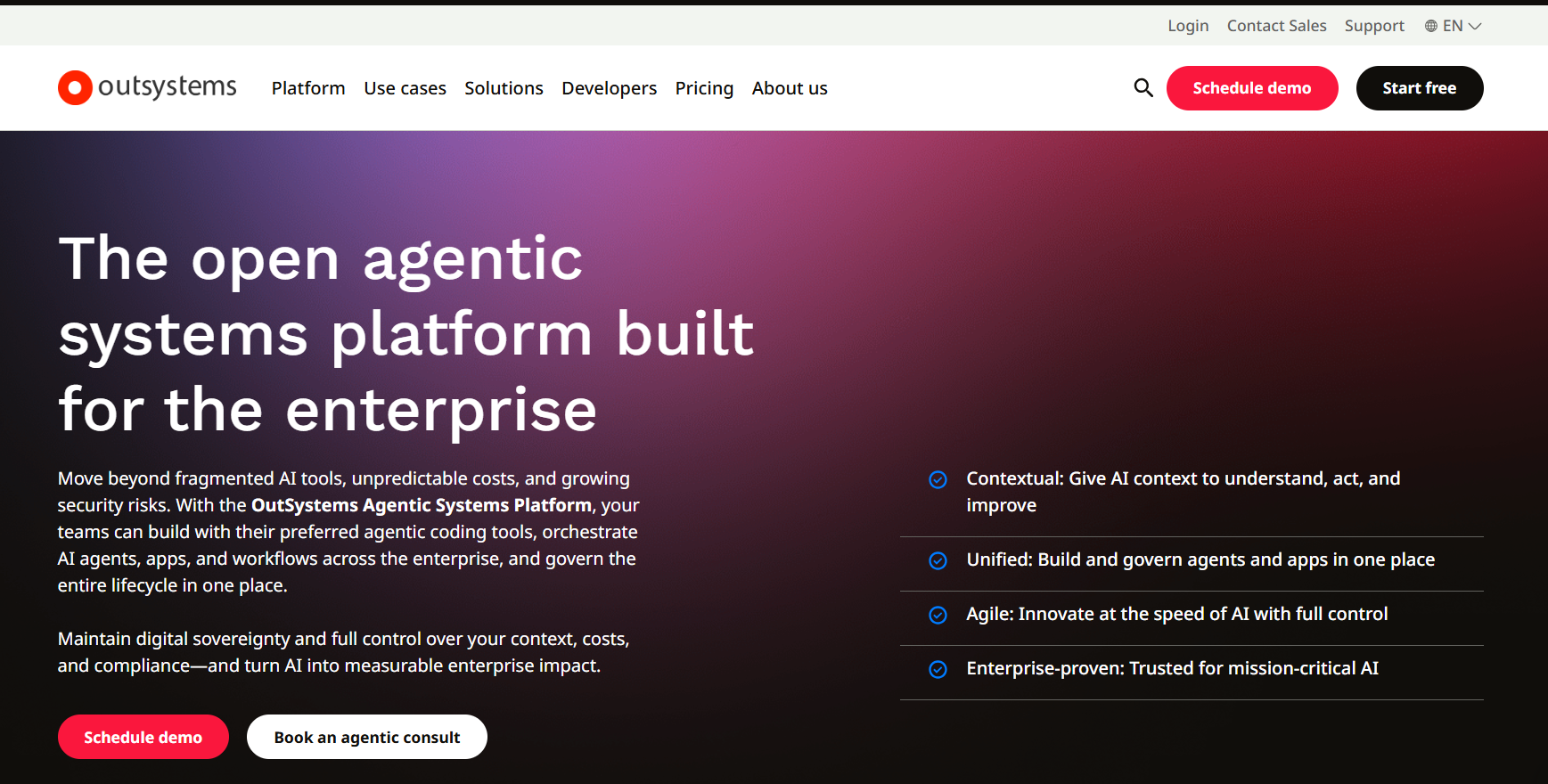
OutSystems is a low-code Mendix competitor with an AI-driven approach to help organizations build powerful business applications. Its full capabilities may require some coding skills, but OutSystems is built for scalability.
Key Features
- Built for large-scale applications: OutSystems is designed to handle high traffic and complex workflows, making it suitable for enterprises with demanding application needs.
- AI-driven code optimization: The platform’s AI tools assist developers by suggesting code improvements that enhance performance and ensure security, helping streamline development for complex projects.
- Seamless integration options: OutSystems offers a range of integrations, allowing easy connectivity with existing enterprise systems and APIs, which supports efficient data flow and operational consistency.
- Flexible development with custom coding options: While OutSystems provides a drag-and-drop interface, developers can also add custom code, giving them more control over the final look and functionality of applications.
Best for
- Large enterprises that need reliable, scalable applications for both internal and customer-facing use cases.
- Healthcare providers developing HIPAA-compliant apps where security and data privacy are top priorities.
- Financial services handling sensitive transactions and customer data in secure, compliant applications.
- Government agencies looking for dependable solutions to support public service operations.
Pros
✅ Enterprise-grade reliability: Handles mission-critical, high-traffic apps without the performance ceiling many low-code tools hit.
✅ Regulated-industry fit: Strong track record in healthcare, finance, and government where compliance and audit trails matter.
✅ Hybrid dev workflow: Lets visual builders and professional coders collaborate on the same app without hitting a rewrite wall.
Cons
❌ Vendor lock-in risk: You’ll build applications on OutSystems' proprietary platform, so migrating to another development platform can require significant redevelopment.
❌ High enterprise pricing: Enterprise licensing is custom quoted and can become expensive for larger deployments, making OutSystems less practical for startups and smaller organizations.
Pricing
Contact the OutSystems team for a custom quote.
2. Appian: Best for Workflow Automation
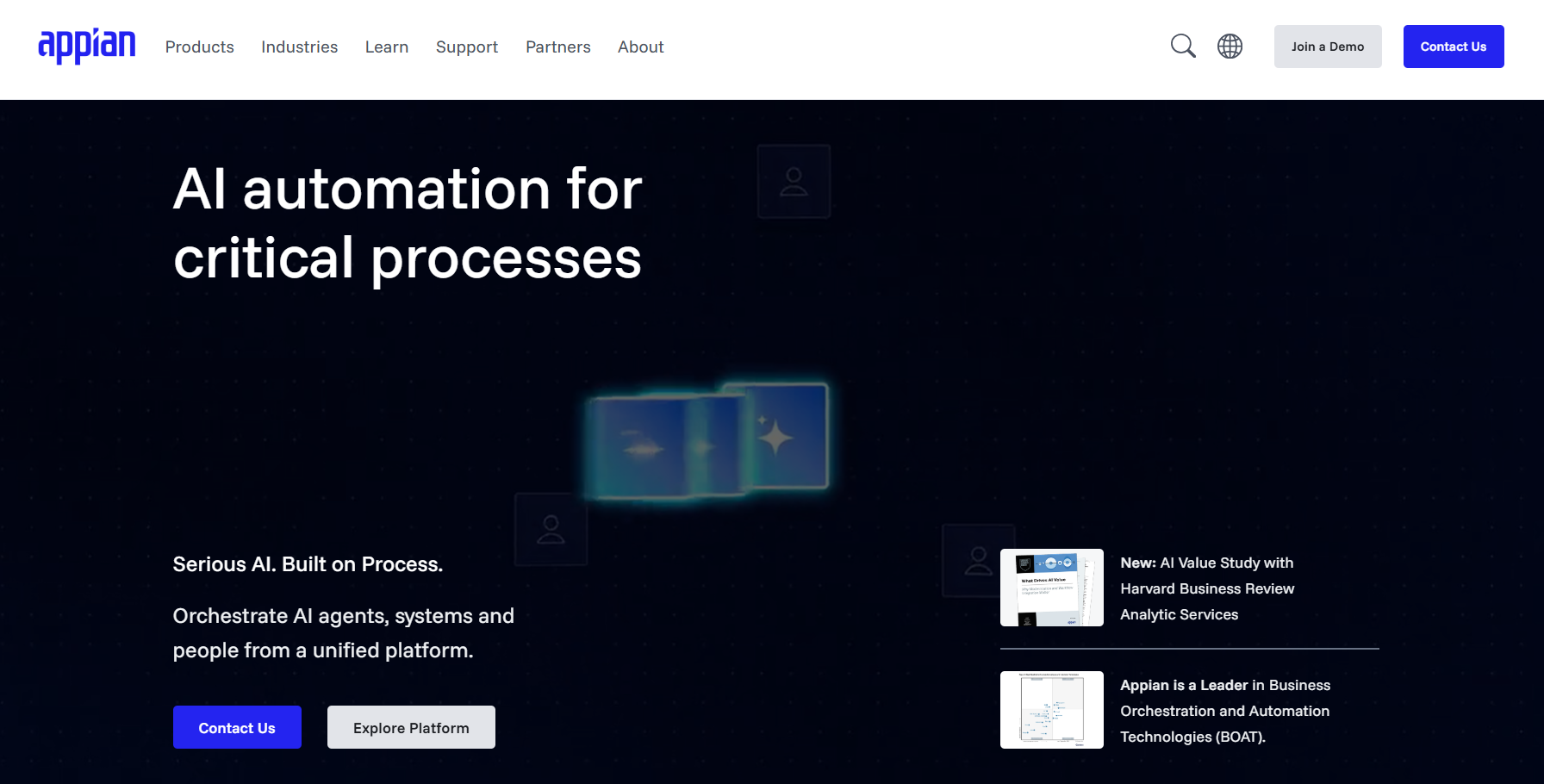
Appian is designed for businesses focused on workflow automation and process management. With tools that simplify the automation of repetitive tasks, Appian helps organizations manage complex business processes.
Key Features
- Workflow automation for repetitive tasks: Appian simplifies routine processes by automating tasks that would otherwise require manual intervention, saving time and reducing errors.
- Robotic Process Automation (RPA): Connects various applications without needing APIs, enabling seamless task automation across systems and minimizing the need for custom integrations.
- Digital Process Automation (DPA): Automates tasks involving human input across multiple systems, making it easier to manage multi-step workflows that span departments.
- Data management tools: Provides a suite of tools for data modeling, integration, and visualization, making it easier to analyze and manage data within applications.
- Flexible deployment options: Appian applications can be deployed either on-premises or in the cloud, allowing organizations to choose based on their infrastructure requirements.
Best for
- Large enterprises handling complex workflows across multiple departments.
- Financial institutions that must automate processes like compliance management and customer onboarding.
- Government agencies looking to improve their public services and streamline collaboration across departments.
Pros
✅ Fast workflow prototyping: Teams can rapidly prototype workflows and iterate on applications using Appian's visual development environment.
✅ No-API integration: RPA (Robotic Process Automation) connects legacy systems and third-party apps even when clean APIs don't exist.
✅ Compliance-ready audit trails: Built-in task tracking and audit logs suit regulated processes like onboarding and claims.
Cons
❌ Team development needs careful coordination: Teams working on the same application can run into deployment conflicts or overwritten changes without disciplined development practices.
❌ Learning curve for advanced apps: Complex applications often require Appian's expression language, reducing the no-code experience for advanced development.
Pricing
You’ll need to contact Appian for pricing details.
3. Blaze.tech: Best for Healthcare Teams Needing Implementation Support
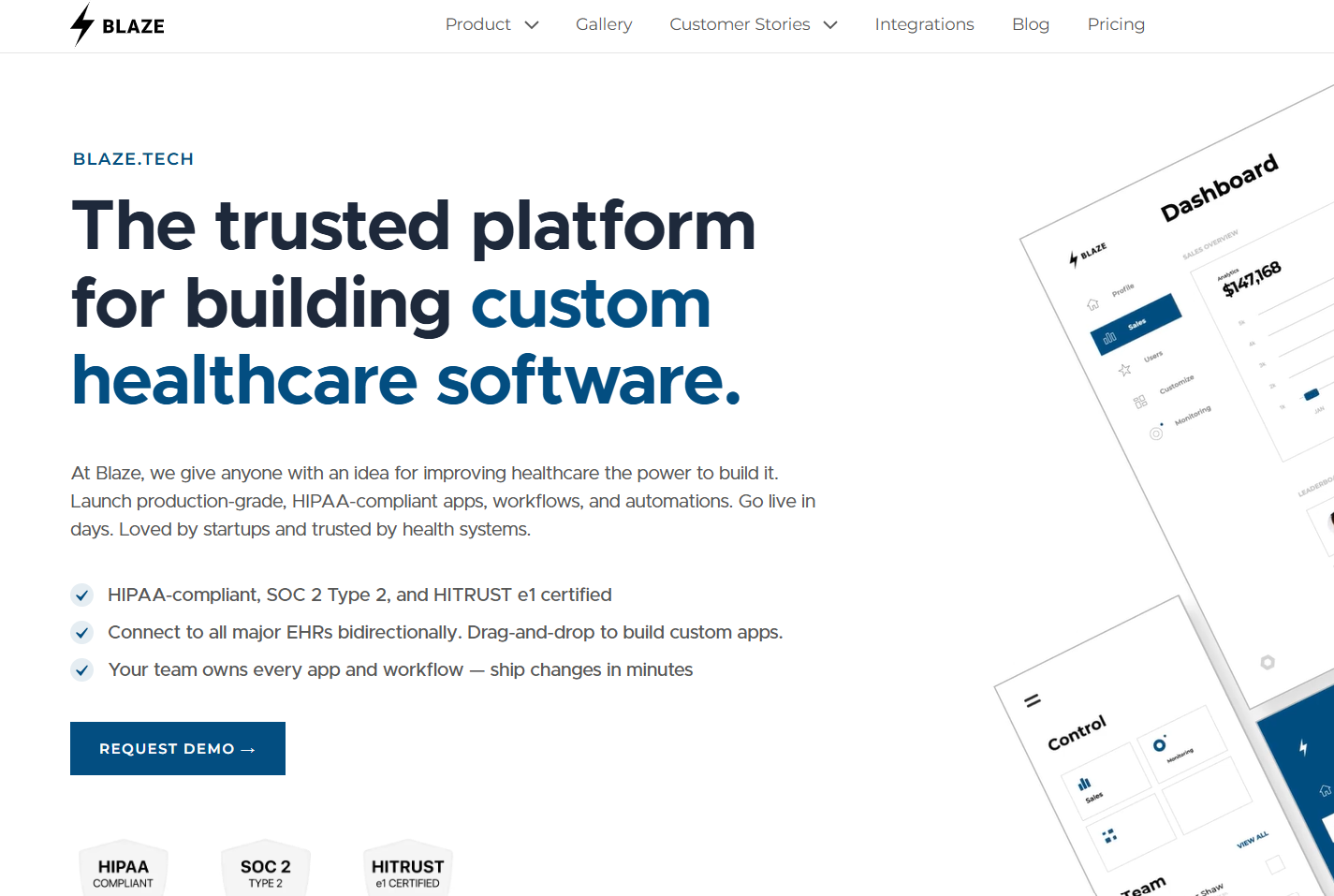
Blaze combines vendor assistance with the option to self-build, so you can create custom healthcare applications for both patients and providers.
Key Features
- Enterprise security and compliance: Blaze offers SOC 2 Type II certification and HIPAA-enabling features, providing a very high level of data security.
- Ease of use and speed: Blaze lets you build applications faster than many other self-build platforms. You can easily select components and connect databases to simplify the development process.
- Extensive integrations: Blaze connects with a wide range of APIs and custom integrations, allowing for complex workflows across applications.
- Library of pre-built components: Blaze provides a rich set of widgets for diverse app needs, from data visualization to interactive user features, reducing the need for custom coding.
Best for
- Large enterprises creating patient-facing applications like patient portals, intake systems, and care management platforms.
- Startups and scale-ups focused on fast, iterative application development as they grow.
- Teams needing development support to get started quickly can benefit from Blaze’s implementation team, which assists with building the first version of their app.
- Non-technical teams who are seeking an intuitive tool to create and manage applications independently.
Pros
✅ OpenAI integration under a BAA: Use OpenAI for patient intake, document extraction, CPT coding, and clinical support while operating under a Business Associate Agreement.
✅ Healthcare experience: Proven experience building compounding pharmacy platforms, behavioral health EHRs, patient portals, and multi-tenant laboratory systems.
✅ Advanced workflow automation: Automate multi-step clinical and operational processes across departments.
Cons
❌ Complex EHR integrations take longer: Epic, athenahealth, and other EHR integrations can increase implementation time and project costs.
❌ Few specialty templates: Most applications are built around your organization's requirements instead of using specialty-specific starter templates.
Pricing
Blaze pricing starts at $1,500/month. For HIPAA-enabling features and a BAA (Business Associate Agreement), contact the sales team for a custom quote.
4. Quickbase: Best for Internal Operational Applications
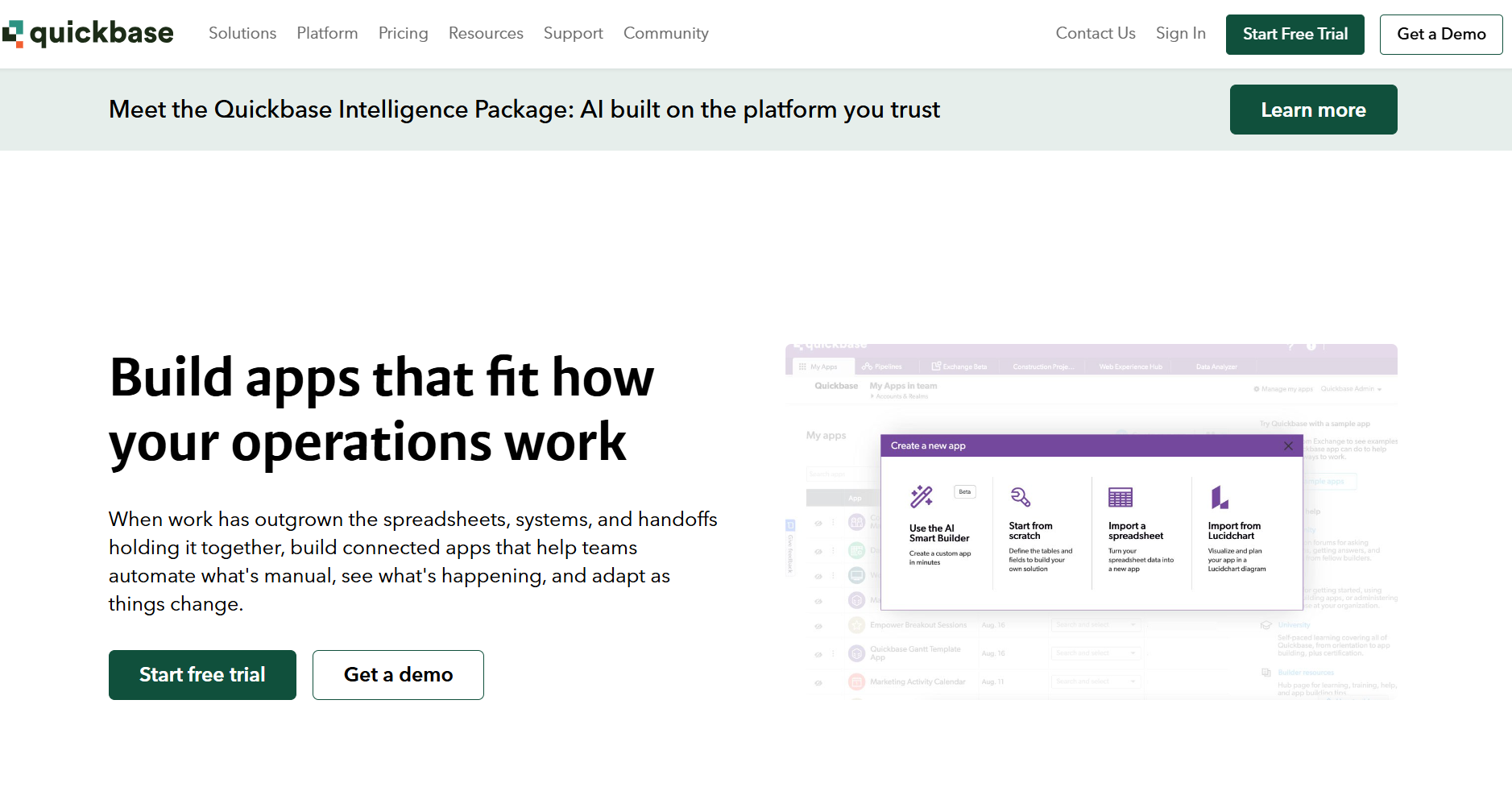
Quickbase is a low-code platform built for data management and project tracking, making it a strong choice for organizations managing complex data relationships.
Key Features
- Data-centric relational database: Quickbase’s database structure allows users to establish complex relationships between data points, making it ideal for teams managing large, interconnected datasets.
- Granular role-based security: Provides fine-tuned control over who can view or edit specific data fields and records, enhancing data security and access management.
- Customizable forms and adaptable workflows: Offers dynamic forms and workflows that adjust based on user input, simplifying data entry and making processes more responsive.
- Real-time automated notifications: Keeps teams informed with instant updates on changes to data, helping streamline collaboration and ensuring everyone stays on the same page.
Best for
- Data-focused project management teams that require strong relational data handling.
- Companies handling large, complex datasets where data connections are crucial for operational insights.
- Organizations prioritizing data security with detailed access controls and role-based permissions.
- Businesses with frequent data updates that benefit from real-time notifications for improved team collaboration.
- Teams that need customizable workflows to simplify and accelerate data collection and task management.
Pros
✅ Precise access control: Field- and record-level permissions suit teams with mixed internal and external users.
✅ Adaptive data entry: Forms and workflows change based on input, cutting down on bad or incomplete records.
✅ Fast internal-tool builds: Non-dev teams stand up operational apps for tracking and reporting without waiting on IT.
Cons
❌ Minimum seat requirements: The Team plan requires a minimum of 20 users at $35/user/month, pricing out small teams that just need a handful of licenses.
❌ API rate ceilings: Throttling kicks in around 10 requests per second per table on the XML API and 100 requests per 10 seconds per user token on REST, which can bottleneck teams needing heavy real-time integrations.
Pricing
Quickbase’s pricing plans start at $35/month per user.
5. Betty Blocks: Best for Enterprise No-Code Development
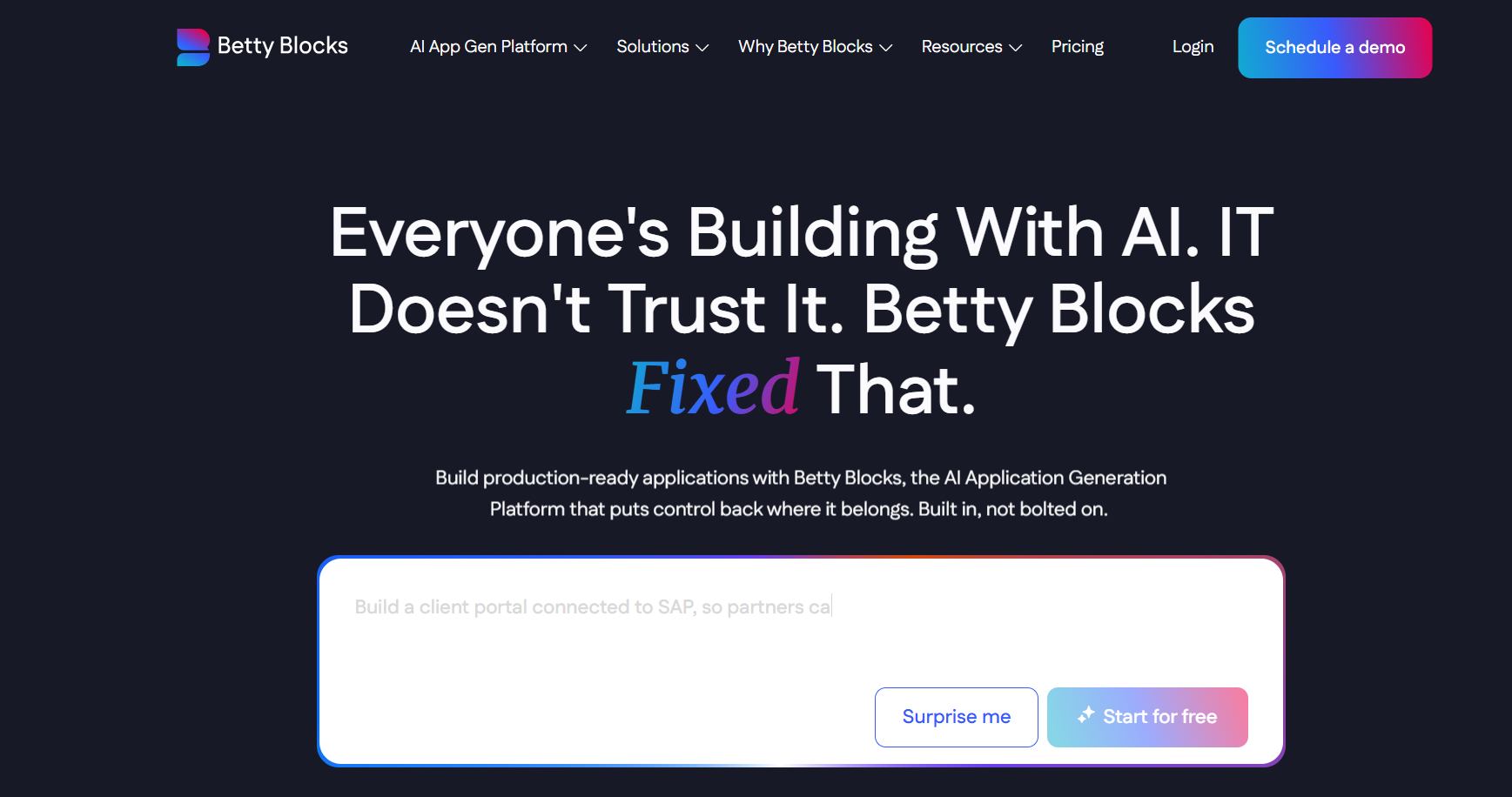
Betty Blocks is a no-code platform designed for creating progressive web apps (PWAs) and web applications, which large enterprises and Fortune 500 companies widely use.
It enables non-technical users to build applications without needing any coding knowledge, supporting both cloud and on-premises hosting for flexible control over data and infrastructure.
Key Features
- True no-code development: Betty Blocks provides a fully no-code environment, allowing users without technical expertise to develop applications, unlike Appian’s low-code setup.
- On-premises hosting option: As one of the few platforms to support on-premises deployment, Betty Blocks lets IT teams manage data and infrastructure directly.
- Microsoft integration: Integrates seamlessly with Microsoft 365 and Azure, including one-click deployment to Azure servers, making it ideal for organizations already using Microsoft tools.
- User-friendly design for non-developers: Build your app with an AI prompt, then use the drag-and-drop interface to customize your app. Or, start with a premade template instead.
Best for
- Large enterprises and Fortune 500 companies needing a secure, no-code app development platform with strong integration features.
- IT teams in enterprises that prefer on-premises solutions for greater control over data and infrastructure.
- Non-technical business teams who want to develop and deploy applications without relying on coding expertise, benefiting from Betty Blocks’ true no-code environment.
Pros
✅ Rapid application development: Create customer-facing and internal business applications without writing traditional code.
✅ Custom workflow automation: Build tailored business workflows with configurable forms, logic, and approvals without traditional coding.
✅ Enterprise rules: Role-based permissions and access controls help organizations manage application access across teams.
Cons
❌ No self-hosting option: Betty Blocks is delivered as a SaaS platform and doesn’t offer traditional self-hosted deployments for organizations requiring complete infrastructure control.
❌ No code export: The platform doesn’t give you access to your underlying application code, so moving applications to another platform typically requires rebuilding them.
Pricing
Betty Blocks’ pricing starts at €1,500/month.
6. Caspio: Best for Database-Driven Business Applications
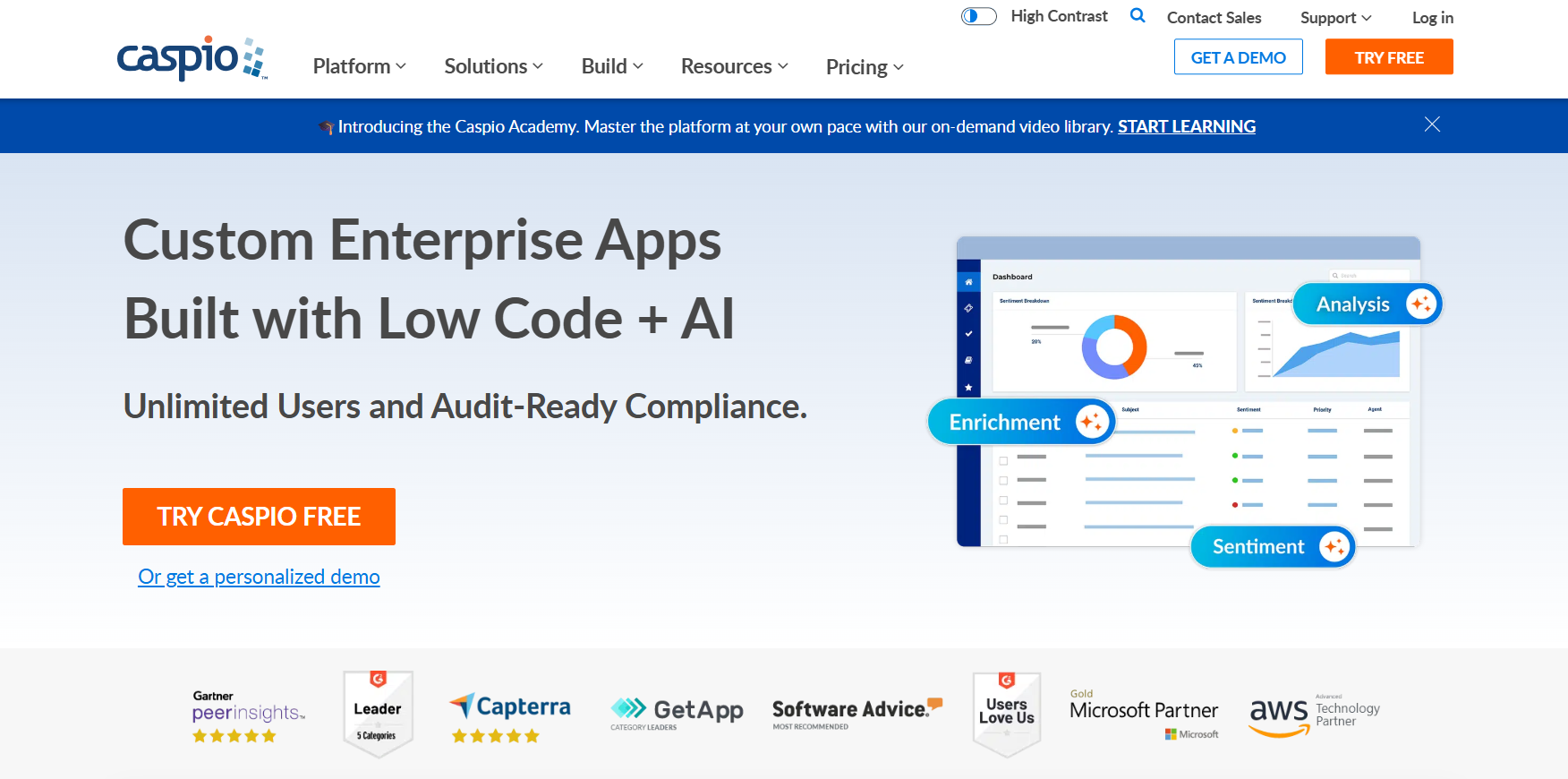
Caspio is a no-code platform tailored for building data-driven applications, making it ideal for businesses that rely on extensive data management and reporting.
Key Features
- Database-centric application builder: Caspio’s tools allow users to create custom databases and relational structures, supporting complex data applications without needing any programming skills.
- Flexible data presentation options: Users can build custom search forms, generate reports, and create interactive dashboards, making it easy to organize and display large datasets.
- Advanced security and authentication: Caspio offers custom authentication features, including password policies, branded login pages, and role-based access to protect data privacy.
- Custom domain deployment with SSL: Allows businesses to host applications on their domains, providing a professional look and secure access through SSL certification.
Best for
- Data-driven organizations that prioritize robust data management and require detailed reporting and security features.
- Research institutions that need precise data collection and processing capabilities to support their studies.
- Medium to large teams that need detailed data applications with advanced automation and integration options.
Pros
✅Unlimited user pricing: All plans include unlimited app users, making it cost-effective for apps with large or growing user bases.
✅ Fast deployment cycle: Built-in cloud hosting and deployment tools let teams publish web applications quickly without managing separate infrastructure.
✅ Strong compliance coverage: Caspio supports SOC 2 Type II, PCI DSS, GDPR, HIPAA, and FERPA requirements, making it well suited for regulated industries when properly configured.
Cons
❌ Limited backend flexibility: Advanced customization is limited for complex applications involving SQL servers or backend logic, making Caspio less suitable for highly customized enterprise systems.
❌ Expensive feature expansion: Add-ons, professional services, and higher-tier plans can significantly increase long-term costs, making larger deployments more expensive over time.
Pricing
Caspio pricing starts at $300/month.
7. Unqork: Best for Regulated Enterprise Applications
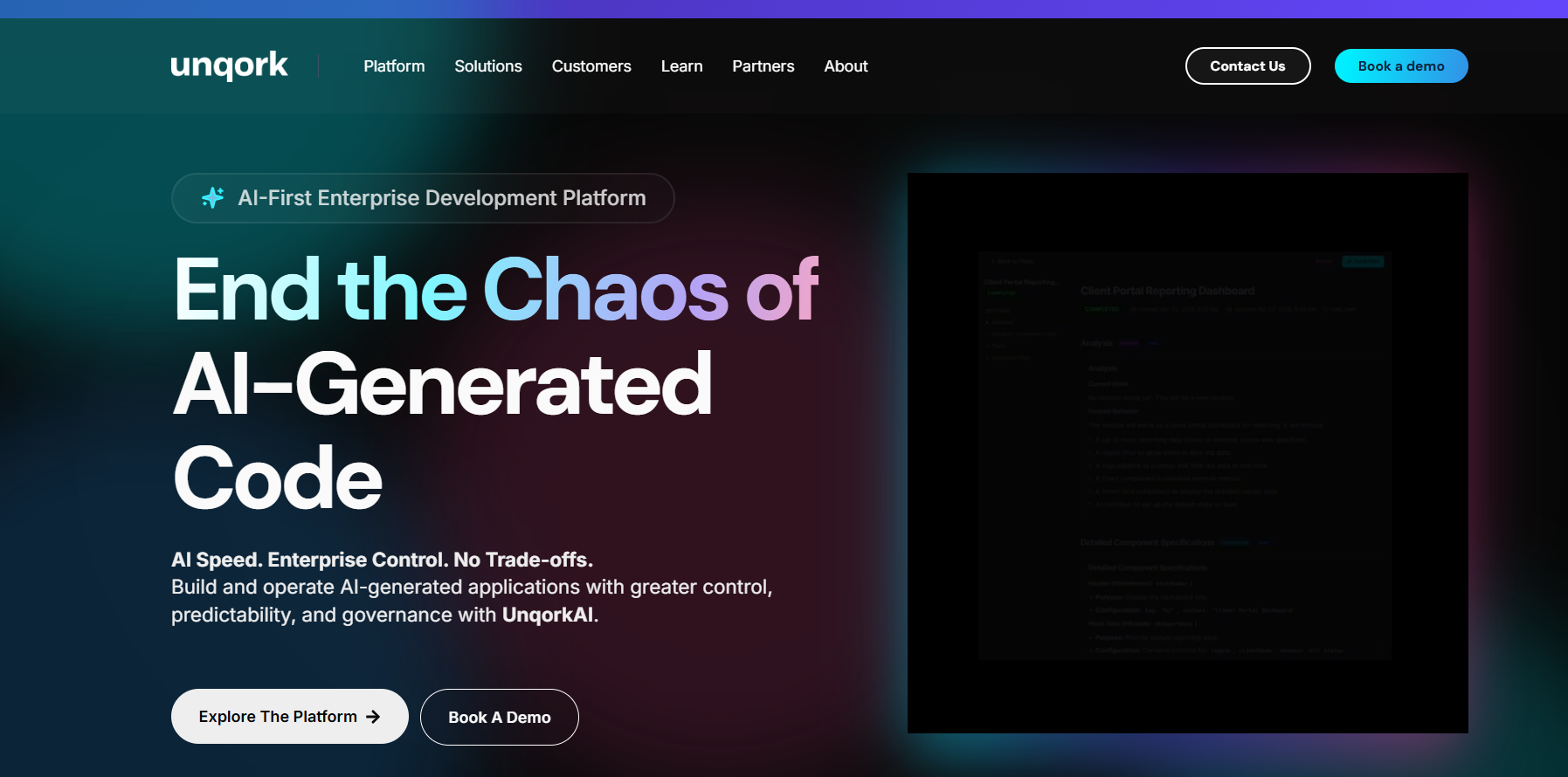
Unqork is a no-code platform aimed at large enterprises that need to build complex, secure, and compliant applications. It’s known for its focus on meeting rigorous industry standards and is best suited for developing customer portals and other enterprise-grade solutions.
While it offers robust capabilities for handling demanding workflows, its focus on complexity may be more than what smaller organizations need or can handle.
Key Features
- Extensive no-code capabilities: Unqork enables the creation of complex applications without any coding, making it easier for enterprises to build sophisticated solutions.
- Enterprise-grade security: Includes advanced security measures designed to meet high standards, which are crucial for protecting sensitive data in large organizations.
- Compliance-focused features: The platform supports various compliance requirements, making it a solid choice for businesses in heavily regulated industries.
- Enterprise software integration: Provides seamless integration with other enterprise-level software, allowing businesses to connect Unqork applications with existing systems effortlessly.
Best for
- Large enterprises with complex application needs, particularly those requiring high levels of customization and scalability.
- Highly regulated industries (e.g., finance, healthcare) where compliance is critical to business operations.
- Organizations with significant resources and a need for sophisticated, custom solutions that can integrate seamlessly with existing enterprise systems.
Pros
✅ Less technical skills needed: Unqork's no-code platform reduces the amount of custom code teams must maintain over time.
✅ Built for regulated industries: Organizations in financial services, insurance, healthcare, and other highly regulated industries will find Unqork compatible with their needs.
✅ Cloud deployment flexibility: Unqork supports deployments across major cloud environments, giving enterprises flexibility when planning infrastructure.
Cons
❌ Enterprise-only focus: Unqork targets large organizations, making it less practical for startups, small businesses, and individual developers.
❌ Complex logic limitations: Highly specialized business logic may be more difficult to implement than in traditional code-based development.
Pricing
Contact Unqork’s sales team for a custom quote.
8. Airtable: Best for Spreadsheet-Based Business Workflows
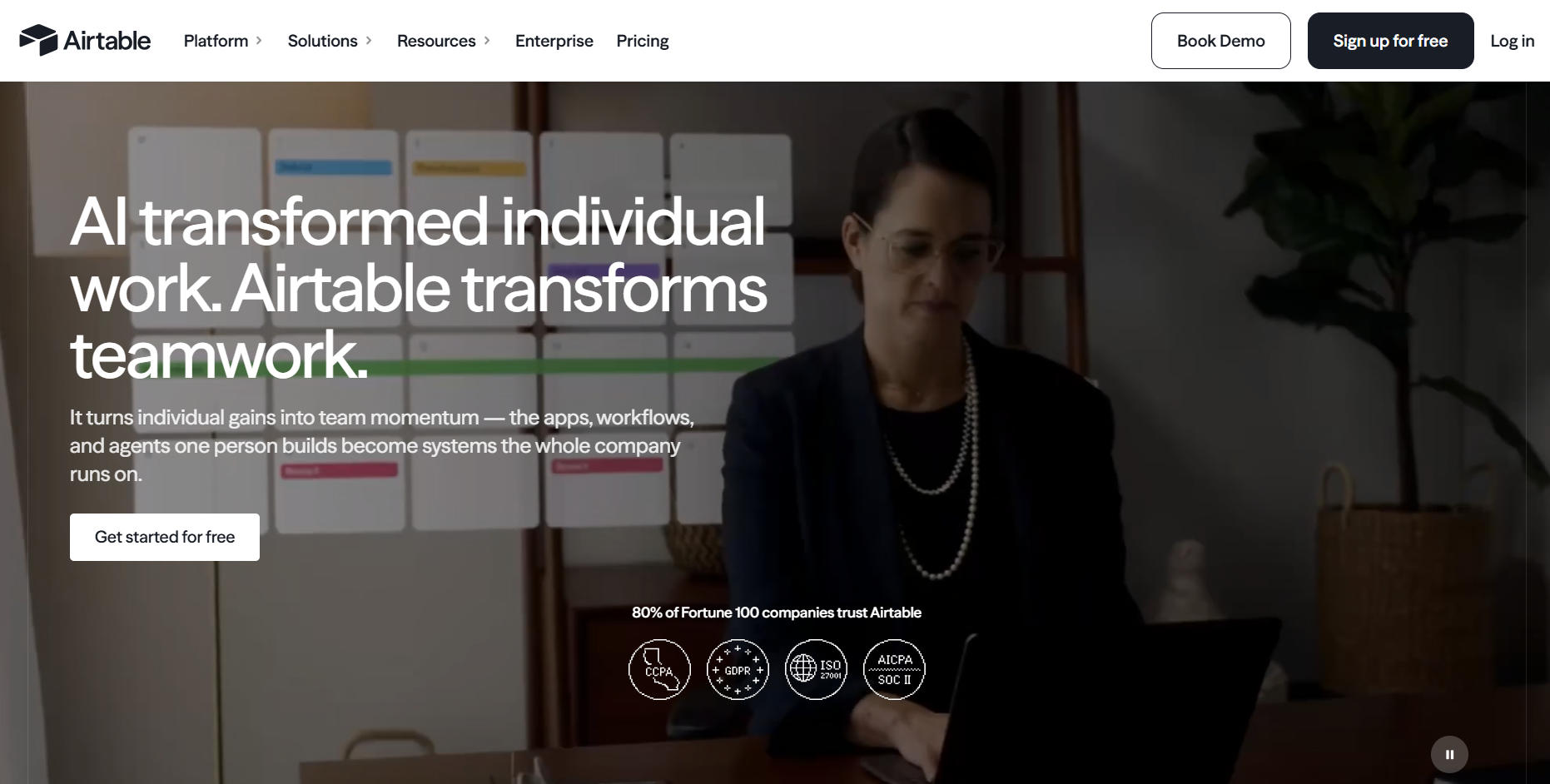
Airtable stands out as a powerful AppSheet alternative with a database-centric approach that's both versatile and user-friendly. It has many design templates, tools, and integrations for fast and simple data management.
Key Features
- Intuitive database management: Airtable's core strength lies in its database functionality, making it easier to store, manage, and access data with greater flexibility.
- Visual project management: Create detailed project views, such as Gantt charts, Kanban boards, and pivot tables, to effortlessly track tasks, deadlines, and milestones.
- Customization: Adapt Airtable to your unique workflows with its flexible features and user-friendly interface.
- Collaboration: Airtable excels at team collaboration, making it easy for multiple users to work on the same project simultaneously.
Best for
- Small businesses looking for advanced spreadsheet alternatives that provide additional features like custom fields and integrations, making it easier to manage data efficiently.
- Teams that need visual project management tools, such as Gantt charts and Kanban boards, to organize tasks, track progress, and meet deadlines.
- Freelancers and consultants managing client work. Airtable’s flexibility allows independent professionals to organize projects, track hours, and manage workloads effectively.
- Content and marketing teams that need an adaptable tool to manage campaigns, editorial calendars, and content libraries.
- Creative teams working on collaborative projects that benefit from Airtable’s mix of data storage and visual organization options.
Pros
✅ Permanent free plan: Airtable's Free plan has no time limit, allowing individuals and small teams to continue using it indefinitely within plan limits.
✅ Free viewer collaboration: Unlimited read-only viewers and commenters let non-company members access shared information without increasing costs.
✅ Quick project setup: Airtable’s templates and customizable views help teams launch project trackers and operational workflows without starting from scratch.
Cons
❌ Record limits by plan: Larger databases may require upgrading to a higher-tier plan as record limits increase with more expensive subscriptions.
❌ Per-user pricing: Airtable charges for each editor, which can become expensive as more team members need editing access.
Pricing
Airtable’s pricing starts at $24/month per seat.
9. Microsoft Power Apps: Best for Microsoft-Centric Organizations
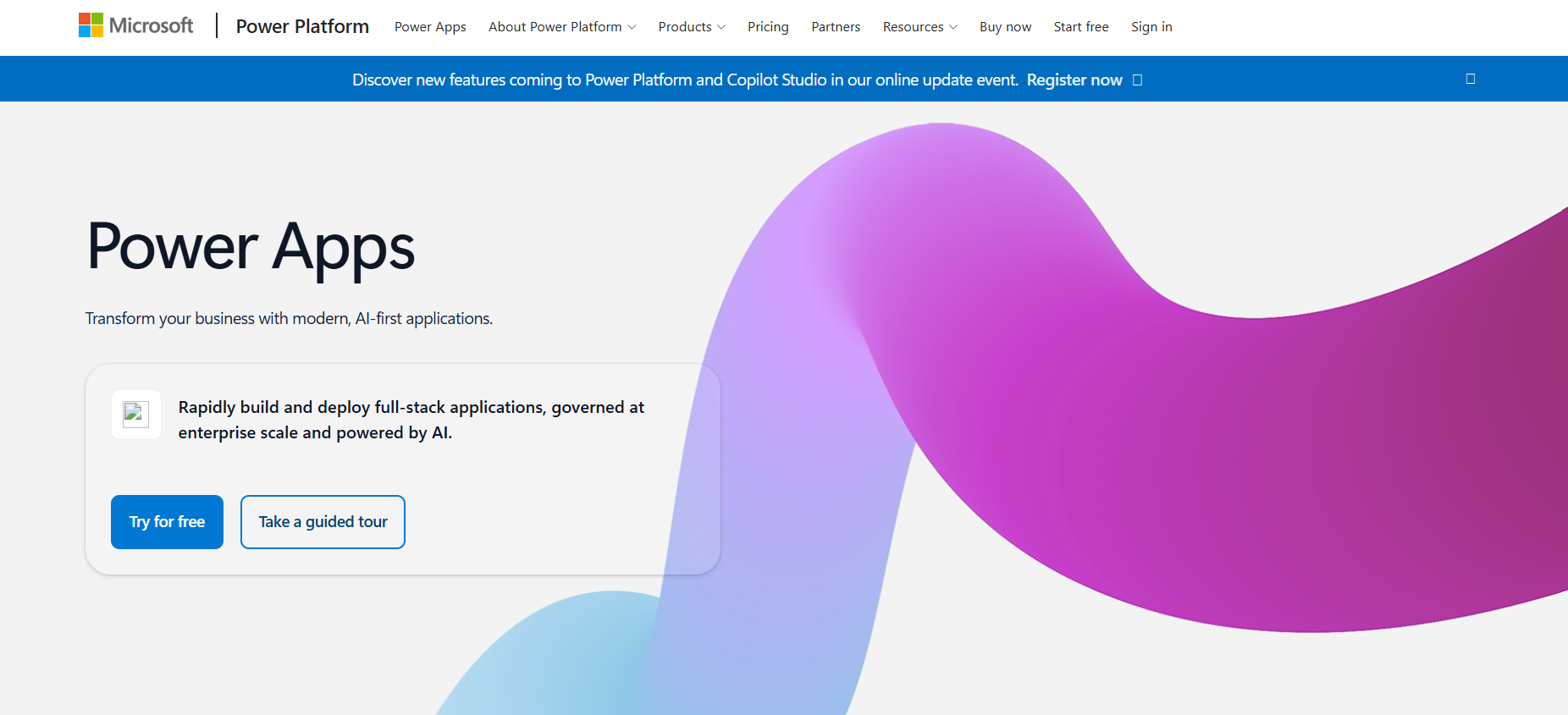
Microsoft Power Apps is a low-code platform that integrates with the entire Microsoft ecosystem. Power Apps enables you to build, customize, and deploy applications across multiple platforms, leveraging a range of pre-built code blocks, templates, and AI capabilities.
Key Features
- Microsoft integration: Power Apps connects effortlessly with Office 365, Dynamics 365, Azure, and SharePoint, creating a unified experience for Microsoft-centric organizations.
- User-friendly customization options: With a large library of templates and support for various programming languages, Power Apps allows users to customize applications to fit specific business needs.
- Cross-platform development: Users can develop applications for Android, iOS, Windows 10, and web servers, providing flexibility in deployment across different devices.
- Comprehensive toolset: In addition to app-building capabilities, Power Apps includes Power BI for analytics, Power Automate for workflow automation, and Power Virtual Agents for creating chatbots, adding layers of functionality.
Best for
- Healthcare organizations that need HIPAA-compliant applications to securely manage sensitive data.
- Development teams looking for a flexible, low-code platform that integrates well with existing back-end systems and Microsoft cloud services.
- Organizations requiring cross-platform apps that need consistent functionality across mobile, desktop, and web environments.
- Businesses aiming to leverage AI capabilities for automation and data analysis through Power Apps’ AI Builder tools.
Pros
✅ Deep Microsoft ecosystem integration: Native connections to Microsoft Teams, SharePoint, Dynamics 365, and other Microsoft services simplify extending existing business workflows.
✅ Enterprise data platform: Premium licensing unlocks Microsoft Dataverse and premium connectors for building more advanced business applications.
✅ Enterprise governance: Managed environments and centralized admin controls help organizations oversee Power Apps deployments at scale.
Cons
❌ Complex licensing: Multiple licensing models and changing plan structures can make Power Apps pricing difficult to estimate and budget.
❌ Premium connector requirements: Integrations with services like SQL Server, Salesforce, SAP, and Dataverse require Premium licensing beyond many Microsoft 365 subscriptions.
Pricing
Power Apps pricing starts at $20 per user/month.
10. Google AppSheet: Best for Google Workspace Applications
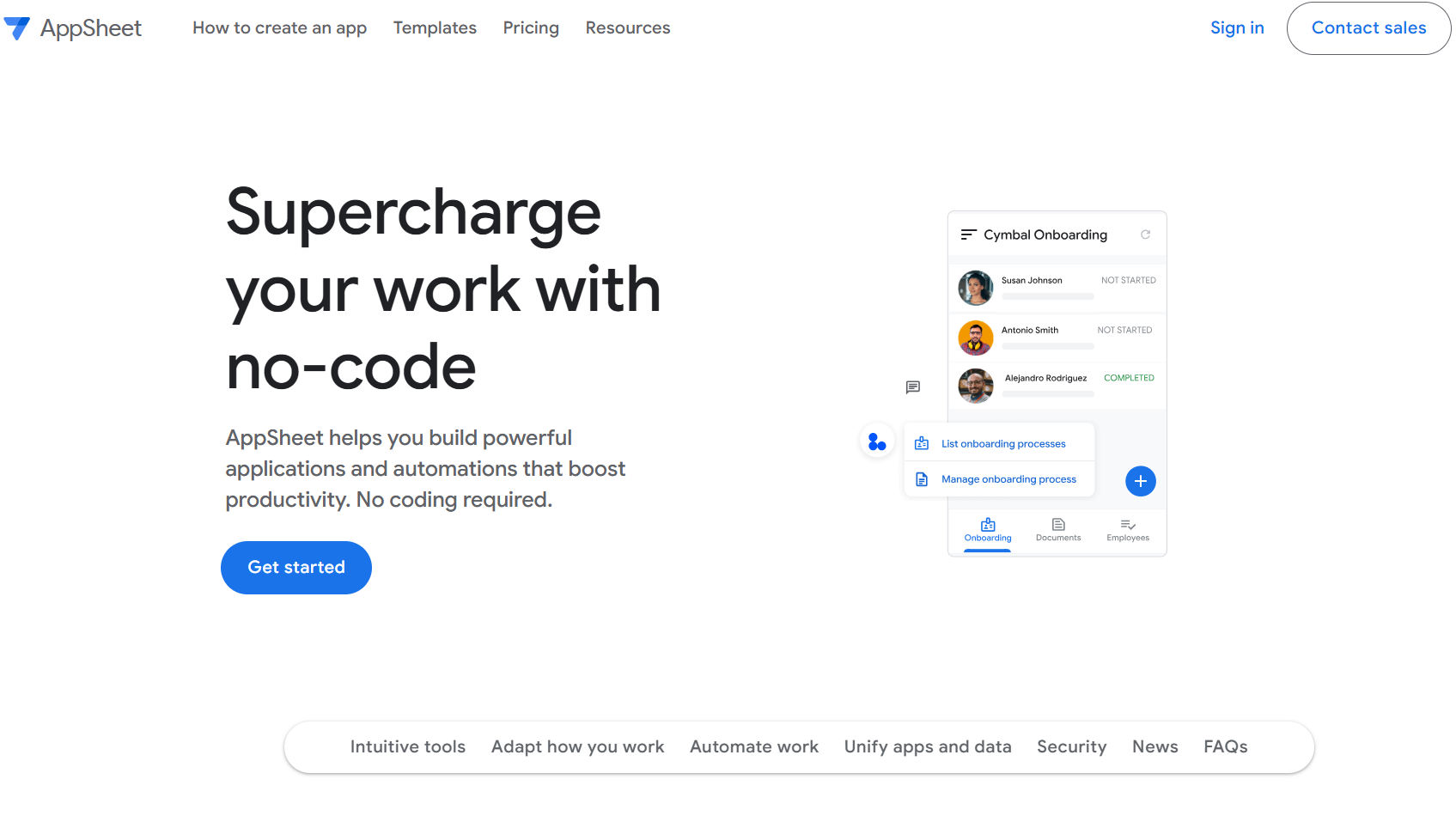
Google AppSheet lets you build lightweight applications directly from Google Sheets and other Google Workspace tools. Tailored for small to medium-sized projects, AppSheet allows users to create mobile and web apps with data-driven functionality.
Key Features
- Automated workflows: Includes automated notifications, data updates, and approvals, simplifying project management for non-technical users
- Customizable interface: Provides options for user roles, data views, and custom formatting, creating an app experience that adapts to specific user needs
- Mobile-ready design: Apps created with AppSheet are optimized for mobile and tablet use
Best for
- Teams already using Google Workspace, especially those needing to build simple, data-centric applications without complex development.
- AppSheet may not be ideal for larger enterprises needing advanced customization and integration options beyond Google.
Pros
✅ Simple Google Workspace integration: AppSheet can generate applications directly from Google Sheets and integrates with Google Workspace services.
✅ Mobile-first experience: AppSheet applications run on iOS and Android through the AppSheet mobile app, providing a consistent experience for field teams.
✅ Affordable entry pricing: Lower-tier plans make AppSheet one of the more accessible no-code platforms for small teams and departmental applications.
Cons
❌ Large dataset limitations: Google recommends keeping applications below roughly 100,000 rows for the best performance, making AppSheet less suitable for very large datasets.
❌ Feature limits by plan: Advanced capabilities such as enhanced governance, security, and AI features require higher-tier subscriptions.
Pricing
AppSheet pricing starts at $5 per user/month.
11. Bubble: Best for Startup Web and Mobile Applications
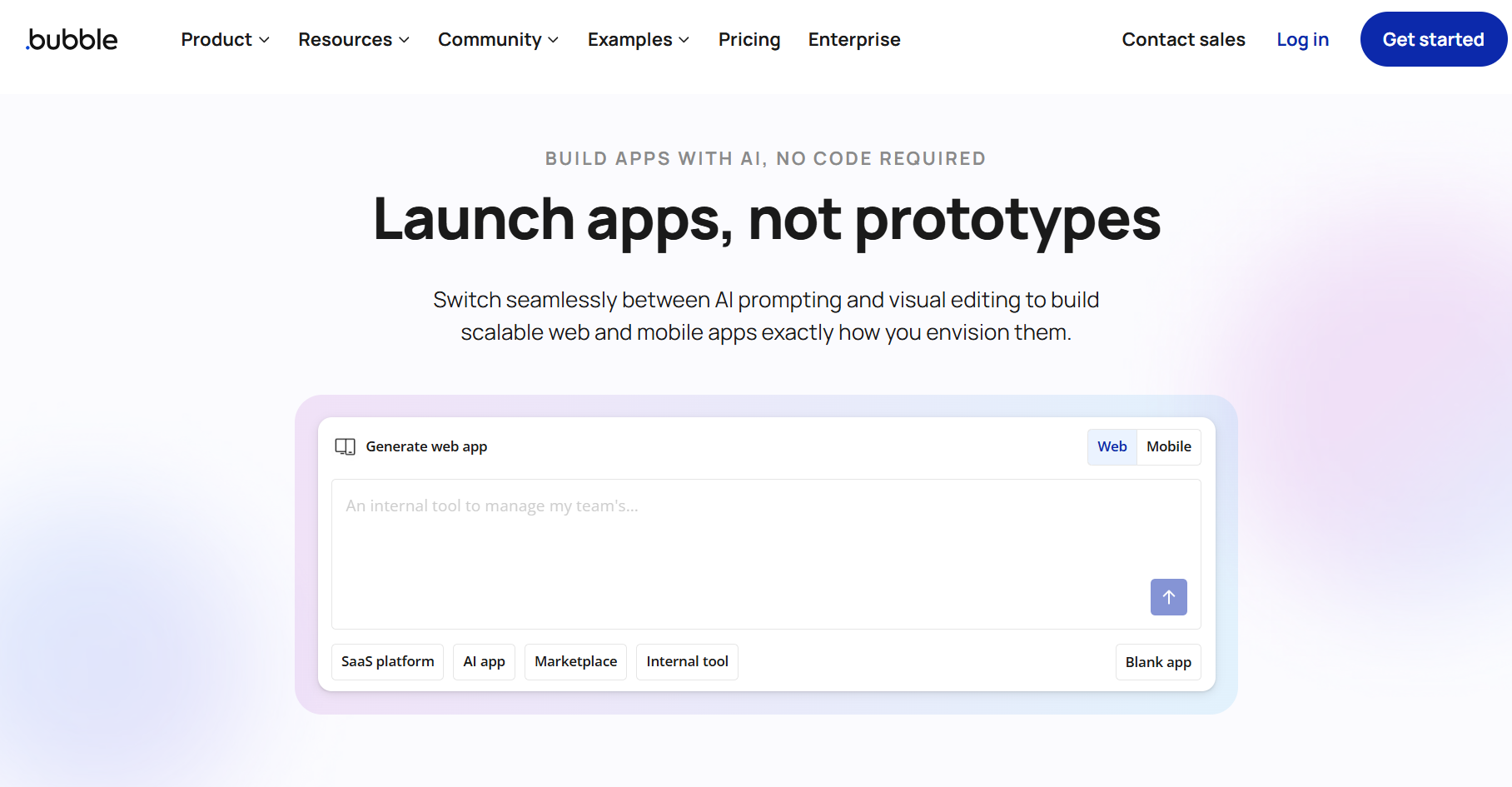
Bubble is a famous no-code platform for building various types of web and mobile applications, including customer portals. It's known for its flexibility in both front-end and back-end development.
Key Features
- Customizable front-end and back-end: Bubble allows users to design both the user interface and the underlying logic of their applications.
- Community support: The platform has a large and engaged user community that provides support and shares resources. You can tap into this community to get questions answered and problem-solve.
- Learning resources: Bubble offers various tutorials and documentation to help users learn the platform.
- App store publishing: The platform now supports publishing an app in the Apple App Store and Google Play Store.
Best for
- Bubble suits creators and freelancers who want full control over their app’s look and functionality without needing coding expertise. The platform’s rich customization options make it easy to design unique, polished applications tailored to individual project needs.
- Small businesses and startups needing to prototype and test ideas rapidly will benefit from Bubble’s visual interface and extensive API support.
Pros
✅ Unified visual development: Bubble combines front-end design, workflows, and data management in a single visual editor, reducing the need to switch between multiple development tools.
✅ Fast MVP development: The platform helps startups and non-technical teams quickly build, launch, and iterate on product ideas before investing in traditional software development.
✅ Battle-tested: The platform has existed since 2012, and users have built millions of apps with it.
Cons
❌ No code export: Bubble doesn't provide portable application source code, so moving to another platform typically requires rebuilding the application.
❌ Usage-based pricing: The platform charges based on Workflow Unit consumption, so inefficient workflows and growing application usage can increase operating costs over time.
Pricing
Bubble’s pricing plans start at $29/month for a web app, $42/month for a mobile app, and $59/month for a web/mobile app combo.
Blaze: The Best Mendix Alternative for Healthcare Apps
If you need a Mendix alternative to build your next healthcare application, go with Blaze. It offers compliance features and enough scalability to grow with your company.
Here’s why hundreds of healthcare providers choose Blaze:
- Replace repetitive administrative work without a platform overhaul: Automate patient intake, document routing, approvals, reminders, and other manual tasks without replacing your existing EHR.
- Faster implementation than switching to another enterprise platform: Launch in weeks instead of months, without the migration timeline a full Mendix replacement usually demands.
- AI integrations built for real clinical workflows, not generic automation: Supports use cases like automated patient intake, document extraction, and OpenAI integration alongside secure EHR and EMR connections built for how your team actually works.
- Built on compliance-ready infrastructure from day one: Blaze is a HIPAA-enabling, HITRUST e1-certified, SOC 2 Type II healthcare app development platform.
Schedule a free build consultation call today if you want a Mendix alternative that’s not complex or IT-dependent, giving you a faster, simpler path to publish your app.
Frequently Asked Questions
Does Mendix Support HIPAA Compliance?
Yes, Mendix supports HIPAA compliance by providing a BAA (Business Associate Agreement) and HIPAA-enabling features like encryption and role-based access. Although those features are what make compliance possible, HIPAA compliance applies to the healthcare provider or organization using the app, not the app itself.
What Is the Cheapest Mendix Alternative for Small Businesses?
The cheapest Mendix alternative for small businesses is Google AppSheet, which starts at $5/user/month. Another option for small businesses that need a shared data-management solution is Airtable, starting at $24/seat/month. Both cut manual updates and keep startup costs low without sacrificing core functionality.
Which Mendix Alternative Is Best If I Need Coding Flexibility, Not Just No-Code?
If you need more coding flexibility, you can try OutSystems. It offers a low-code development environment, which lets you combine visual builders, such as a drag-and-drop interface, with the option to enter custom code.
Sources
1. U.S. Department of Health & Human Services. “Summary of the HIPAA Security Rule.” HHS.gov. https://www.hhs.gov/hipaa/for-professionals/security/laws-regulations/index.html
2. U.S. Department of Health & Human Services. “Security Rule Guidance Material.” HHS.gov. https://www.hhs.gov/hipaa/for-professionals/security/guidance/index.html
3. National Institutes of Health: StatPearls. “Health Insurance Portability and Accountability Act (HIPAA) Compliance.” NCBI. https://www.ncbi.nlm.nih.gov/books/NBK500019/
The Secure No-Code & AI Platform
Supercharge your team's operations and performance with better apps and tools.
Create custom apps fast
Secure & HIPAA compliant
Streamline complex workflows

The Secure No-Code Platform
Build apps with best-in-class security.
Related Articles
Discover related guides on healthcare no-code development, HIPAA compliance, security, integrations, and launching apps faster.
%20(1).png)
HIPAA-Compliant LLMs: A 2026 Deployment Guide
HIPAA-compliant LLMs require more than a vendor claim alone. Learn how BAAs, safeguards, and considerations can affect the right model for your organization.
%20(1).png)
Appian Pricing: Plans, Costs, & What You Actually Pay (2026)
Appian offers a free community version, but costs depend on your user count and AI usage. Here’s my breakdown of each Appian pricing plan so you can choose.
%20(1).png)
8 v0 Alternatives That I Tested to Save You Time (2026)
I compared 8 v0 alternatives' backend depth, coding requirements, and pricing. See which tools work best for cloud-based hosting and code portability.