
Table of contents
Top 10 Bubble Alternatives & Competitors (2026): Expert Tested

Written by
Blaze Team

Reviewed by
Justyna Wojcik
Expert Verified
I selected these top 10 Bubble alternatives after testing 25 platforms for ease of use and integrations. All are good choices, but each one serves a unique use case.
1. Blaze: Best for Enterprise Apps
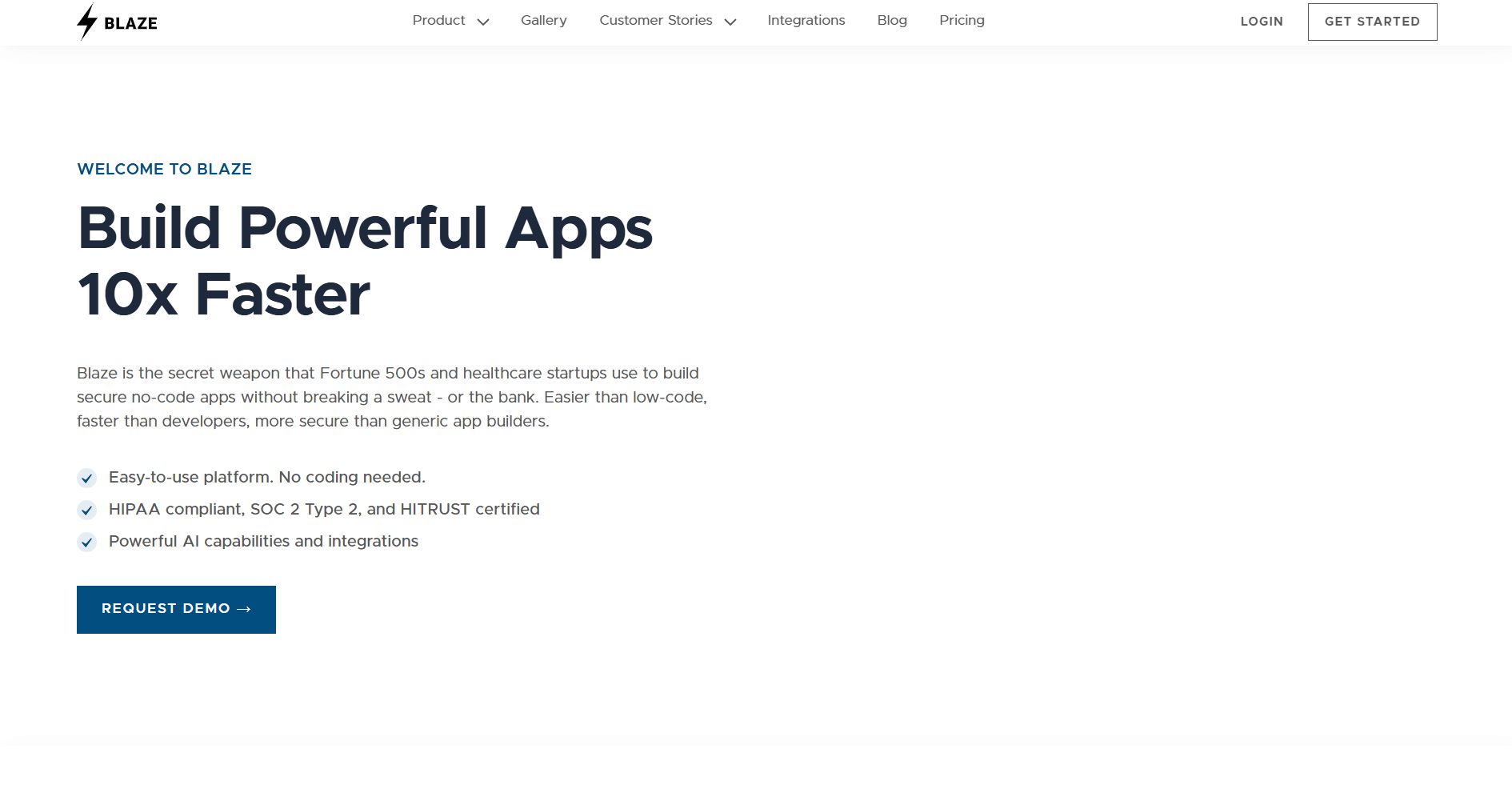
What it does: Blaze is a no-code platform designed to support compliance needs like HIPAA and SOC 2, with a drag-and-drop interface that’s simpler than Bubble’s. It reduces build time by using pre-configured components and native workflows.
Who it’s for: Mid-to-large-sized organizations that need to build internal apps like dashboards, client portals, and project management tools at scale.
We created Blaze so enterprises can build and maintain scalable apps without developers. Unlike many app builders, Blaze supports both full workflows and production applications in a single platform.
For example, I’ve created apps that sync live revenue data from Stripe into a financial database without relying on separate tools or manual steps. I’ve also built and managed databases with Blaze.
Blaze stands out for ease of use, letting you drag in ready-made components like forms, filters, and Kanban boards, then connect them to your data and workflows in minutes.
Overall, Blaze is a better fit for large organizations and enterprises. Blaze’s pricing tiers let you build multiple apps and work with larger datasets, with predictable pricing instead of Bubble’s workload unit system.
Advantages Over Bubble
- No-code workflow automation: Trigger emails, updates, or approvals based on field values without a programming language.
- API and native integrations: Integrate external tools with native connectors or push data updates using REST endpoints or webhooks.
- Role-based permissions: Assign granular permissions by user group across pages, records, and specific actions.
Pros
- Handles complex logic: Multi-step approvals and conditional branching work without hitting platform limits or requiring workarounds.
- Stability: Once configured, systems run reliably under daily load without performance degradation or downtime.
Cons
- Large feature set: Teams building basic forms or trackers may pay for features they don’t need.
Pricing
Blaze pricing starts at $1,500/month.
Bottom Line
Blaze fits teams that need Bubble's database power, but still want a no-code solution. Yet, teams building customer-facing mobile apps for booking and ordering could consider a platform like Adalo.
2. Retool: Best for Internal Business Tools
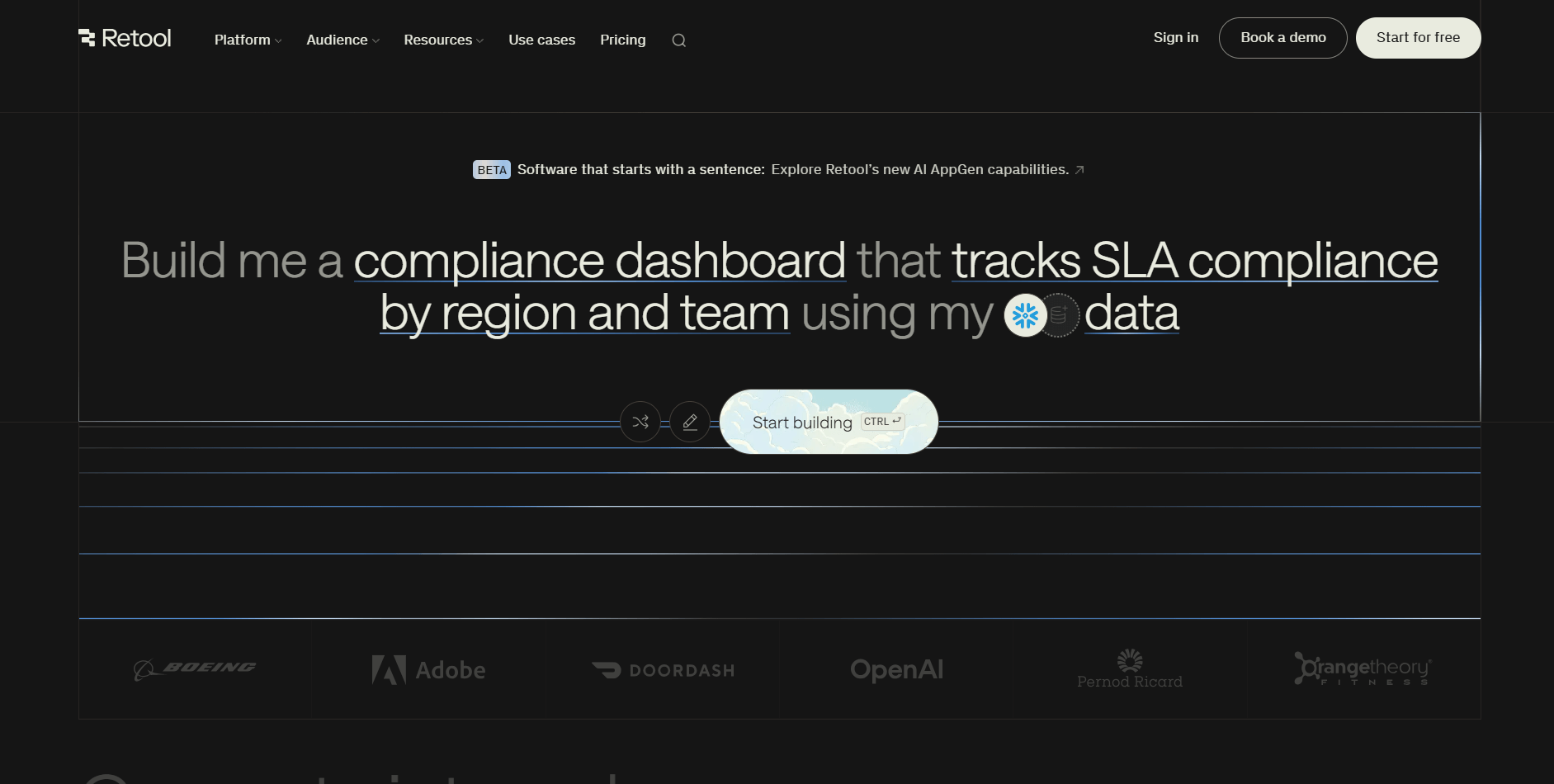
What it does: Retool lets teams build custom admin dashboards and internal tools by connecting databases and APIs to operational interfaces.
Who it's for: Teams that need approval queues, data entry forms, or reporting dashboards quickly on top of existing operational data.
To test Retool, I built a customer refund approval tool and connected it to a PostgreSQL database. The platform made it easy to set up basic things like page links, login settings, and user permissions. Although Retool allowed me to create highly customized apps, I needed to use my advanced API knowledge. So, it’s not the best for beginners.
Advantages Over Bubble
- Pre-built component library: Ready-made tables, forms, and charts work immediately with minimal editing.
- Faster internal builds: Skip responsive design decisions because internal tools prioritize function over mobile-friendly layouts.
- Permission inheritance: Built‑in role‑based and folder‑level permissions for apps and resources.
Pros
- Speed for backend work: Build admin panels faster than Bubble with prebuilt components and direct database connections.
- Scales with data volume: Works well with large datasets because components query your own database or API rather than importing into a separate internal database.
Cons
- Design flexibility costs time: Customizing default components means writing extra CSS, which cancels out Retool’s time savings compared to Bubble.
Pricing
Retool pricing starts at $12/month for app builders and $7/month for internal users.
Bottom Line
Retool makes sense when your team has operational databases but lacks the developer bandwidth to build custom admin interfaces. However, Bubble might be a better option if you need the flexibility to create customized forms, buttons, and fields.
3. Appsmith: Best for Internal Dashboards
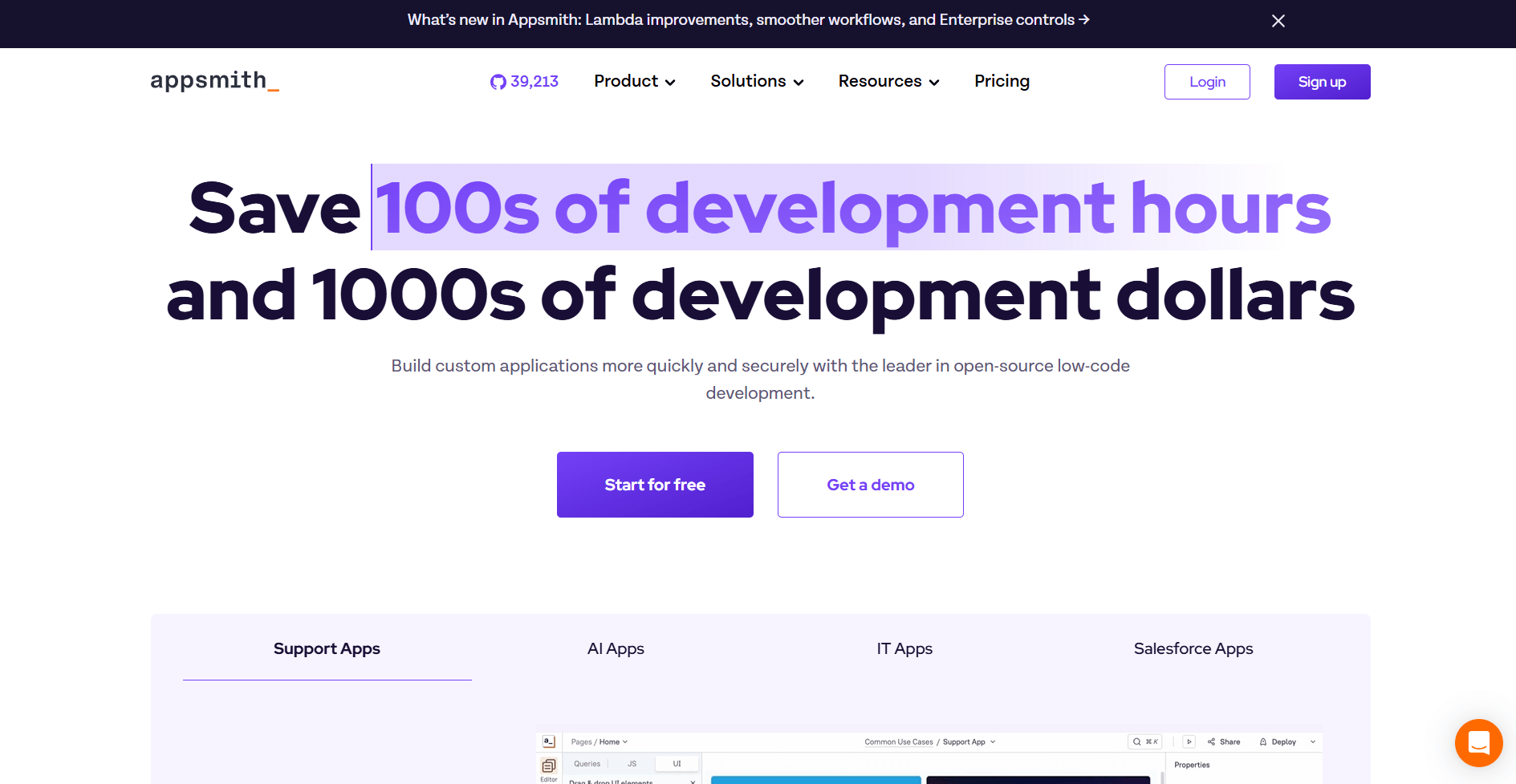
What it does: Appsmith replaces custom-coded internal dashboards by connecting APIs and databases to pre-built charts and data tables.
Who it's for: Technical teams managing reporting dashboards, inventory systems, or ops tools who write SQL but avoid frontend work.
To test Appsmith, I built a sales pipeline dashboard using lead data from our HubSpot database. I launched it on my own server so I could control the app’s code. The downside is that it takes more technical skill to run. Team members who expect a fully no-code tool may find the setup and upkeep more hands-on than they expected.
Advantages Over Bubble
- Open-source control: Self-host on your infrastructure to avoid vendor lock-in or meet compliance requirements.
- API connections: Pull data from multiple APIs without middleware or webhooks. Complex data may require customization.
- Git-based versioning: Track and roll back changes using standard version control workflows.
Pros
- No vendor dependency: Self-hosting removes subscription fees and reduces vendor dependency. You still pay for servers and handle setup, maintenance, and ongoing technical work.
- Developer-friendly workflows: Git integration and JavaScript support match how technical teams already work daily.
Cons
- Built for desktop: Prioritizes desktop dashboards, so mobile responsiveness requires extra layout work.
Pricing
Self-hosting is free, but you’ll pay for servers and maintenance. If you don’t self-host, Appsmith pricing starts at $15/month per user.
Bottom Line
Appsmith works when your team already manages infrastructure and needs dashboards faster than your developers can build from scratch. But Blaze is a better fit if you need scalable apps and you don’t have any developer experience.
4. Webflow: Best for Content-Driven Web Apps
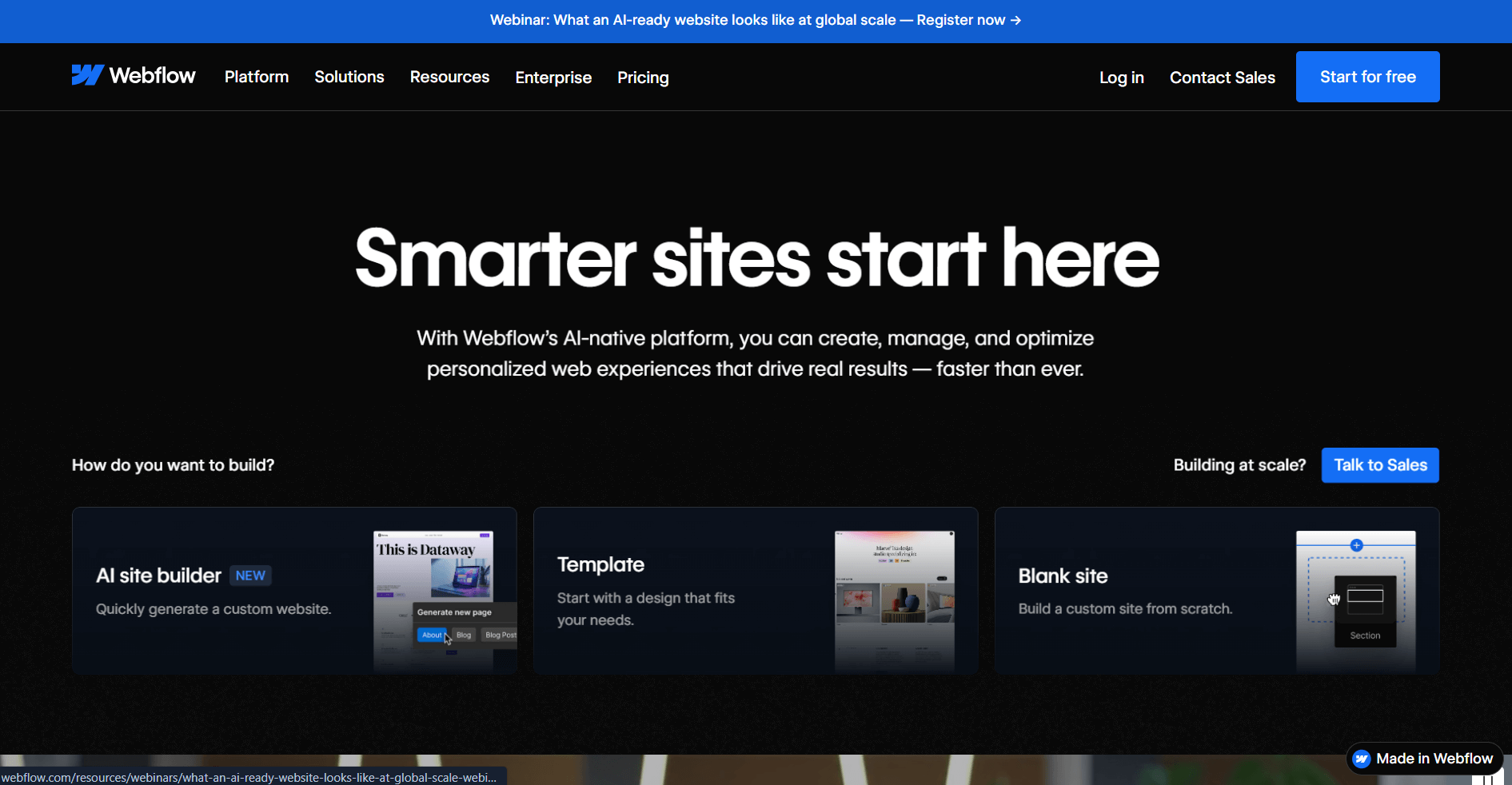
What it does: Webflow replaces custom frontend development for websites and content-heavy applications where design precision matters most.
Who it's for: Design-led teams building branded websites, agencies, or marketing pages who need pixel-perfect control without coding.
I tested Webflow by building a multi-page marketing site with a blog connected to its content system. Webflow gave me strong control over how the site looked and felt. But I had to use another tool, Memberstack, to add login features, which meant extra setup work.
Advantages Over Bubble
- Production-ready code output: Generates clean HTML, CSS, and JavaScript and hosts it on fast global servers.
- Advanced animation control: Create scroll-triggered interactions and micro-animations without writing custom JavaScript libraries.
- CMS for content: Manage blog posts, case studies, and portfolio items through structured content fields.
Pros
- Design precision: Spacing, typography, and layouts match design files exactly without approximation or rounding errors.
- SEO control built in: Edit meta tags, alt text, and URL structures directly instead of relying on platform defaults.
Cons
- Logic limitations exposed: Conditional workflows and data processing need external tools, making complex apps impractical to build.
Pricing
Webflow pricing starts at $18/month for simple websites, $28/month for shared team workspaces (team plans), and $42/month for e-commerce websites.
Bottom Line
Webflow is ideal if your business depends on strong design and you’re building content-focused sites that don’t require complex backend features. If you want a website builder with a lower learning curve but less customization control, Wix is a better option.
5. WeWeb: Best for Frontend-First Web Apps
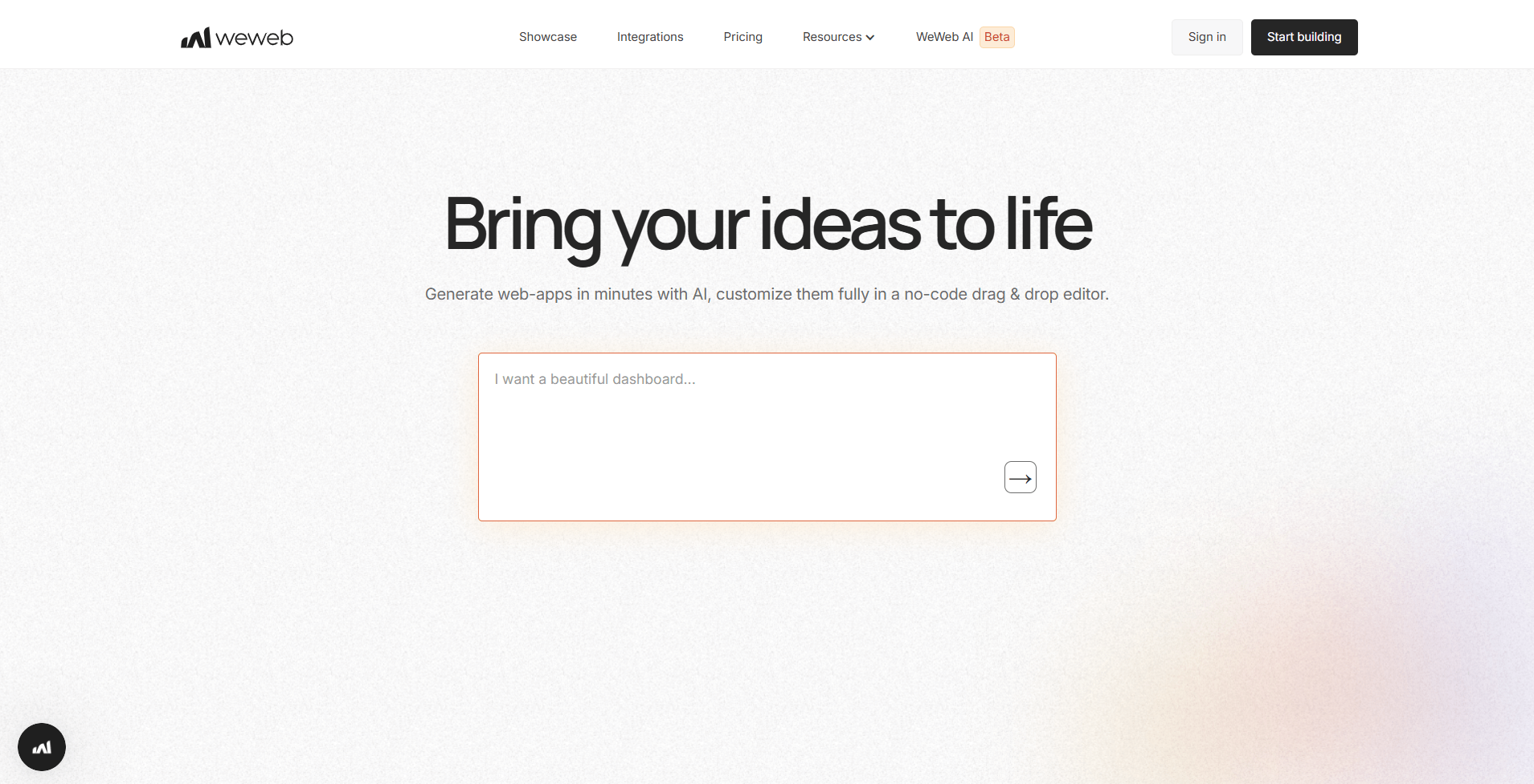
What it does: WeWeb lets you build the front end of a web app visually instead of writing custom React code. It connects directly to existing backends and services to display and manage data.
Who it’s for: It works best for teams that already have a backend and need customer-facing screens built faster than hiring frontend developers would allow.
When I tested WeWeb, I connected to a Supabase backend and built a user dashboard. After launching the test dashboard, I studied user feedback on the mobile layout. WeWeb adjusted the layout for different screen sizes automatically. But I had to write custom code to fix more advanced mobile features.
Advantages Over Bubble
- Faster API integration: Connect and log in to your APIs directly through the interface without building custom connections first.
- Reusable components: Build a design element once and reuse it across pages without repeating the same work or rules.
- Live data updates: Automatically refresh data so users always see the latest updates without reloading the page.
Pros
- Works with existing backends: Keep your current database and backend setup because WeWeb connects to the systems you already use.
- Easy developer handoff: Export the app’s code so developers can take over later and customize beyond what the platform supports.
Cons
- Frontend only: Must connect to a separate backend infrastructure, authentication services, and database management before building most functionalities.
Pricing
WeWeb pricing starts at $20/month.
Bottom Line
WeWeb works best if you already have a backend and need a frontend built faster than developers are available. If you’re building a content-focused site and don’t need complex data connections or user logins, Webflow might be a better fit.
6. Wix: Best for Simple Websites
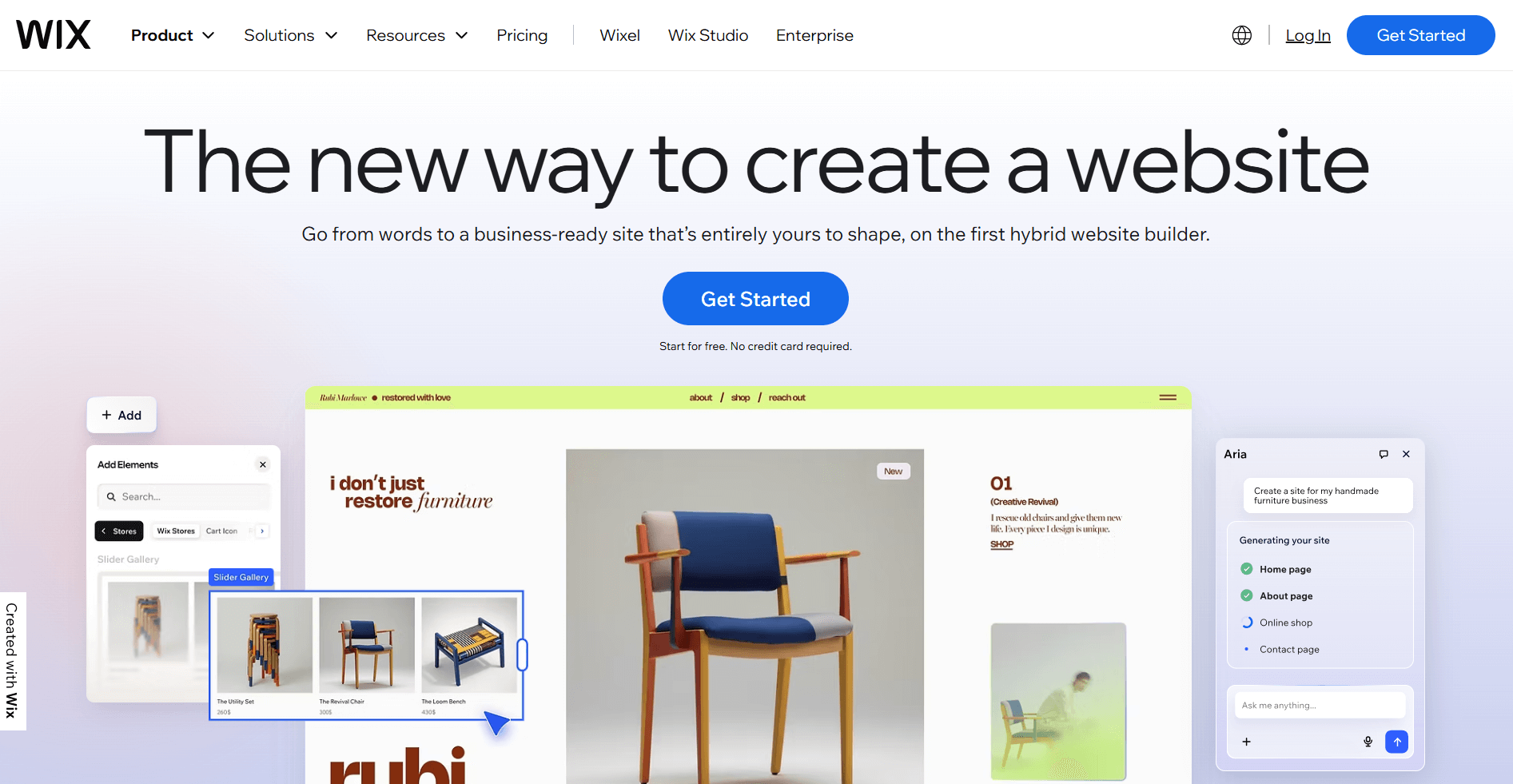
What it does: Wix lets you build websites with an intuitive drag-and-drop interface and 900+ premade templates.
Who it's for: Small business owners launching their first website who need something published quickly without learning technical concepts.
I tested Wix by building a website for a photography studio using one of its premade templates and drag-and-drop tools. Although the drag-and-drop builder and integration with Stripe payments worked smoothly, I was limited to working within Wix’s system. This limitation could be an issue if I ever wanted deeper customization for workarounds.
Advantages Over Bubble
- Template-based speed: Start with pre-designed layouts instead of building pages from blank canvases.
- No learning curve: Editing works like moving objects in a PowerPoint.
- Integrated hosting included: Domain, SSL, and CDN come bundled.
Pros
- Fastest time to publish: Build a professional-looking site live in hours.
- All-inclusive pricing: Hosting, security, and basic features cost less than assembling separate services for small sites.
Cons
- Customization limits: Any feature outside the template scope requires apps or workarounds that multiply costs.
Pricing
Wix pricing starts at $17/month (billed annually).
Bottom Line
Wix works well for validating early business ideas or for quickly launching a simple website. If detailed design and content management matter more, Webflow is the better choice.
7. Softr: Best for No-Code Client Portals
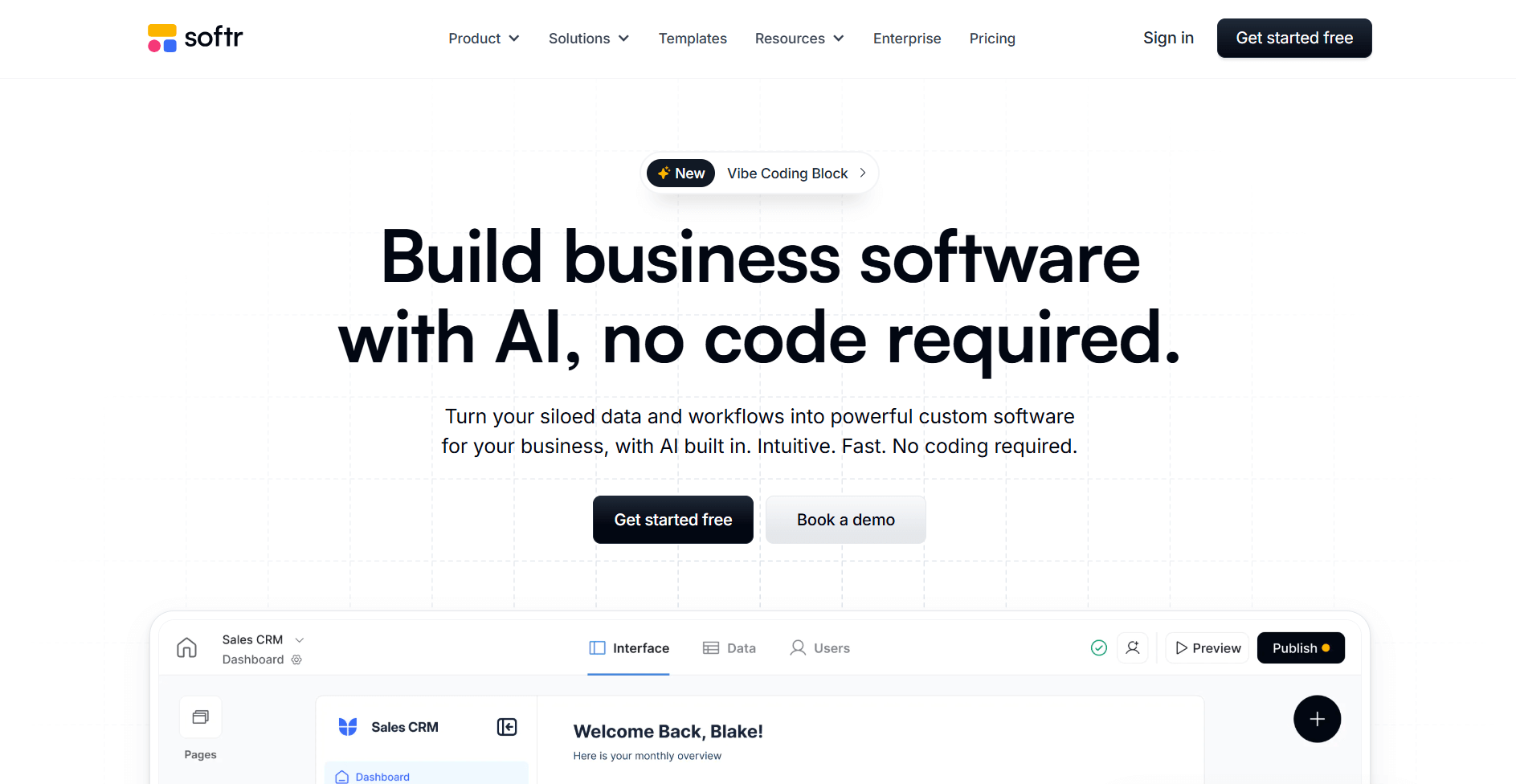
What it does: Softr lets you develop client portals and internal or external apps with a simple no-code interface.
Who it's for: Service businesses managing client projects who need customers to access their data without sharing spreadsheets or databases.
I tested Softr by building a revenue database with its built-in database builder, then used the AI feature to generate a login frontend from a simple prompt. The upside was speed and simplicity as I built a fully functional system with role-based permissions in about two hours. However, Softr’s structured blocks limited how much I could customize the interface.
Advantages Over Bubble
- Airtable native integration: Read data directly from existing Airtable bases without importing it into a new database.
- Authentication included: User login and permission controls work immediately without configuring separate authentication services.
- Block-based building: Assemble pages using pre-configured components instead of designing layouts from scratch.
Pros
- Fast validation builds: Test client portal concepts in days instead of committing months to custom development.
- Predictable user management: Role-based access mirrors how most teams already think about client permissions.
Cons
- Customization ceiling: Softr’s block system limits customization. More advanced behaviors often require external automations or custom code.
Pricing
Softr’s monthly pricing starts at $59/month.
Bottom Line
Softr works well when you need a client portal or external-facing access layer deployed in hours. If you’re building client portals on multiple APIs, Retool is the better choice.
8. Glide: Best for Aesthetically Pleasing Apps

What it does: Glide lets you turn spreadsheets into mobile apps with integrations for Airtable and Google Sheets and ready-made templates.
Who it’s for: It works well for operations teams that need simple mobile apps for field work, staff directories, or inventory tracking, without relying on developers.
During testing, I built an ordering app. Glide made it easy to add my brand colors and fonts, and the changes applied across the interface instantly. However, the layout stayed locked to Glide’s templates, so I couldn’t freely move elements or control spacing the way I could with a more flexible builder.
Advantages Over Bubble
- Spreadsheet data sources: Connect Google Sheets, SQL databases, or Airtable without migrating data.
- Template acceleration: Start with pre-built app structures instead of designing every screen and interaction from scratch.
- Progressive web apps: Deploy apps that install on phones like native apps without app store approval processes.
Pros
- Clean default aesthetics: Apps look polished immediately without hiring designers to create custom interfaces.
- Data source flexibility: Teams already managing data in spreadsheets avoid learning new database systems entirely.
Cons
- Complex workflow constraint: Forces teams to stack spreadsheet formulas and built-in automations.
Pricing
Glide pricing starts at $25/month.
Bottom Line
Glide works best when teams need fast mobile access to spreadsheet data and can accept fixed layouts. If you need a mobile app that must be published in app stores, consider using Adalo instead.
9. Adalo: Best for Native Mobile Apps
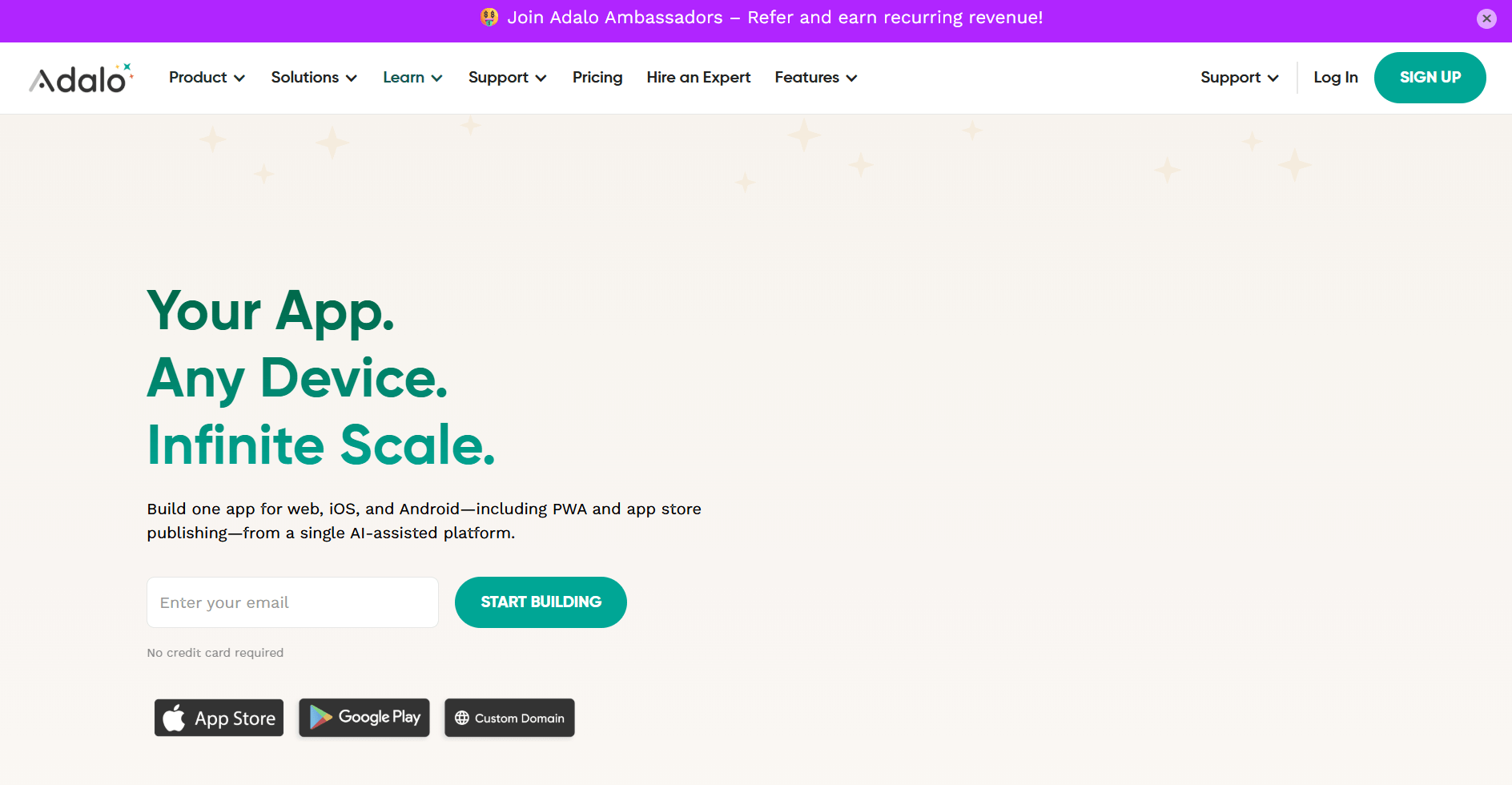
What it does: Adalo lets you build native iOS and Android apps that you can publish directly to the app stores.
Who it's for: Founders testing mobile product ideas who need a real app store presence without hiring mobile development teams.
I tested Adalo by building a marketplace app with user profiles, product listings, and in-app messaging. Adalo removes much of the complexity around building and publishing mobile apps, which made it easier to configure my app’s layout free-form, with my mouse. But adding advanced features like complex search filters wasn’t possible.
Advantages Over Bubble
- True native apps: Publish to Apple App Store and Google Play Store from one no-code build, without relying solely on webview wrappers.
- App store compliance help: Templates and publishing guides align with Apple and Google guidelines, reducing design-related rejections.
- Intuitive platform: One of the most intuitive drag-and-drop interfaces available.
Pros
- Validation speed advantage: Test market demand with real users downloading from stores in weeks, not months.
- Minimal learning curve: Unlike Bubble, you can start building your Adalo app without tutorials.
Cons
- Performance limits: Performance degrades as datasets grow and screens become more complex.
Pricing
Adalo’s pricing starts at $45/month.
Bottom Line
Adalo makes sense when app store presence validates your business model, and you're building consumer apps with small to mid-sized datasets. If you need to deploy internal tools and progressive web apps, Glide is a better choice.
10. Thunkable: Best for Simple Logic
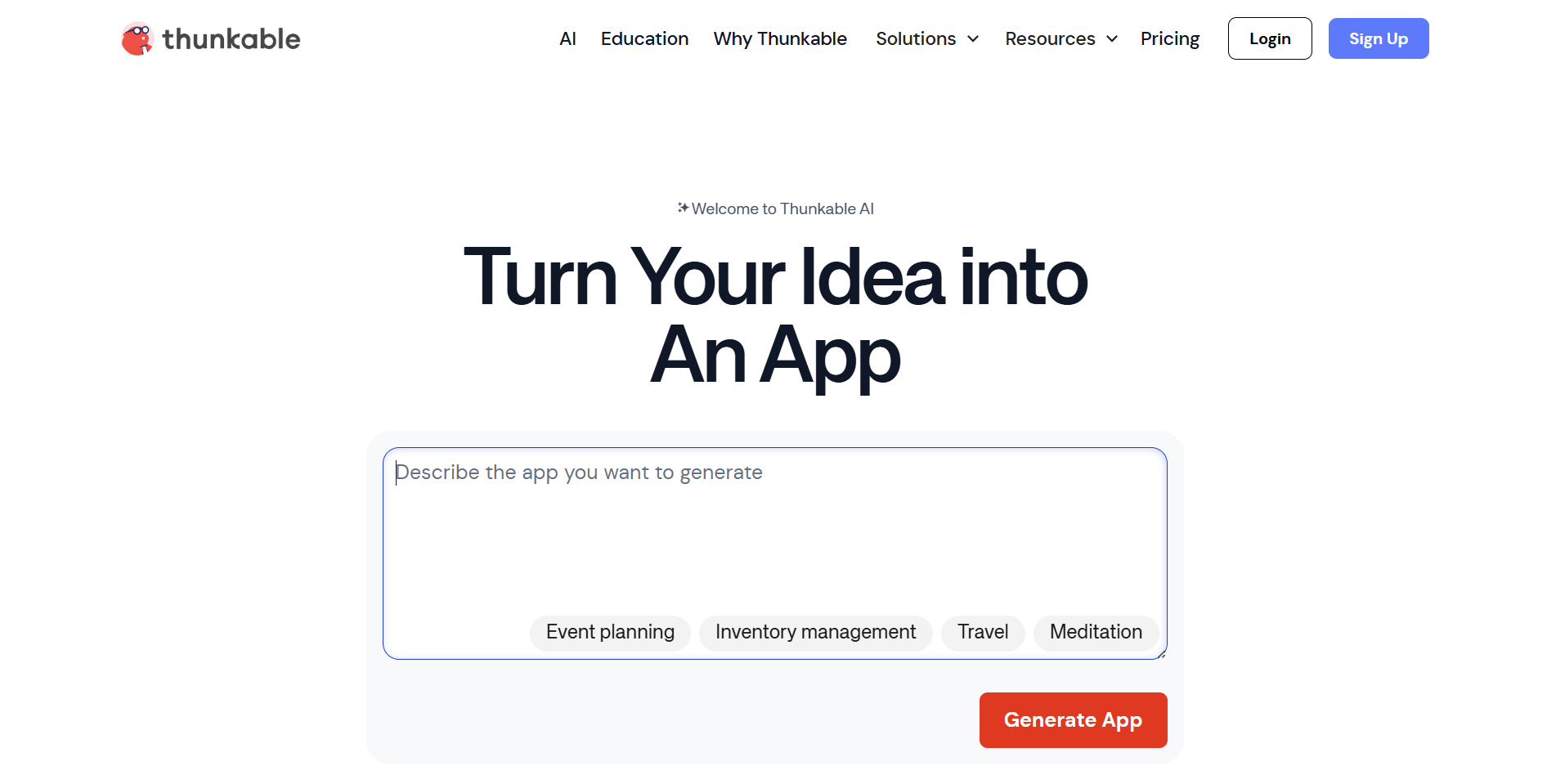
What it does: Thunkable uses a visual, block-based interface for creating custom backend logic.
Who it's for: Teachers, students, or first-time builders creating simple utility apps who need visual programming without text code.
I tested Thunkable by building a habit tracker app with daily check-ins and streak tracking. The colorful, uniquely shaped blocks made it easy to see how each rule connected. But the block system had limits. It didn’t support live data updates for many users at once. Because of that, I couldn’t update streaks across devices right away or manage shared data without delays.
Advantages Over Bubble
- Block-based programming: Snap together logic visually instead of writing code or configuring workflow editors.
- Educational foundation: Uses MIT App Inventor's approach, making it familiar for students transitioning from learning environments.
- Live testing: Preview changes on your phone instantly without waiting for builds or deployments.
Pros
- Logic visualization: Seeing conditional statements as blocks makes debugging faster than reading text-based code.
- Gentle learning curve: First-time builders grasp app logic concepts faster with visual blocks than with text-based workflows.
Cons
- Limited professional use: The visual design appears basic, making it a poor fit for client-facing apps.
Pricing
Thunkable pricing starts at $19/month.
Bottom Line
Thunkable works well for learning mobile app basics or building quick test apps where ease of use matters more than looks. Yet, Adalo is the better choice when you want to test real business ideas that require strong performance and credibility in app stores.
How I Tested Each Bubble Alternative
I began with 25 Bubble alternatives and multiple sets of sample marketing and financial data. Each tool had the same test: Build a working app or website with user login and database connections.
The platforms that made this list supported these core features:
- Reliable build speed and simplicity: A major reason people seek alternatives to Bubble is its steep learning curve. To measure speed, I timed how long it took to create an app with live data from start to publishing. Platforms that required studying hours of tutorials or multiple attempts to complete basic tasks got the ax.
- Database flexibility and control: I tested how each platform handled the data. The best Bubble alternatives gave me clear control over data structure without forcing migration from existing systems.
- Performance under load: I tested each platform by simulating multiple users accessing data at the same time. The platforms that made my top 10 handled the extra traffic without slowdowns or errors.
I also considered the following:
- Pricing transparency and scalability: Many Bubble users pay higher prices due to Bubble’s WU pricing. The alternatives I selected either use flat monthly pricing or clearly disclose charges upfront without penalizing normal app usage.
- Data transfer: I tested whether I could export my data to other apps. The best alternatives offered standard data export formats compatible with other tools.
I removed any platform that didn’t meet basic no-code requirements, such as drag-and-drop builders, data controls, and reliable performance. Then, I could easily compare the remaining tools on build speed and pricing without hidden complexity.
My Final Verdict: Which Bubble Alternative Should You Choose?
Each of my top 10 Bubble alternatives works best for different use cases, from strict compliance needs to simple mobile apps for beginners. Here’s how to choose the right one for you:
Choose Blaze If You:
Need to build secure, HIPAA and SOC 2-compliant apps that can scale without a learning curve.
Choose Retool If You:
Already have operational databases running and need internal admin tools built quickly.
Choose Appsmith If You:
Require self-hosted dashboards for compliance, and your team has the technical skills to manage infrastructure and Git workflows.
Choose Webflow If You:
Prioritize design precision for marketing sites and content-heavy applications.
Choose WeWeb If You:
Already have backend infrastructure and need customer-facing frontends built quickly.
Choose Wix If You:
Need a simple business website builder without learning technical concepts.
Choose Softr If You:
Need to build secure portals in hours, not months.
Choose Glide If You:
Need mobile-optimized apps pulling from existing spreadsheets, and value deployment speed and aesthetics.
Choose Adalo If You:
Want to publish in the app stores to validate your business model, or are building consumer apps.
Choose Thunkable If You:
Are learning app development basics or building educational prototypes.
Build Your Next Scalable Business App with Blaze
Blaze is one of the most flexible no-code Bubble alternatives for building scalable business apps. You can create internal tools, client portals, and operational dashboards without developers or technical experience and avoid unnecessary platform complexity.
Here’s why more mid-size to large-size companies choose Blaze:
- Enterprise compliance: Blaze includes features such as role-based permissions, audit logs, and encryption to support HIPAA and SOC 2 compliance requirements. Actual compliance depends on how each organization configures and uses the platform.
- Predictable pricing structure: Build and scale apps without worrying about workload unit overages or surprise bills from automated workflows and database queries.
- Low learning curve: Learn Blaze's drag-and-drop builder in just a few hours, and let non-technical teams create project management tools, dashboards, and automation workflows in days (sometimes, hours) instead of weeks.
- Dedicated support: If you opt for the enterprise plan, Blaze provides hands-on onboarding and implementation support so your team can launch, test, and scale apps confidently across departments.
Schedule a free demo today and learn why Blaze is the best Bubble alternative for your organization.
Frequently Asked Questions
What Are The Best Bubble Alternatives For Building Scalable Business Apps?
The best Bubble alternatives for building scalable business apps are Blaze for enterprise compliance needs, Retool for internal admin tools, and Appsmith for self-hosted dashboards. Each platform supports growth features like large datasets and multiple users, without Bubble’s workload unit pricing limits.
Which Bubble Alternative Works Best For Internal Tools?
Retool is the best Bubble alternative for internal tools because it connects directly to existing databases and offers pre-built components for admin panels. Appsmith excels for technical teams that need self-hosted dashboards, while Blaze handles enterprise-scale internal apps with compliance requirements.
Which Bubble Alternative Works Best for Customer-Facing Web Apps?
Webflow is the best Bubble alternative for customer-facing web apps. It handles design-heavy apps with a powerful drag-and-drop editor. WeWeb suits apps that require existing backend connections. Softr excels at simple client portals, while Adalo handles consumer mobile apps needing app store presence and native functionality.
The Secure No-Code & AI Platform
Supercharge your team's operations and performance with better apps and tools.
Create custom apps fast
Secure & HIPAA compliant
Streamline complex workflows

The Secure No-Code Platform
Build apps with best-in-class security.
Related Articles
Discover related guides on healthcare no-code development, HIPAA compliance, security, integrations, and launching apps faster.
.png)
10 Best Replit Alternatives: Tested for Developer Tasks (2026)
After comparing 10 Replit alternatives, I found differences in compliance features and needed coding skills. Discover platforms and prices to find the best fit.
%20(1).png)
Healthcare Claims Automation: How It Works (2026)
Healthcare claims automation connects systems to reduce repetitive work. Explore the 9 workflow stages that show how eligibility, validation, and payments move.
%20(1).png)
8 Healthcare Dashboard Examples (2026)
Explore healthcare dashboard examples for hospital operations, revenue, and compliance. Discover what each dashboard tracks and how to build one.