
Table of contents
7 Best Web App Development Companies 2026: How To Choose

Written by
Blaze Team

Reviewed by
Justyna Wojcik
Expert Verified
I analyzed 50+ web app development companies, comparing expertise, portfolio strength, and client feedback. Then, I used my findings to select the 7 top agencies worth hiring to build your web app.
7 Best Web App Development Companies: At a Glance
Getting Started: Types of Web App Development Methods
Before you start web app development, you’ll need to understand different options. Each option has ideal use cases and pros and cons, so you’ll need to choose one that aligns with your goals.
- Agencies for full project delivery: Agencies handle design, development, and maintenance under one roof. They offer quality, but at a higher price and longer time horizon.
- Freelancers for flexible hiring: Freelancers are affordable for smaller projects or short-term tasks, though their responses might be delayed due to time-zone constraints.
- In-house teams for control: Hiring an in-house team to build your app gives you full oversight. You can track progress daily, but expect higher overhead costs.
- No-code options for speed: These platforms require no programming skills, using templates and visual builders. They offer speed and accessibility but limit customization.
- Low-code if you have coders: These platforms combine visual builders with coding flexibility, blending rapid development and customization. But it requires some programming knowledge.
Take stock of your goals, budget, and technical needs. Compare options carefully so your choice aligns with your goals.
1. Blaze: Best Web App Development Company Overall
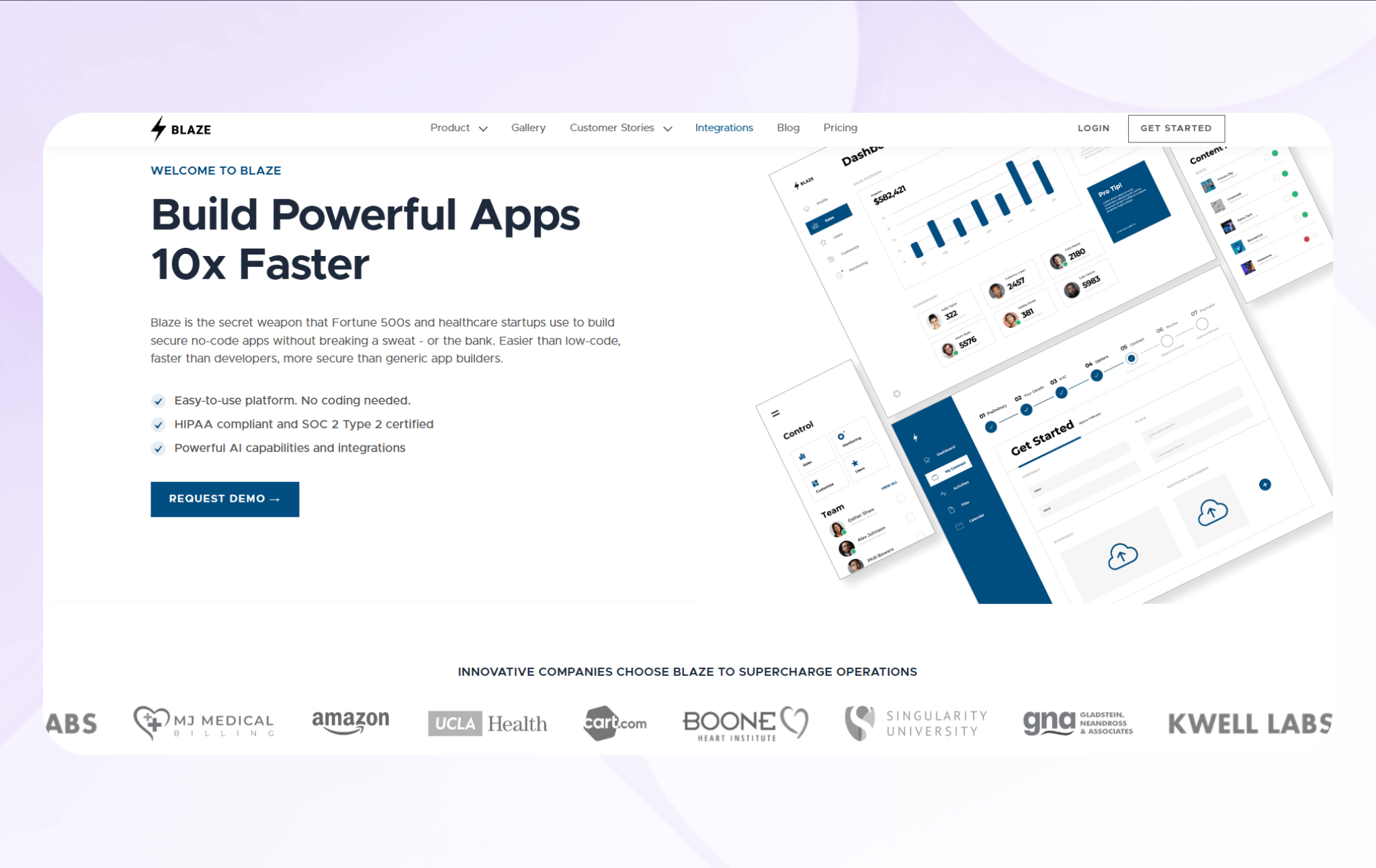
Blaze is a no-code web app builder that lets teams create secure business apps without hiring a development company. It has features that help you maintain HIPAA and SOC 2 compliance, making it a strong choice for regulated sectors such as healthcare and finance.
Key Features
- No-code visual builder: Blaze offers a drag-and-drop interface that lets nontechnical users build complete web apps without code, connecting data and UI in one workspace.
- Multi-environment deployment: The builder supports development, staging, and production environments for smooth deployment. Your team can also separate testing from live builds, improving rollout safety and stability.
- Role-based access controls: The platform provides detailed user permissioning for teams managing sensitive data, keeping admin, user, and developer roles clearly defined and secure.
Pros
- Rapid app creation without coding: Nontechnical users can build, test, and deploy production-ready apps quickly without relying on developers.
- Safe iteration and deployment: Multiple environments reduce update risk and maintain stability when launching new features or improvements.
Cons
- Limited deep customization: Although Blaze offers a wide range of integrations and features, it provides less deep customization than coded apps.
Bottom Line
Blaze is an ideal alternative to hiring a development agency. Plans start at $1,350/month on the annual plan. It lets medium-sized businesses and enterprises build and scale apps without paying agency-level creation or maintenance costs.
2. SDLC Corp: Best For Full-Stack Digital Transformation
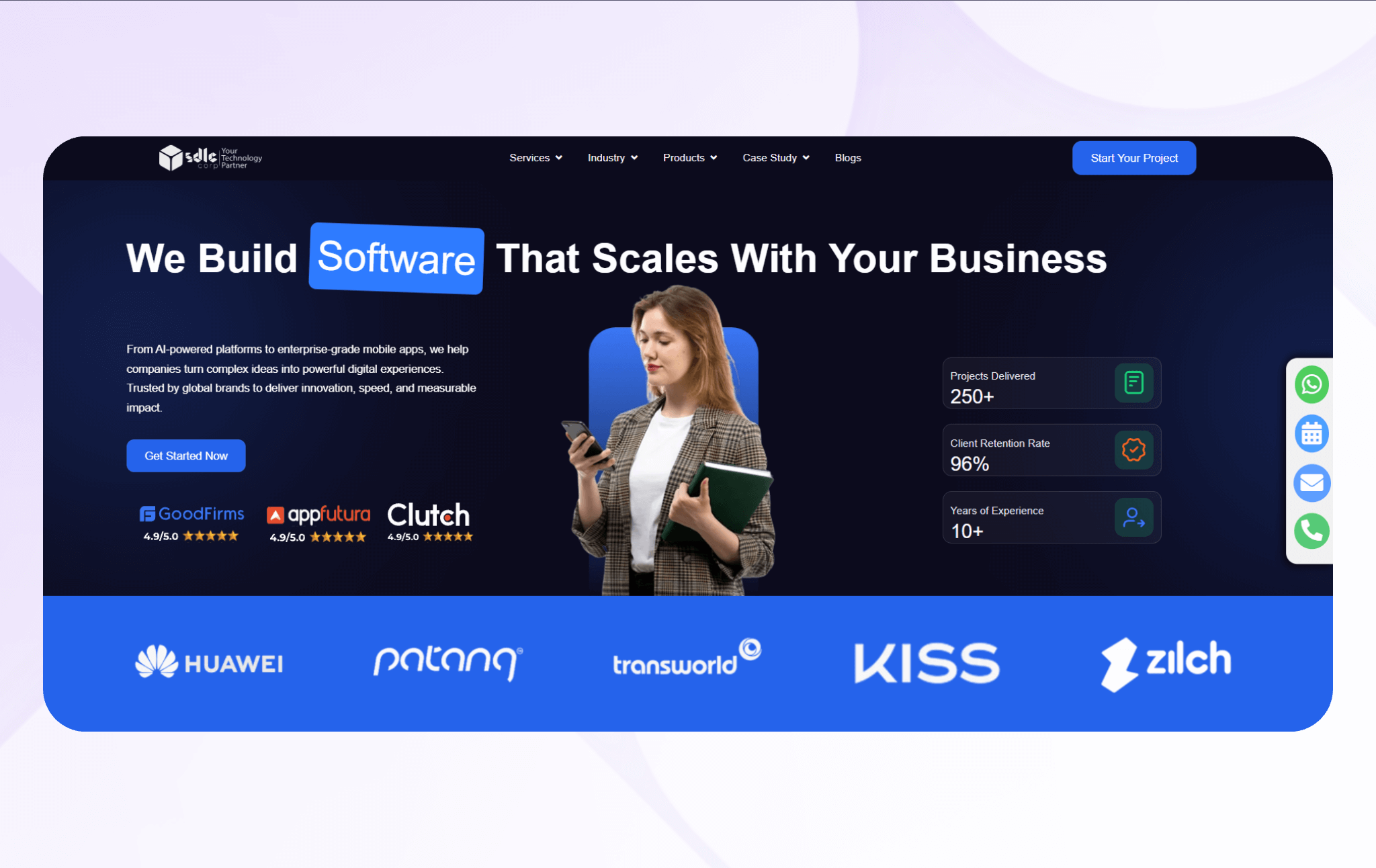
SDLC Corp serves businesses of all sizes, from startups to enterprises with full-stack web, mobile, and cloud solutions across multiple industries.
Key Features
- Digital transformation and legacy modernization: SDLC specializes in migrating outdated systems to modern architectures. They’ll integrate new modules and refactor core components, modernizing your legacy web app.
- Cloud-native and scalable architecture design: Their teams deploy microservices, serverless functions, and containerized infrastructure to scale your performance, meeting your user base's needs.
- Data, AI, and analytics integration: SDLC adds machine learning, predictive analytics, and data pipelines to transform operational data into actionable insights.
Pros
- Strong track record & client retention: SDLC Corp has completed 500+ projects and has built a strong client retention record, according to reviews.
- Competitive pricing with high value: Clients praise their cost-to-outcome ratio, particularly for transformation projects spanning multiple tech domains.
Cons
- Potential communication overhead across global teams: With offices across multiple time zones and geographies, you might encounter delays.
Bottom Line
If your goal is to transform your company’s clunky old web app into modern and stellar software, SDLC Corp offers a balance of depth and value.
3. App Maisters: Best For Enterprise-Level Scalability
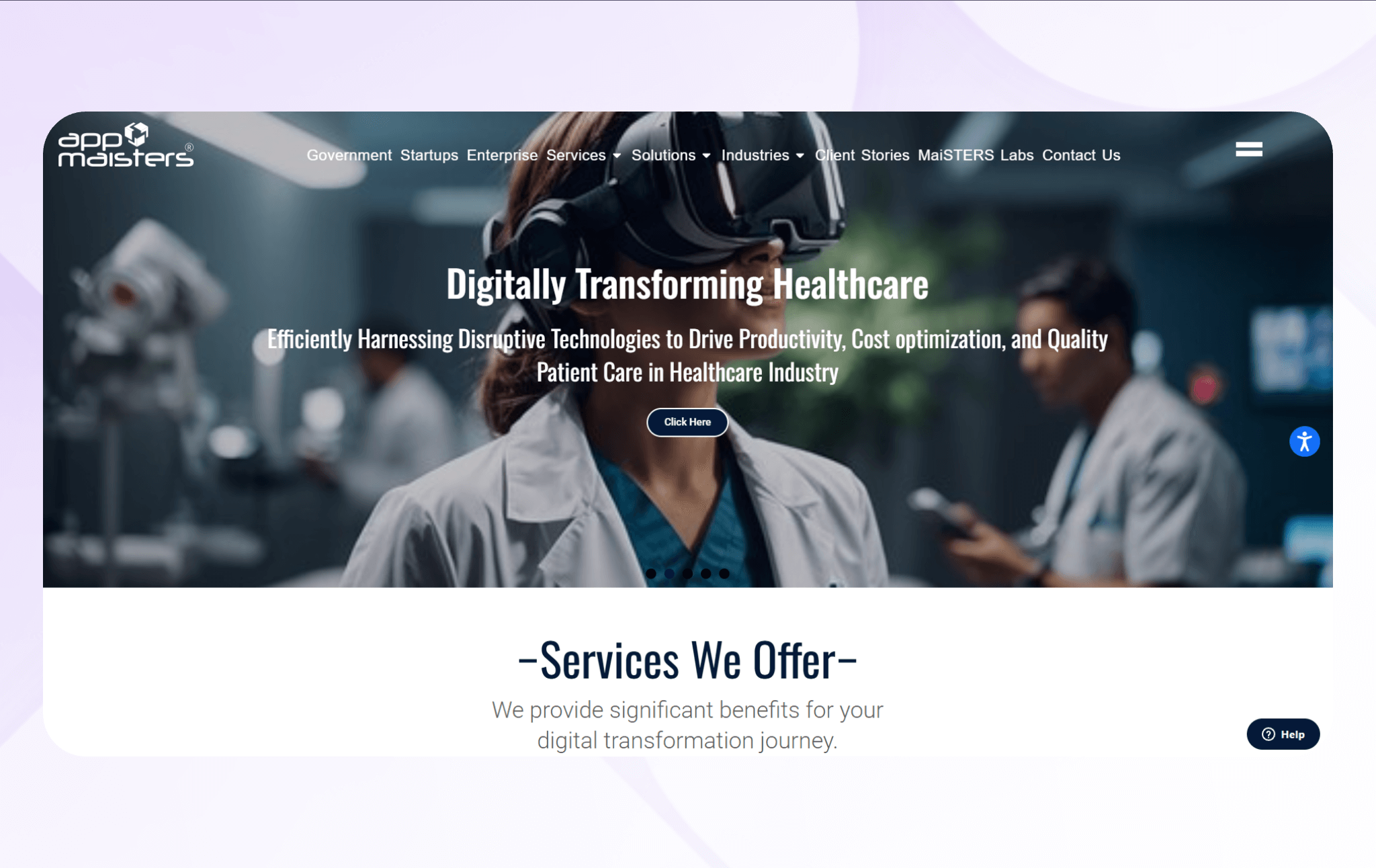
App Maisters builds scalable, secure web and mobile systems, specializing in enterprise clients. They also serve the government and public sector organizations.
Key Features
- Enterprise app architecture with integration support: App Maisters builds apps that sync with legacy systems, databases, and internal APIs to maintain consistency across platforms and reduce migration risk.
- Cloud & scalable infrastructure engineering: They design apps with load-balanced, horizontally scalable cloud models to support growth in user base and data volume.
- End-to-end DevOps and automation: The team handles continuous integration, automated testing, and deployment pipelines to maintain reliability and speed at scale.
Pros
- Strong enterprise credibility: The company’s public sector and large-scale client work gives confidence in handling mission-critical, regulation-heavy environments.
- Scalability focus: App Maister focuses its architecture, cloud infrastructure, and DevOps discipline to provide reliable scaling under heavy user load.
Cons
- Less flexibility for pivots: Their tightly engineered systems may require more effort to rearchitect when your business model or direction changes drastically.
Bottom Line
If you aim for long-term enterprise growth, need compliance and integrations, and can invest accordingly, App Maisters stands out. Their experience in complex, regulated domains make them a strong partner for scaling web applications for the public domain or various enterprise sectors.
4. Utility: Best For AI-Driven Mobile & Web Hybrid Apps
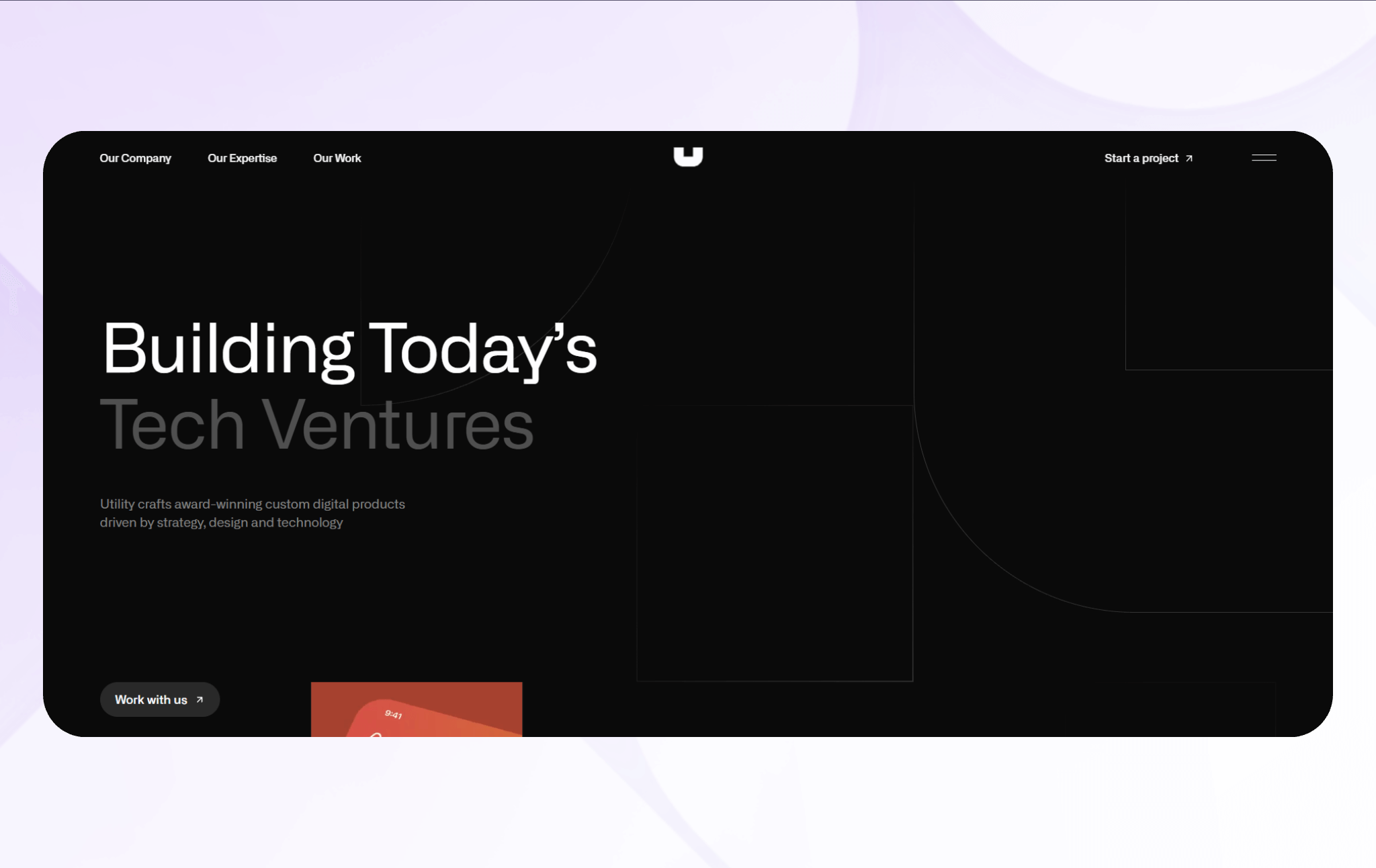
Utility is a web app development agency that blends AI, design, and engineering to build hybrid mobile and web applications. They cater to startups, enterprises, and all businesses in between.
Key Features
- AI-augmented product strategy: Utility embeds AI-driven insights into ideation, user research, and product roadmapping to inform design decisions and optimize feature sets.
- Scalable engineering: The company designs modular codebases, microservices, and cloud architectures that support growth, feature expansion, and performance demands.
- Intelligent UX interface: They weave ML models, smart features, and adaptive UI into hybrid apps to deliver personalized and predictive user experiences.
Pros
- Hybrid app development (web and mobile): They use cross-platform frameworks and web technologies to build apps that work across mobile and browser with a unified backend, helping businesses reach a broader user base.
- One-stop shop: Utility offers end-to-end services (strategy, design, engineering, growth), so you don’t need to shop for multiple vendors.
Cons
- High project minimums: Although they offer services for startups, their pricing minimums exceed what’s needed for a simple MVP, so you’ll face a higher upfront cost.
Bottom Line
If you want a hybrid mobile and web product powered by AI and built for scalable growth, Utility is a strong choice. Their technical expertise makes them well-suited for complex, high-performance app projects.
5. OpenXcell: Best For Blockchain and Web 3 Apps
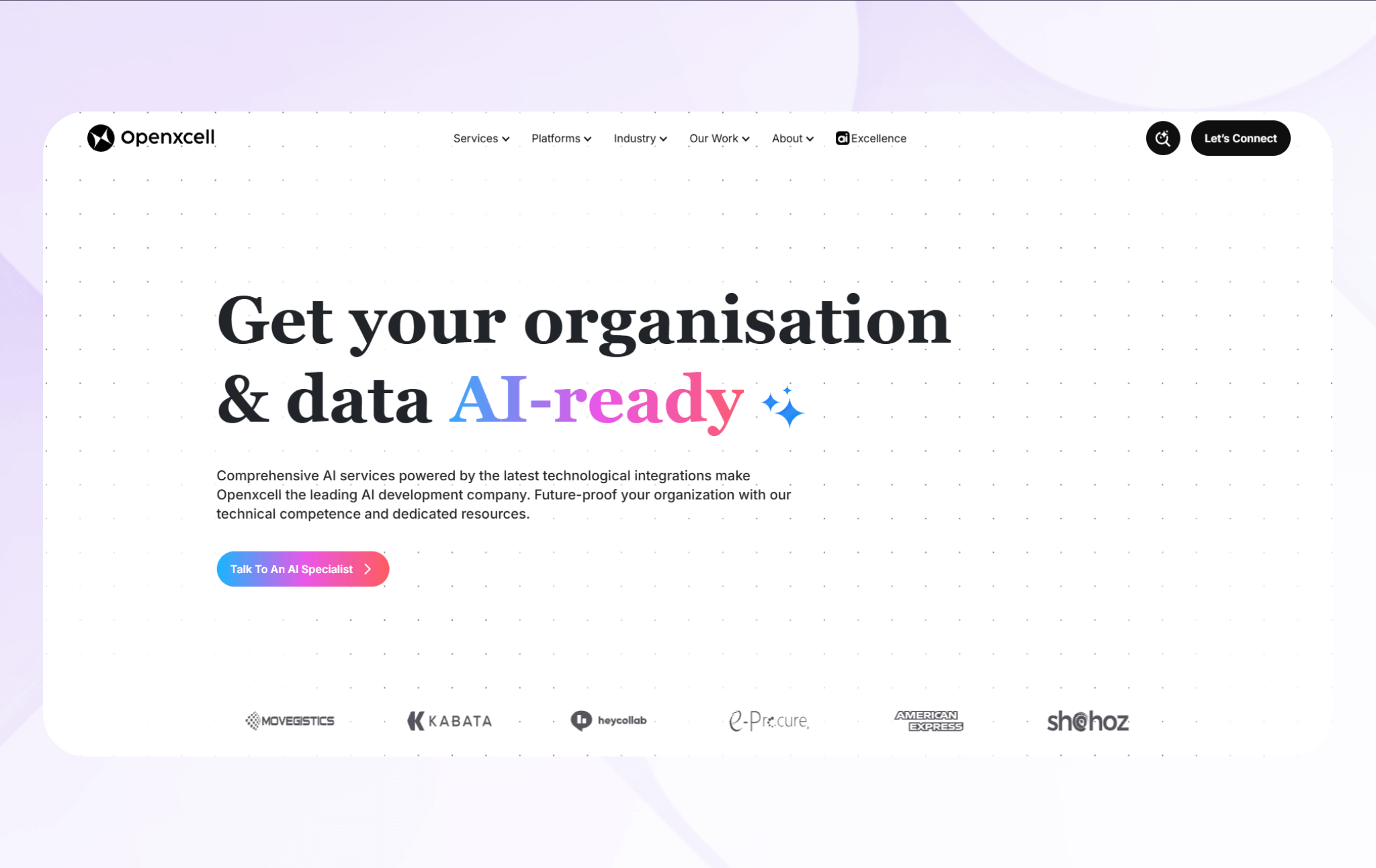
OpenXcell develops web, mobile, AI, and blockchain solutions using creative engineering and advanced technology. Founded in 2008, OpenXcell has over 15 years of industry experience.
Key Features
- Full-stack web and SaaS development: OpenXcell builds responsive, scalable web apps, SaaS platforms, and PWAs (Progressive Web Apps) using modern stacks like React, Node.js, Django, and multi-tenant architectures.
- Blockchain and emerging tech solutions: The team specializes in developing blockchain, smart contracts, and building Web3 apps.
- DevOps, CI/CD (Continuous Integration/Continuous Delivery), and scalable infrastructure: They incorporate continuous delivery, containerization, cloud automation, and infrastructure as code to support growth and reliability.
Pros
- Broad technology breadth: Their ability to combine web, mobile, AI, blockchain, and DevOps under one roof simplifies vendor management.
- Strong innovation reputation: OpenXcell’s focus on AI, blockchain, and tech integration distinguishes it among development firms that focus only on web or mobile app development.
Cons
- Scaling complexity increases costs: As projects grow in tech sophistication, maintenance and extension costs rise sharply.
Bottom Line
OpenXcell suits businesses seeking AI, blockchain, and Web 3 development. The company offers several years of experience dealing in these niches.
6. Closeloop Technologies: Best For Agile Startups & MVPs
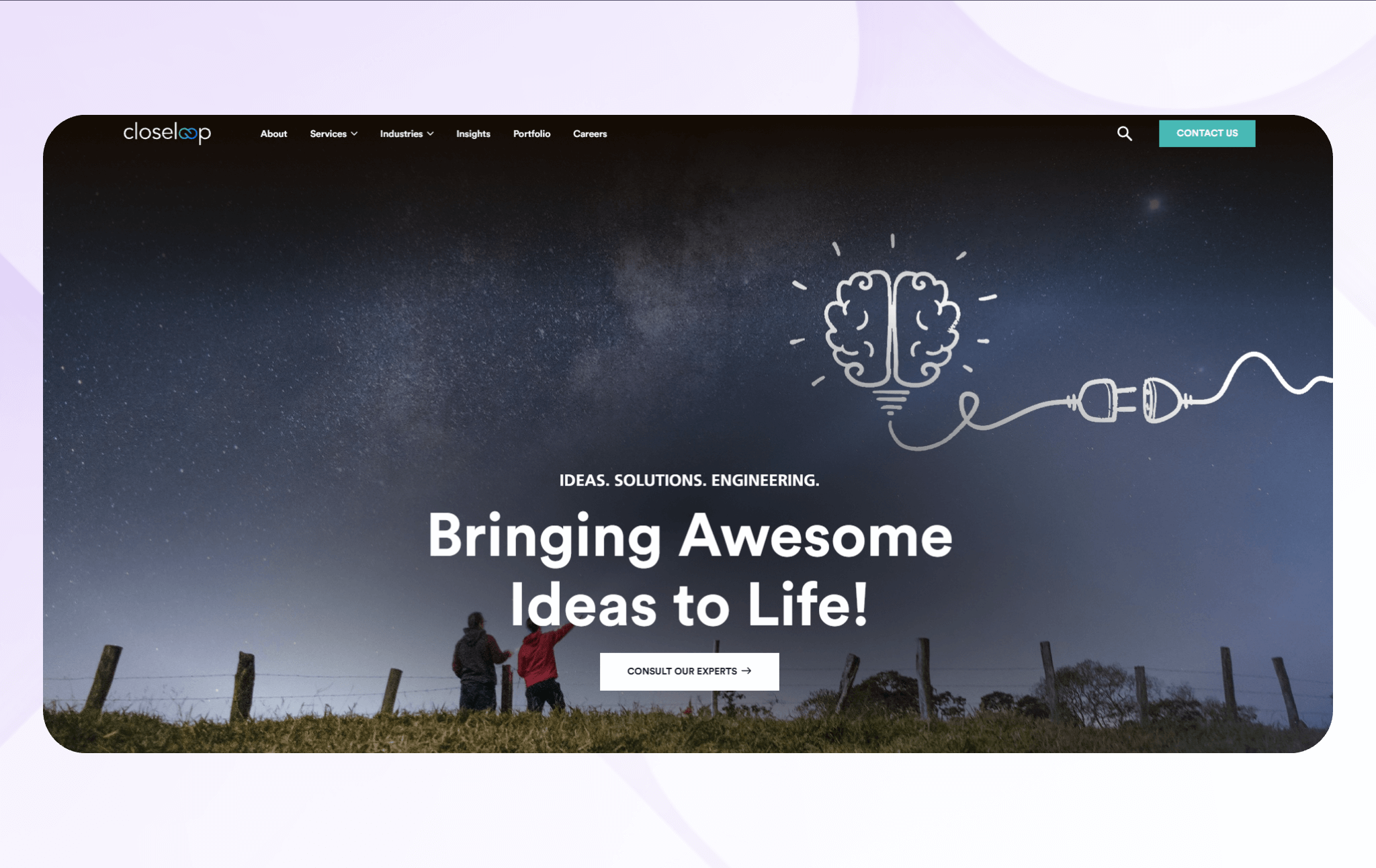
Closeloop Technologies builds web and mobile apps for startups and early-stage ventures, focusing on minimum viable product (MVP) projects, but they also scale to enterprise demands.
Key Features
- Onshore-offshore delivery model: They combine U.S. project management with offshore engineering to balance cost, communication, and quality.
- Tech stack flexibility and modernization: The team works with JavaScript, Node, React, Python, cloud platforms, and legacy systems, refactoring as your product evolves.
- Agile team scaling: You can ramp teams up or down and get executive technical guidance (architecture, tech strategy) as your startup matures.
Pros
- Startup-friendly rates: With hourly rates between $25–$49, project estimates can run under $50,000.
- Proven track record across sizes: They have delivered 250+ projects across startup and enterprise clients, showing the ability to scale from MVP to full systems.
Cons
- Resource constraints during peak demand: During busy periods, small teams may face strain, which slows delivery and limits capacity for new tasks.
Bottom Line
Closeloop Technologies is a viable option for startups. Their hybrid delivery, agile approach, and experience from MVP to scale make them a dependable partner for early-stage and growing ventures.
7. Instinctools: Best For Long-Term Partnerships And Custom Solutions
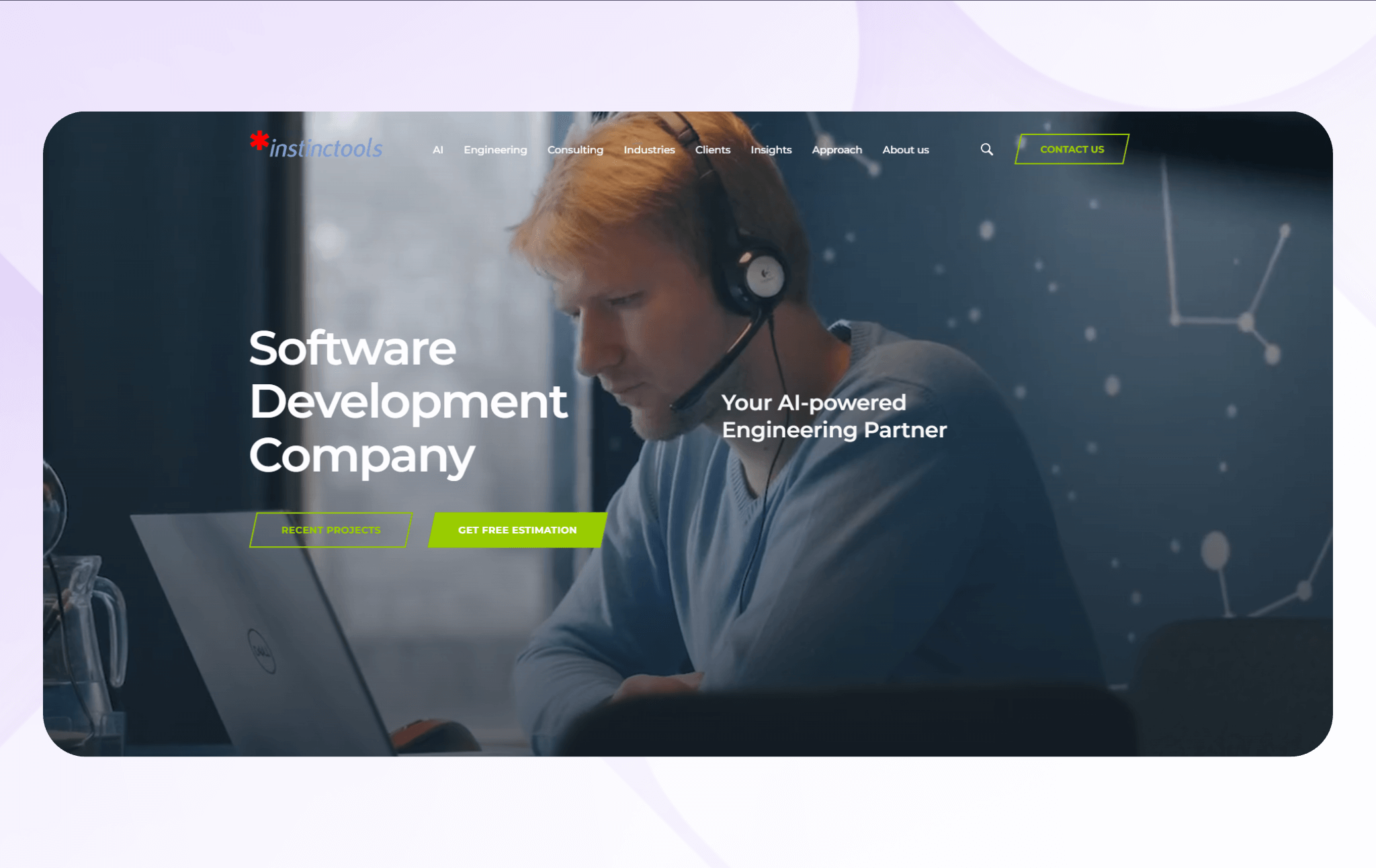
Instinctools is a global software engineering firm that specializes in AI, custom systems, cloud, and web solutions, catering to mid-to-large enterprises.
Key Features
- AI, data analytics, and intelligent systems: Instinctools embeds AI, ML, data visualization, and intelligent logic into apps, turning data into actionable insights.
- Established delivery models: They offer dedicated teams, offshore development centers, and partner programs to scale teams, manage operations, and align with client workflows.
- Custom end-to-end software development: The company crafts systems from concept through deployment, prioritizing maintainability, scalability, and performance across evolving business needs.
Pros
- Strong continuity and client retention focus: Instinctools positions itself as a long-term partner, not just a project vendor, supporting continuous system evolution.
- 25+ years of global experience: With over two decades in software engineering, Instinctools brings proven expertise, process maturity, and technical stability to large-scale digital projects.
Cons
- Slower ramp-up for ultra-lean startups: Because they favor long development time, very early startups seeking MVPs may find them less nimble.
Bottom Line
If you seek a development partner that works with you for the long term and handles deep technical integrations, Instinctools might suit your development needs. Their mix of custom engineering, AI/data skills, and delivery flexibility suits businesses that plan on evolving their platform over the years.
How I Tested These Web App Development Companies
Any company can claim to be the “best” web app developer. But to prove their worth, I tested each business and pored over reviews.
Here’s how I evaluated these companies:
- Full-stack development capabilities: Teams that provide both backend and frontend capabilities (full stack) offer greater convenience. You won’t need to hire another agency to handle separate parts of your app. To evaluate this, I reviewed active projects, analyzed GitHub contributions, and assessed expertise with React and other frameworks.
- Real-world performance: Performance determines user satisfaction and retention. I checked reviews on Clutch.co, Reddit, and Trustpilot to learn about developed features like API response times and data handling. Companies receiving reviews about optimized speed without sacrificing design or security scored high.
- Technical and niche expertise: I looked for companies that blend practical engineering with forward-thinking innovation. By evaluating project profiles, I discovered companies that developed web apps using emerging technologies like Web3, AI, and blockchain to address real business challenges while maintaining scalability.
I also considered these factors:
- Project management process: Strong project management keeps builds on track and aligned with business goals. To measure this, I scanned reviews that explained how each company planned, tracked, and delivered projects using agile or Scrum.
- Support and maintenance: Post-launch support determines how well apps perform over time. I evaluated each team’s maintenance plans, update frequency, bug-resolution speed, and support reviews written by clients.
What to Look for in a Web App Development Company
Finding the best web app development companies starts with knowing what to look for before signing a contract.
Follow these steps to find a partner that matches your goals:
Step 1: Define Your Project Requirements
Start by documenting the outcomes you want to achieve and your app’s overall user experience. Define your must-have features, integrations, budget limits, and launch milestones so stakeholders can align on scope and success criteria. Determine if your web app needs to comply with HIPAA or other standards.
When you share detailed project requirements with web app development companies, they can propose accurate timelines and suitable architectures. Clear communication of your goals sets the foundation for smoother collaboration and faster completion.
Step 2: Evaluate Technical Expertise and Industry Fit
Verify each company's relevant experience. Confirm their preferred tech stack, cloud platform, and data model so it fits your needed specifications. Request project portfolios and look for apps that function similarly to how you want yours to perform.
Step 3: Ask About Security, Compliance, and Scalability
Confirm data handling practices, encryption standards, access controls, and audit readiness for regulations that apply to your users and markets. Learning these compliance fundamentals allows you to vet companies that can build a web app that aligns with your industry’s standards.
Politely press for examples of capacity planning, horizontal scaling, load testing, and disaster recovery. Learn each company’s quality-control and scalability processes. You’ll need this information because scalability and resilience directly impact user trust and your ability to grow without system failures or costly downtime.
Step 4: Compare Pricing Models and Contracts
When asking for pricing, request estimates that include clear development deadlines, milestone payments, and change-order rules that protect timelines when scope shifts occur. Understanding these terms before you start development can prevent you from going over budget and keep your project on schedule when priorities change.
Weigh fixed-price predictability against time-and-materials flexibility. Your contract should include the following:
- Code ownership: Ownership defines who legally owns the app’s source code after development. If you own your code, you can modify, maintain, or migrate your product without needing the developer’s ongoing permission or involvement.
- Third-party licenses: These licenses outline the rights and restrictions for external libraries, APIs, or plugins used in your app. Understanding license terms prevents unexpected fees, legal risks, or future dependency issues with proprietary components.
- Acceptance criteria: Define measurable standards that the development company must meet upon project completion. Both parties agree on what qualifies as ‘done’ before signing off on completed milestones.
- Warranties: Like the warranty on your shiny new iPhone, a defined warranty period with a development company guarantees accountability and product stability before entering paid maintenance phases.
- Maintenance and support obligations after launch: This contract element explains the developer’s responsibilities for post-launch maintenance, updates, and troubleshooting.
Note: Be sure to have a lawyer review this information. Repeat the process with three or four companies to compare fairness, transparency, and overall value.
Step 5: Consider Communication and Ongoing Support
Strong communication reduces risk by aligning expectations before decisions harden.
Consider time zone differences and the speed of app development, and use these factors to determine the best-fit company.
Look for issue tracking and proactive maintenance plans. These plans should cover security patches, dependency updates, performance monitoring, and roadmap collaboration. Ongoing support keeps your web app improving after release.
My Final Verdict: Which Web App Development Company Should You Choose?
Finding the right web app development company depends on your goals, resources, and growth plans. I selected the top 3 companies below because they combine proven performance, scalability, and the ability to create unique or niche web apps.
Each option below caters to a different user base:
- Choose Blaze if you need speed: Teams needing quick, secure app launches benefit most from Blaze’s no-code platform. It’s ideal for enterprises that want to prototype, iterate, and deploy web apps rapidly using built-in integrations and scalable hosting. And it’s a more cost-effective option than hiring a development company.
- Choose Utility if you want customization: Mid-size or enterprise businesses with complex workflows should consider Utility. It suits teams needing tailored interfaces and integrated backend systems. The company will handle everything from UX research to multi-platform deployment with reliable scalability.
- Choose OpenXcell if you need advanced technologies like Web3 or blockchain: It’s ideal for businesses developing decentralized apps, NFT marketplaces, or secure transaction systems. Their engineers bring expertise in this newer niche, with the ability to build frameworks tailored to enterprise-grade performance and reliability.
When should you avoid hiring a web app development company? Companies that are unsure of their goals, scope, or timeline should avoid jumping straight into a contract.
If you’re looking to save money and don’t want to deal with an extended timeline, consider a no-code platform like Blaze that’s a fraction of the cost and puts you in the driver's seat for app development.
Get Started with Blaze
Decide that hiring a web app development company isn’t for you? Go the no-code route and get Blaze, which lets you create your own web app without writing a line of code. Here’s why more businesses skip development company shopping and are opting for Blaze:
- No-code simplicity: Build sophisticated business tools using an intuitive drag-and-drop interface. No coding or technical expertise is required.
- Integrations: Integrate effortlessly with external databases and third-party apps for automated data transfers and real-time notifications.
- Security features: Protect your applications with single sign-on, automated security scans, and full HIPAA and SOC 2 compliance.
- White-glove support: Our dedicated team handles deployment and ongoing maintenance, ensuring your applications run flawlessly 24/7.
Ready to transform your ideas into enterprise-ready web applications? Schedule a free demo with Blaze now.
Frequently Asked Questions
What Services Does a Web Application Development Company Provide?
A web application development company builds custom software for businesses. Covering frontend and backend design work, their core services are development, UI/UX design, cloud configuration, API integration, and database architecture.
What Industries Benefit Most From Custom Web App Development?
Industries that require tailored software features and solutions benefit the most from custom web app development. These industries include healthcare, finance, e-commerce, logistics, education, and government sectors.
Are No-Code Web App Development Companies Secure?
Yes, no-code web app development companies are secure when they follow industry best practices and comply with HIPAA and SOC 2 standards. Some features that help with compliance are role-based permissions, encryption, and audit logs. Verify each platform’s security standards before selecting one.
The Secure No-Code & AI Platform
Supercharge your team's operations and performance with better apps and tools.
Create custom apps fast
Secure & HIPAA compliant
Streamline complex workflows

The Secure No-Code Platform
Build apps with best-in-class security.
Related Articles
Discover related guides on healthcare no-code development, HIPAA compliance, security, integrations, and launching apps faster.
%20(1).png)
Cerner vs. Epic: Which EHR System Is Better? (2026)
I compared Cerner vs. Epic across clinical features, usability, interoperability, implementation, and cost. See which EHR better fits your organization.
%20(1).png)
Mendix vs. Appian: Which Low-Code Platform Is Better? (2026)
I compared Mendix vs. Appian across app development, process automation, integrations, scalability, and pricing. Find out which platform fits your needs.
%20(1).png)
8 Best Base44 Alternatives and How to Pick (2026)
After comparing 8 Base44 alternatives, I found clear differences in code access and mobile deployment. See which platform best matches your project needs.