
Table of contents
Top 10 Franchise Portals + How to Build Your Own (2026)

Written by
Blaze Team

Reviewed by
Bruno Denuit
Expert Verified
After testing dozens of platforms for compliance, lead tracking, and multi-location communication, here are the 10 franchise portals that actually simplify operations instead of adding more complexity.
Top 10 Franchise Portals: At a Glance
| | Best For | Key Features | Starting Monthly Pricing |
|---|---|---|---|
| Blaze.tech | Customizable portals for multi-location franchisors | Drag-and-drop builder with workflow automation | $1,500 |
| Jolt | Food, beverage, and hospitality operational management | Mobile checklists with real-time compliance monitoring | Custom quote |
| FranConnect | Enterprise-level automation for complex franchises | CRM, compliance, analytics supporting large systems | Custom quote |
| Five.co | Technical teams needing low-code customization | Visual database tools supporting tailored workflows | $29.99 |
| FranchiseSoft | End-to-end management across franchise operations | Compliance tracking with royalty processing tools | Custom quote |
| Connecteam | Mobile workforce communication and task coordination | Messaging, scheduling, and training inside branded apps | $35 |
| LoopSpark | Franchise community engagement and communication enhancement | Social feeds with resource library analytics | Custom quote |
| Pipedrive | Managing franchise sales pipelines effectively | Lead tracking with automated email follow-ups | $24/user |
| Franchise Gator | Generating franchise leads through directory exposure | Targeted listings delivering consistent franchise inquiries | Custom quote |
| Zoho Franchise Management App | Zoho ecosystem users and developers | Low-code tools for building a custom portal | $12/user |
1. Blaze: Best Overall Franchise Portal Builder
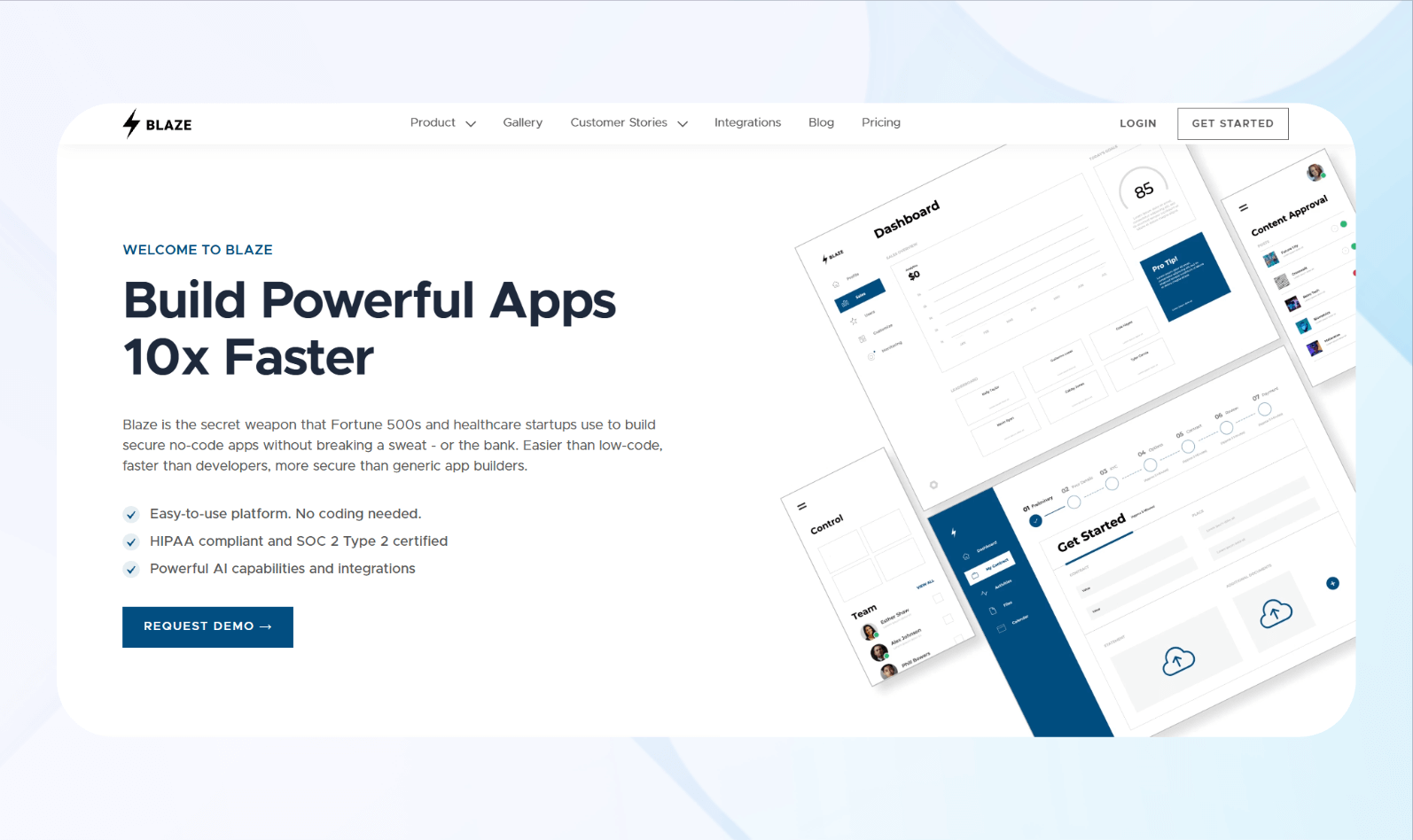
Blaze isn't an off-the-shelf franchise portal. It's a no-code platform that lets you create a customized portal and supporting tools, such as a database, without developers.
I tested Blaze by building an automated system to track a sample set of compliance data and manage dummy inventory using its simple drag-and-drop editor. Then, I created a custom database to store all compliance records in one place, without SQL.
My customized system linked inventory items to required rules, automatically tracked renewal dates, and generated audit-ready reports. It also kept a clear record of every change made in my franchise portal. Compared to an off-the-shelf solution, Blaze gave me more control over where I put my data and how I tracked compliance.
Key Features
- No-code interface: Design branded franchise portals using drag-and-drop tools and premade elements like forms, charts, and buttons.
- Automation tools: Automate approval processes, compliance checks, and task assignments across franchise locations using conditional triggers and role-based routing.
- Database and file management: Use Blaze's no-code database builder to create a storage system for contracts, brand guidelines, and other data assets.
Pricing
Start using Blaze at $1,500/month.
Bottom Line
Blaze gives you complete control to create custom portals and internal tools built for your brand's specific needs without a technical team. It's ideal for growing franchise systems that need scalable, customized, no-code solutions and centrally managed portals.
2. Jolt: Best for Food and Beverage and Hospitality Franchises
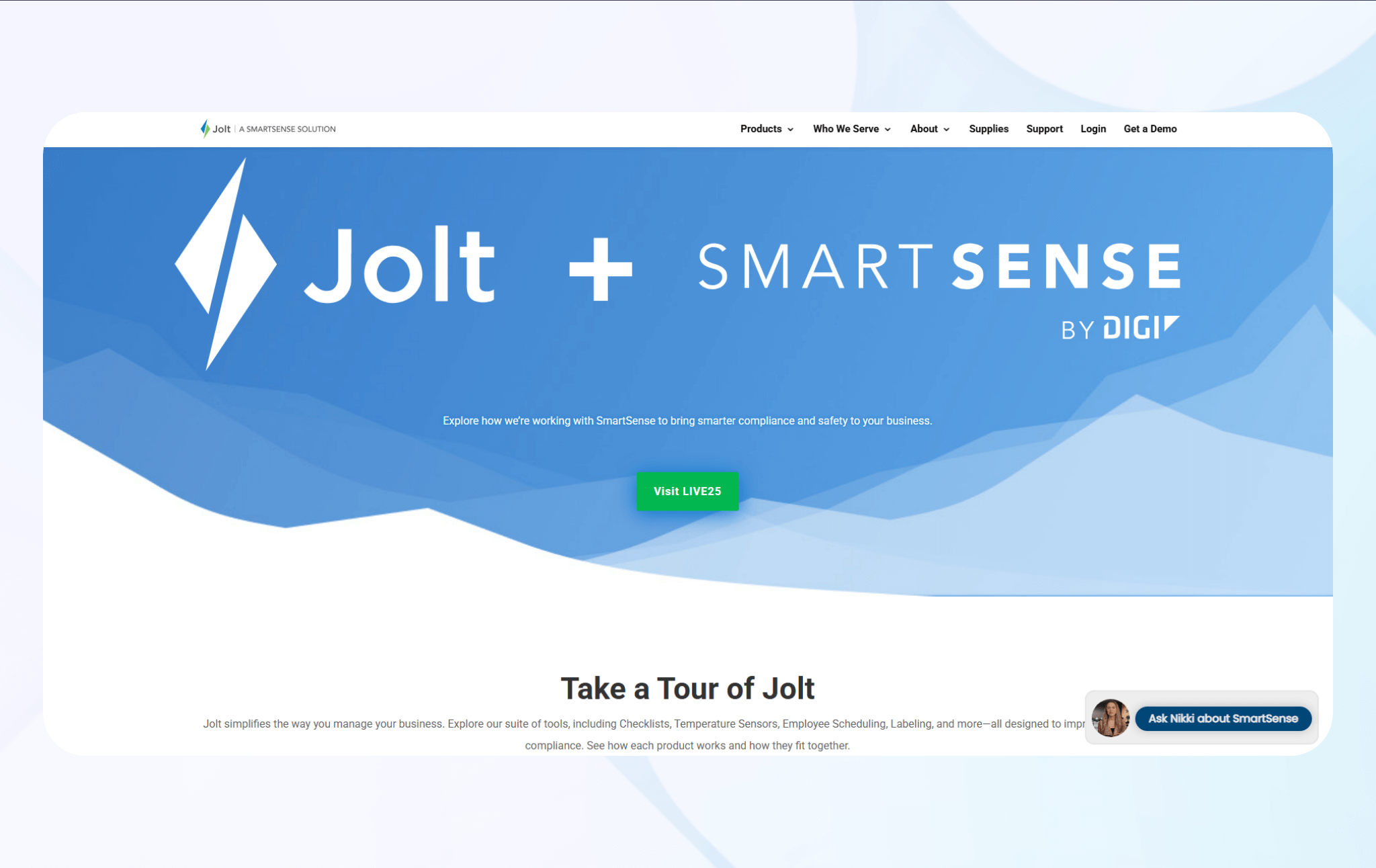
Jolt combines a mobile app with admin dashboards for portal management. It's popular with restaurants, foodservice companies, and retailers.
I tested Jolt by setting up a sample site and assigning daily checklists to each team through the mobile app. The admin dashboard let me see who accomplished each task and when.
Key Features
- Digital checklists and task management: Deploy standardized opening, closing, and shift checklists that employees complete on tablets or smartphones.
- Temperature and food safety monitoring: Track refrigeration temperatures, how long hot food stays warm (hot-holding time), and food safety protocols, with automatic alerts across all locations from a single main dashboard.
- Real-time compliance monitoring: Monitor task completion rates, view missed assignments, and receive instant notifications so you can address issues immediately.
Pricing
Contact Jolt's sales team to request a demo and get a custom quote.
Bottom Line
If you're in food and beverage, retail, or hospitality, Jolt gives you a real-time, clear view of daily tasks and how well teams complete them.
3. FranConnect: Best for Enterprise Franchise Operations
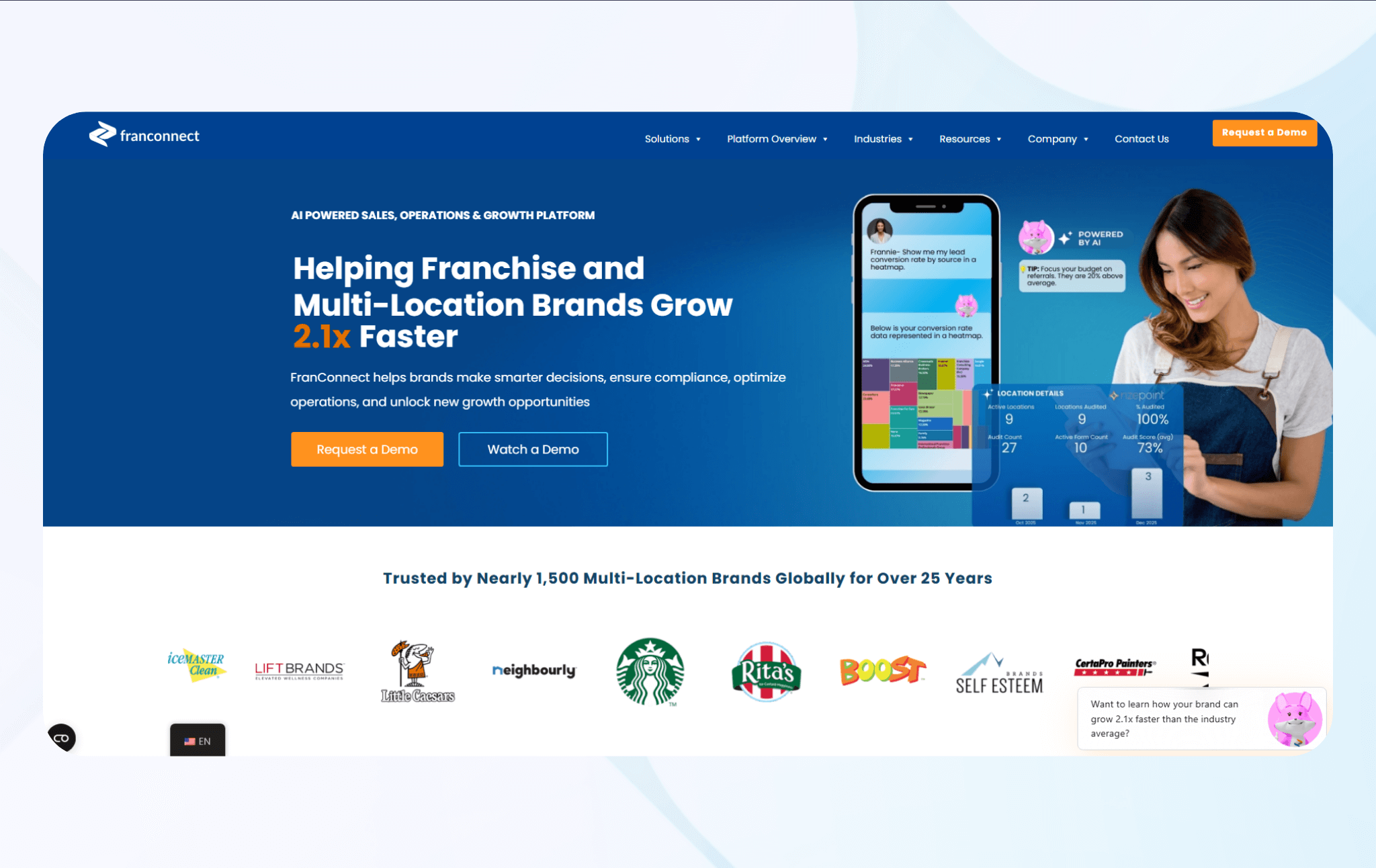
FranConnect is a franchise management platform that helps brands automate sales tracking, reporting, and daily operations across several branches.
I tested FranConnect by setting up sample franchise locations and sales data, and checking how the data appeared in reports. Then, I explored the operations tools to see how well the platform managed each of my sample franchises, controlled user access, and tracked performance.
Key Features
- Franchise development CRM: Manage franchise sales pipelines with lead scoring, automated follow-ups, and territory management.
- Operations and compliance management: Use digital checklists, audits, guides, and performance scorecards to help franchisees follow your brand rules.
- Marketing resource management: Distribute approved marketing materials and run all local marketing programs from a single place.
Pricing
Contact FranConnect to set up a demo and receive a quote.
Bottom Line
FranConnect delivers deep functionality for enterprise franchisors who need automation and analytics to manage complex, high-volume franchise operations.
4. Five.co: Best for Franchises with Technical Teams
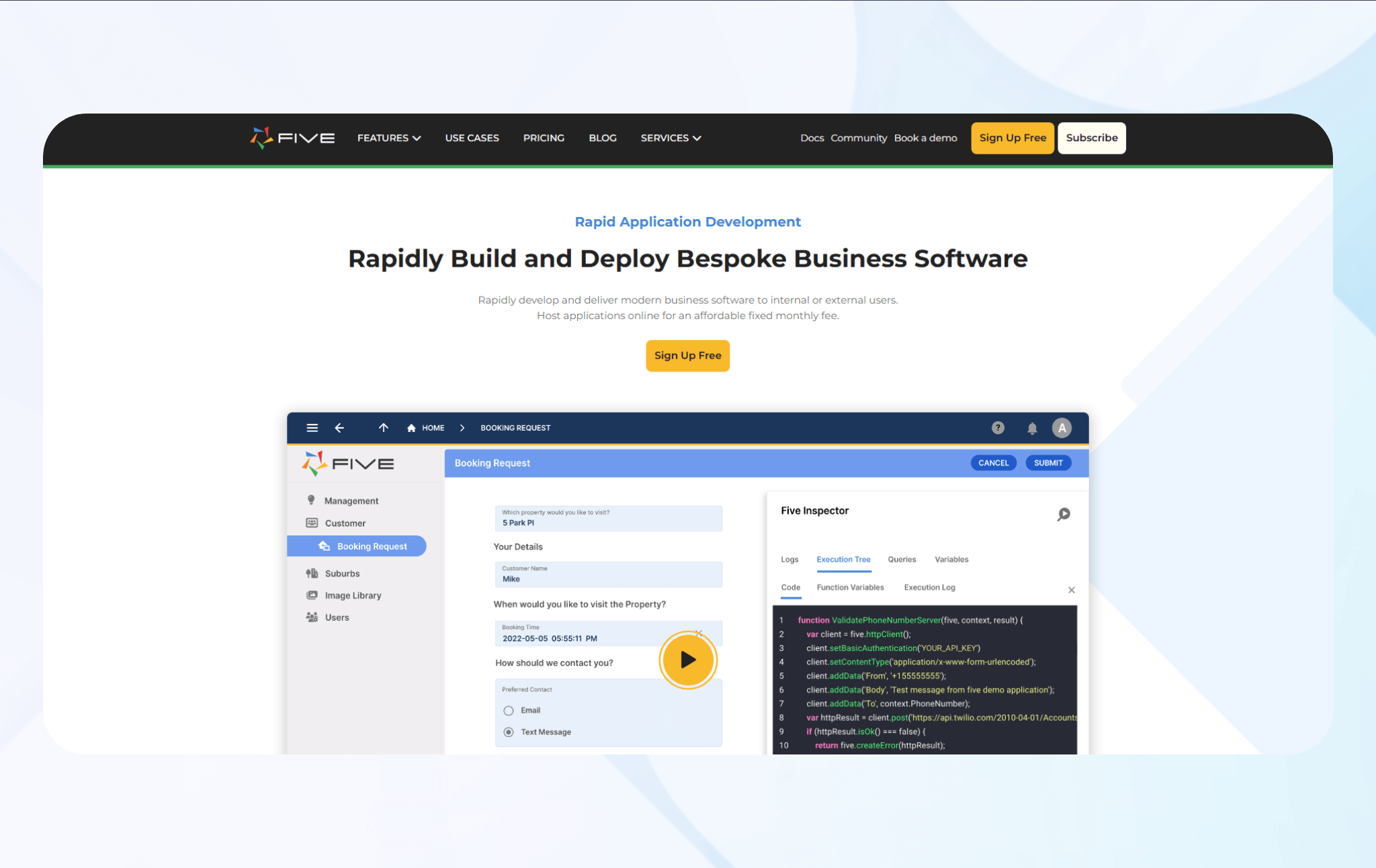
Five.co is a low-code platform that helps teams build custom franchise portals. It works best for technical teams that want full control over their data and how their systems run.
I tested Five by building a custom database and internal portal using JavaScript and SQL logic. Writing my own commands enabled me to build location-specific workflows with my sample data.
Key Features
- Visual database builder: Design custom database schemas to store franchise data, location details, compliance records, and operational metrics.
- Visual app builder: Build franchise portals using a low-code interface that combines visual design tools with SQL queries, business logic, and custom functions for specialized requirements.
- User authentication and access control: Set up secure logins and role-based permissions for different user types.
Pricing
Five's pricing starts at $29.99/month.
Bottom Line
Five.co allows you to build a highly customized database-centered portal, as long as you have developers or your team.
5. Franchise Soft: Best for End-to-End Franchise Management
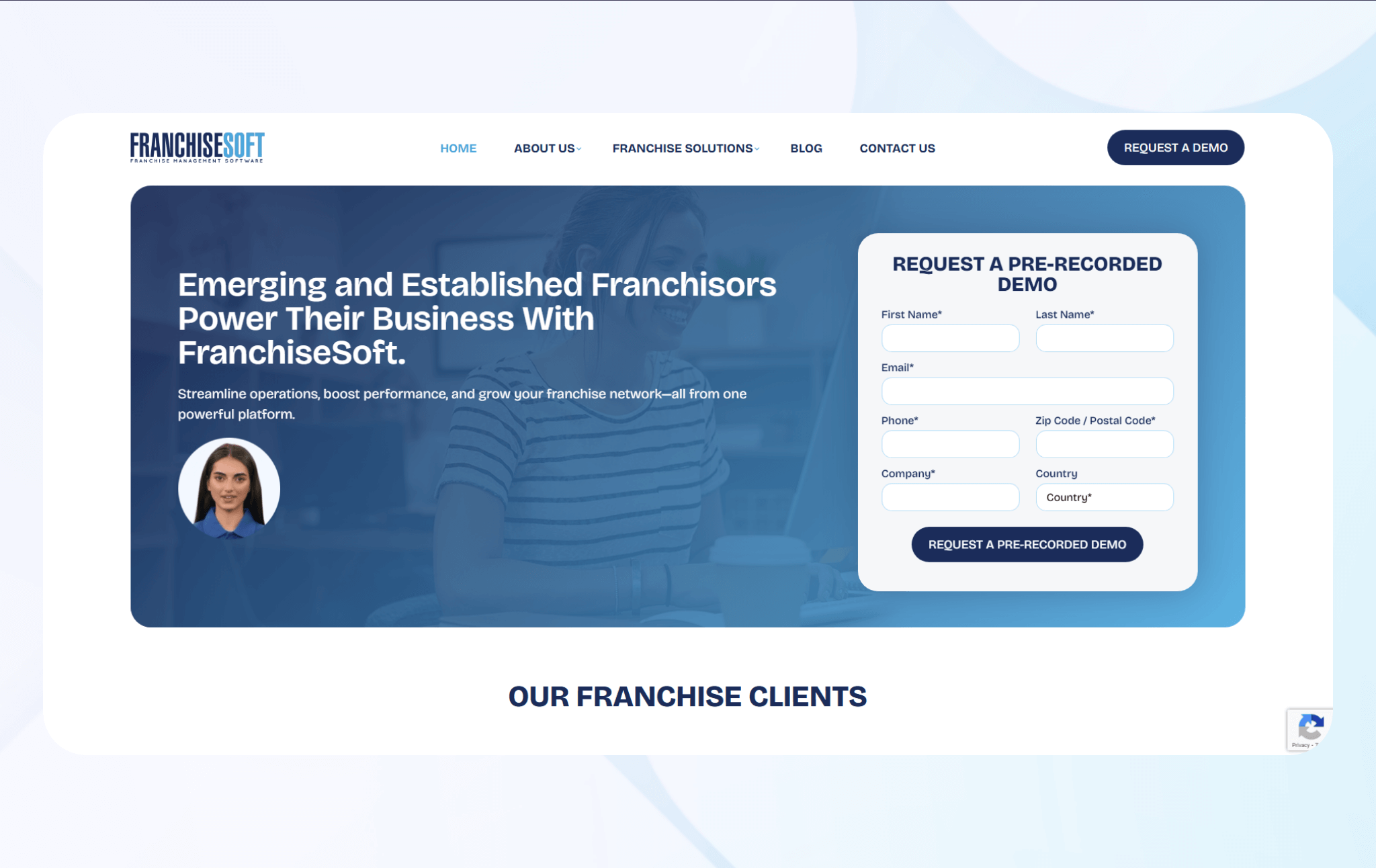
FranchiseSoft is a franchise management platform that handles sales, onboarding, compliance tracking, and royalty management. It works well for mid-sized and large franchises with many locations and brands.
For testing, I set up sample franchises with multiple locations and vendors. Using dummy data, I checked how the platform handled royalty calculations, onboarding steps, and compliance tasks.
Key Features
- Compliance and audit tracking: Check that each franchise follows your rules, meets daily tasks, and submits reports on time.
- Royalty and payment processing: Calculate royalties, track payments, make invoices, process payments, and match accounts for each location.
- Communication and document portal: Share your brand guides, marketing files, manuals, and news in one online portal.
Pricing
Contact Franchise Soft for a custom quote.
Bottom Line
FranchiseSoft provides tools to manage your franchise's sales, operations, and compliance in a single platform.
6. Connecteam: Best for Communication with Franchisees

Connecteam helps with employee communication, scheduling, and task management through a branded mobile app. It suits franchisors whose employees use mobile devices in their day-to-day work.
For testing, I set up a sample team workspace and assigned dummy tasks through the mobile app. I then sent in-app messages and tracked time to see how easily I could track work across locations.
Key Features
- Employee communication hub: Send announcements, updates, and messages to specific locations or employees through the mobile app.
- Time clock and scheduling: Track employee hours with a GPS time clock. You can create shift schedules, manage time-off requests, and export timesheets to payroll.
- Digital training and onboarding: Deliver training courses, step-by-step guides, and onboarding materials through mobile modules.
Pricing
Connecteam pricing starts at $35/month.
Bottom Line
Connecteam gives you affordable tools to manage your workforce on mobile. It's an option if you need mobile tools to communicate, train, and track your franchise's operations.
7. LoopSpark: Best for Franchise Community Building

LoopSpark is a franchise communication platform that connects you with franchisees through branded social feeds, resource libraries, and engagement features. It works well if you want to build a stronger franchise community and improve communication.
I tested LoopSpark by creating a sample communication hub for 5 dummy franchisee groups. By uploading an example guide to the library, I reviewed the upload speed, engagement analytics, and how quickly franchises could access material.
Key Features
- Social feed: Create a space where franchisees and HQ can share updates, wins, and ask questions through LoopSpark's messaging and automation tools.
- Resource library and document management: Organize brand materials like guides, training content, and marketing files so franchisees can find what they need inside LoopSpark.
- Engagement analytics and insights: Use analytics and reports to track franchisee performance and communications.
Pricing
LoopSpark pricing starts at $189/month.
Bottom Line
LoopSpark helps you strengthen your franchise network with social-style tools. Use it to build community, share ideas, and improve relationships with your franchisees.
8. Pipedrive: Best for Franchise Sales Pipelines

Pipedrive is a sales CRM platform that helps you manage your sales process, track candidate updates, and close deals. Your franchise development team can use it to spot new franchise opportunities, track leads, manage candidate relationships, and improve your sales process.
I tested Pipedrive by building a sample franchise sales pipeline with custom stages and sample lead data. The platform let me log activities, set up automatic follow-ups, and review the reports to see how clearly the system showed deal progress and results.
Key Features
- Lead capture and tracking: Collect franchise inquiries from websites, portals, and marketing campaigns, and log your candidates' histories in one place.
- Email integration and automation: Sync email communications, send automatic follow-ups, schedule reminders, and track email opens.
- Sales reporting and analytics: See your sales results, deal values, and team performance on simple dashboards.
Pricing
Pipedrive pricing starts at $24/seat/month.
Bottom Line
Pipedrive offers straightforward, affordable CRM tools for franchise sales teams that want a clear view of their leads and simple automation.
9. Franchise Gator: Best for Finding Franchise Leads
Franchise Gator helps connect businesses with people who want to buy a franchise. It works well for teams that want to attract serious candidates through ads and online listings.
When I tested Franchise Gator, I used sample franchise listings and analyzed how they stood to "interested buyers," played by 5 members of my team. I tracked each lead and checked how different listing content and promotions changed each buyer's interest.
Key Features
- Franchise directory listings: View detailed franchise profiles with investment requirements, support details, and brand information in a searchable directory.
- Lead tracking tools: Track incoming franchise inquiries and candidate details from Franchise Gator in your sales process, and use their filters to better target qualified leads.
- Targeted advertising campaigns: Run banner ads, sponsored listings, and premium placements across the Franchise Gator network to help more candidates see your brand.
Pricing
Contact the sales team and receive a customized quote.
Bottom Line
Franchise Gator helps provide lead opportunities if you prioritize volume and visibility. It's effective when you're looking to expand your franchise network by providing solid lead options.
10. Zoho Franchise Management: Best for Integrated Zoho Ecosystems

The Zoho Franchise Management app is a customizable, low-code app template built on the Zoho Creator platform. You can adjust it to support franchise tasks and communication, but it's not a complete standalone franchise portal.
I tested the low-code tool by building a simple onboarding process for new franchisees and organizing location records in the template. The built-in layout made it easy to change forms, set up automations, and control who could access each part of the system.
Key Features
- Zoho ecosystem integration: Connect your franchise data to Zoho Analytics, Zoho Sign, Zoho Campaigns, and other Zoho apps.
- Custom workflows and automation: If you have some developer experience, use Zoho Creator's low-code tools to build custom approvals, notifications, and task assignments.
- Operations tracking and storage: Track your franchisee's performance and manage daily tasks. You can also store your data and documents.
Pricing
Zoho's pricing starts at $12/user per month.
Bottom Line
Zoho Franchise Management works best if you're already connected to the Zoho ecosystem. The platform lets you share data across the Zoho apps you already use.
How to Build Your Own Franchise Portal in 6 Steps
Now that you know my top 10 franchise portal providers, let's discuss the setup process. By understanding the following steps, you'll know what to expect when you onboard a new franchise portal.
Step 1: Define the Purpose and Requirements of Your Franchise Portal
Before you start building your franchise portal, clearly outline its purpose and requirements. This helps you make better choices and keeps the portal working for you and your franchise partners.
Grab a pen and some paper and brainstorm what your portal will achieve for your business and franchisees. Channel your inner Picasso (or kindergarten stick-figure artist) and sketch out how you want your portal to appear. Jot down the features you want to include in your portal.
Step 2: Choose a Platform
Now that you've defined your portal's requirements, it's time to select the right software. You have 3 major options:
- Premade franchise portals: These ready-made tools come with built-in features like messaging, reports, and basic data tracking. You can set them up quickly, but they don't allow as much customization as low-code or custom options. Examples include FranConnect (if you want full franchise management) and FranchiseSoft.
- No-code/low-code platform: Using no-code/low-code tools lets you create a customized portal with a user interface. Non-technical teams can use no-code platforms, but low-code platforms require some developer experience. You can build unique franchise portals, but they aren't plug-and-play. Zoho and Blaze are examples.
- Traditional coding: You can hire a development agency to build your portal with programming. Although you'll get a highly customized result, you'll most likely pay tens of thousands of dollars, depending on complexity. And the development timeline will take months.
Step 3: Implement key features
Whether you choose a ready-made or custom portal, include these features to manage your franchise network:
- Centralized management: Create a system that lets you manage franchisee information, sales reports, and daily data in one place. This centralization will save time and reduce errors.
- Communication tools: Implement communication tools to interact with your franchisees. These tools can include announcement boards, messages, and places to share resources.
- Document access: Provide easy access to crucial documents like training materials, contracts, and operational guidelines.
- Security protocols: Security tools like encryption and access controls protect sensitive data and limit who can see certain information.
Including these 4 features enables better communication and a smoother user experience for you and your franchisees. Your franchisees can log in, get updates, and communicate from nearly any location (with a web connection).
Step 4: Configure Data Management and Integrations
Effective data management is the key to a successful franchise portal. Prebuilt franchise portals will come with their own unique database, but customization may be limited.
Most no-code/low-code franchise portal builders include a database builder that lets you customize how you organize your data. Many of these tools also let you connect your portal to third-party databases such as Airtable or MongoDB.
If you purchasea traditionally coded franchise portal, your development agency should also build a customized database using SQL or another database coding language.
Configure your database by following these steps:
- Structure your data: Decide which information matters most to your franchise. These can be sales reports, compliance checklists, inventory levels, or whatever metrics matter to you. Structure your database to capture them.
- Integrate third-party tools: Connect tools like Stripe, Gmail, and HubSpot CRM to your database so you can view all relevant information in your franchise portal.
- Standardize data inputs: Use the same data fields and names across all locations.
- Set up data relationships: Link tables such as locations, franchisees, audits, and sales to improve your reports.
- Schedule data backups: Avoid data loss during power outages by setting automatic backups. These measures protect against accidental deletions or errors and restore clean data quickly when needed.
Keep your database up to date by choosing a platform that can scale with your franchise as it grows. A good database builder will easily scale with your operations and accommodate an increasing number of employees, inventory, and operational data.
Step 5: Implement Security and Access Controls
Security matters when dealing with sensitive franchise data. Your system should include the following safeguards:
- Encryption: Use encryption to secure data both at rest and in transit. This protocol makes the data unreadable to anyone who tries to access it without permission.
- Single sign-on (SSO): Implement SSO so users can access multiple connected tools with one set of credentials.
- Two-factor authentication (2FA): Turn on 2FA to add an extra step to the login process. Requiring two forms of identification significantly reduces the risk of unauthorized access.
- Set user roles and permissions: Choose who can view, edit, or manage information.
- Implement audit logs: Track user actions across the system. Audit logs document activity, help you detect unusual behavior, and support compliance with internal policies.
Implementing and maintaining security and access controls is a full-time job. As your organization grows, hire employees to keep an eye on your platform's security.
Step 6: Test and Launch Your Franchise Portal
Before releasing your portal to your whole franchise network, run a clear testing process so you know everything works. Follow these points when releasing your portal:
- Technical testing: Check data accuracy, test security settings, and make sure integrations work. Fix any performance issues before moving forward.
- User testing: Give a small group of real users early access. Have them complete common tasks and share feedback so you can find problems and fix the workflow.
- Deployment: Launch your portal using your organization's standard deployment process. Try to keep downtime low so your franchise partners have a smooth transition.
Don't release your portal to your entire franchise network at once. Launch it slowly. Start by giving access to your smallest franchise location only so you can catch and fix problems early. Use their feedback to improve the portal, then open it up to other locations.
Common Mistakes to Avoid When Creating a Franchise Portal
Knowing the issues other franchise owners face can help you design a better system and make the rollout easier. Avoid these mistakes:
- Overloading your portal with features: Don't try to include every possible tool from day one. This leads to clutter, confusion, and a clunky system. Start with essential features and add more only when users ask for them.
- Poor organization of documents and resources: If users can't find files quickly, the portal loses value. Provide clear categories and tags, and use simple, consistent names.
- Not designing for mobile use: Franchisees often check information on the go, so a desktop-only experience will cause frustration. Make sure your portal works well on mobile devices.
- Failing to plan for integrations: Your portal must communicate with CRMs, accounting tools, or reporting systems. Otherwise, you'll create time-consuming bottlenecks. Plan important integrations early and choose platforms that connect well with your other tools.
Just like that cliche about Rome, a strong franchise portal isn't built in a day. Building a great portal will take time. You need real users and real feedback to learn what works. Start by testing it with a small group, listening to what they say, and making changes. This process can take a few months, but it will help your portal run smoothly in the long run.
Build Your Next Franchise Portal with Blaze
Instead of settling for a pre-made franchise portal with fixed features and limitations, build a custom system with Blaze. You can design a franchise portal that matches your workflows and brand without developers or coding.
Here's why more businesses go with Blaze:
- User-friendly interface: A drag-and-drop builder makes it easy to create dashboards, training hubs, operations pages, and communication tools without code.
- Secure and compliant: Built-in security features like role-based access, permissions controls, and automatic audit logs help you protect sensitive franchise data. Blaze also supports HIPAA and SOC-2 compliance.
- Expert support: A dedicated success team guides you through setup and optimization, so your portal runs smoothly.
Schedule a free demo today and learn how you can create a customized franchise portal with Blaze.
Frequently Asked Questions
1. What is a franchise portal, and why do franchisors need one?
A franchise portal centralizes the tools franchisors use to manage daily operations, including file sharing, compliance tracking, and lead collection. The right portal should align with your franchise's goals while giving you clear internal oversight and consistent team communication.
2. Should I use premade software, no-code tools, or custom coding to build a franchise portal?
Choose based on your needs and resources. You can quickly launch premade franchise portals like FranConnect. Customization is possible, but it's typically within the templates' framework. No-code platforms offer flexibility for building tailored solutions without technical skills or high costs. Custom coding delivers complete control but requires significant investment.
3. What features should every franchise portal include?
Every portal should offer centralized management, communication tools, easy document access, and strong security controls like encryption, permissions, and role-based access. These keep operations smooth and protect sensitive data. They also provide franchisees with the resources they need to succeed.
The Secure No-Code & AI Platform
Supercharge your team's operations and performance with better apps and tools.
Create custom apps fast
Secure & HIPAA compliant
Streamline complex workflows

The Secure No-Code Platform
Build apps with best-in-class security.
Related Articles
Discover related guides on healthcare no-code development, HIPAA compliance, security, integrations, and launching apps faster.
%20(1).png)
ERP System Examples: 10 Types and How Businesses Use Them
ERP system examples vary widely across company size and industry. I reviewed 10 platforms and their core functions so you can choose the one for your business.
.png)
Knack vs. Caspio: Which App Builder Is Better? (2026)
I compared Knack vs. Caspio across pricing, database capacity, and customization. See why Knack suits simpler builds, and Caspio handles more complex apps.
%20(1).png)
Pharma Software Development: The Complete Guide (2026)
Pharma software development requires planning around workflows and regulations. Learn my 4-step process to define requirements and manage deployment.