
Table of contents
Top 18 ServiceNow Competitors (2026): Tested & Reviewed

Written by
Blaze Team

Reviewed by
Justyna Wojcik
Expert Verified
1. Blaze: Best ServiceNow Competitor for Compliance
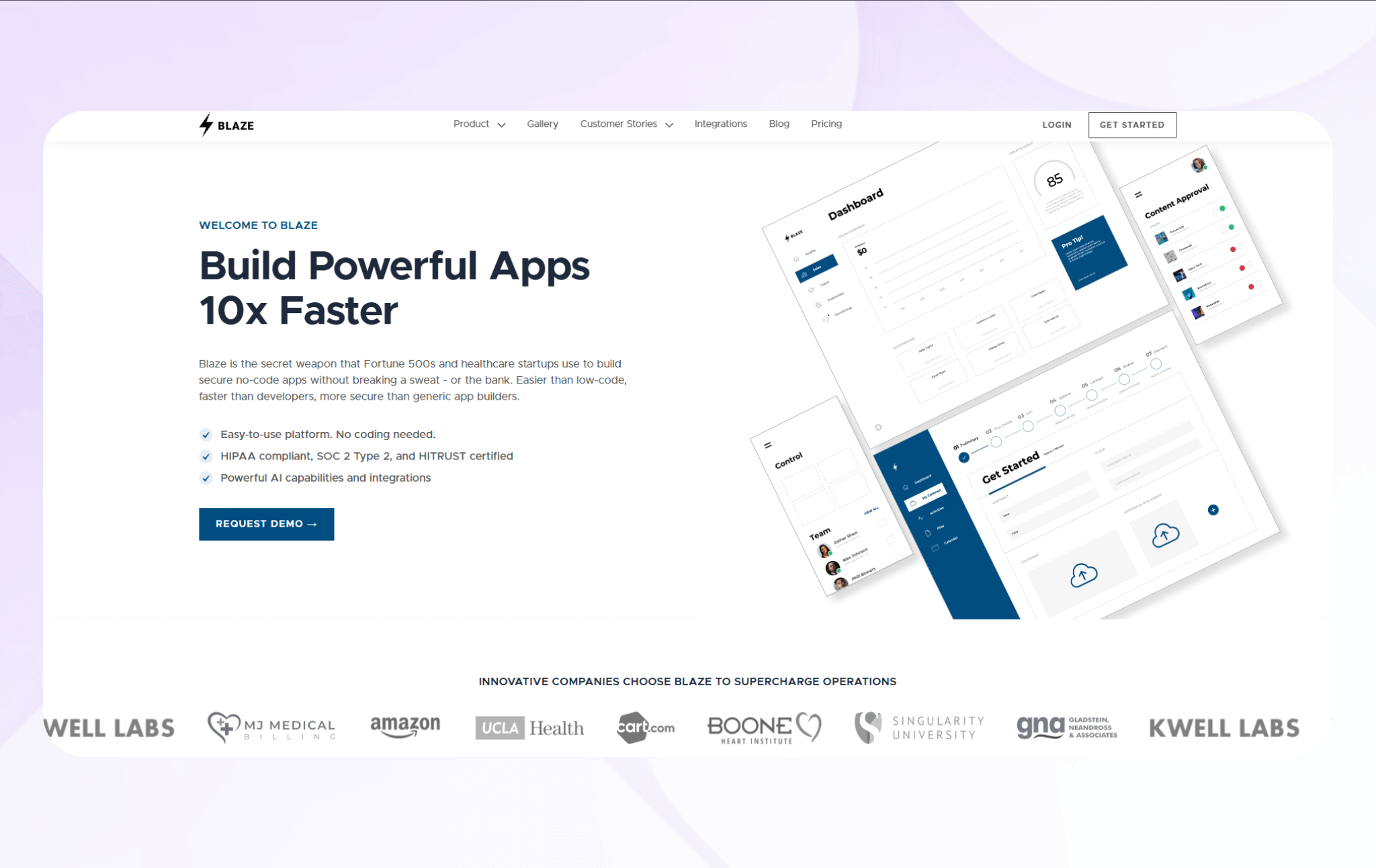
What it does: Blaze is a no-code platform that lets teams build secure internal tools and web applications for customer service and business processes without writing code.
Who it’s for: Organizations, from growing teams to large enterprises, that want a flexible, branded solution they can maintain in-house without engineers.
Blaze, our own app builder, differs from traditional enterprise platforms like ServiceNow by emphasizing a visual, no-code approach to building apps. This allows non-technical business and operations teams to make and update apps without software developers.
With Blaze, you can create many of the customer-facing apps and workflows you might otherwise build on ServiceNow. You can build customer portals with support ticketing, CRMs, and approval flows that integrate with third-party platforms you currently use.
One of our biggest selling points is rapid app development: We've seen teams replace ServiceNow modules with Blaze applications in weeks, not months. Non-technical staff can iterate workflows and interfaces themselves rather than submitting change requests to developers.
Advantages Over ServiceNow
- No-code customization: Uses a drag-and-drop editor with premade components to build and modify workflows. Teams can also use Blaze’s AI tool to configure visual components and generate layouts faster.
- Workflow flexibility: Teams adapt unique processes quickly without waiting on developers or ServiceNow consultants.
- Faster deployment: Publish internal tools and workflows significantly faster than traditional ServiceNow implementations.
Pros
- Compliance: Helps support HIPAA compliance and provides SOC 2 attestation with security features like encryption, audit logs, and role-based access.
- Lower implementation effort: Reduces setup and maintenance time compared to ServiceNow custom application builds.
Cons
- No full IT support framework: Blaze can’t replace ServiceNow’s complete incident and change management system.
Pricing
Blaze pricing starts at $1,500/month.
The Bottom Line
Blaze is a secure, user-friendly no-code platform used to build ITSM-style tools and workflows for organizations that prioritize compliance, scalability, and adaptability.
2. Freshservice: Best for Fast ServiceNow Replacement
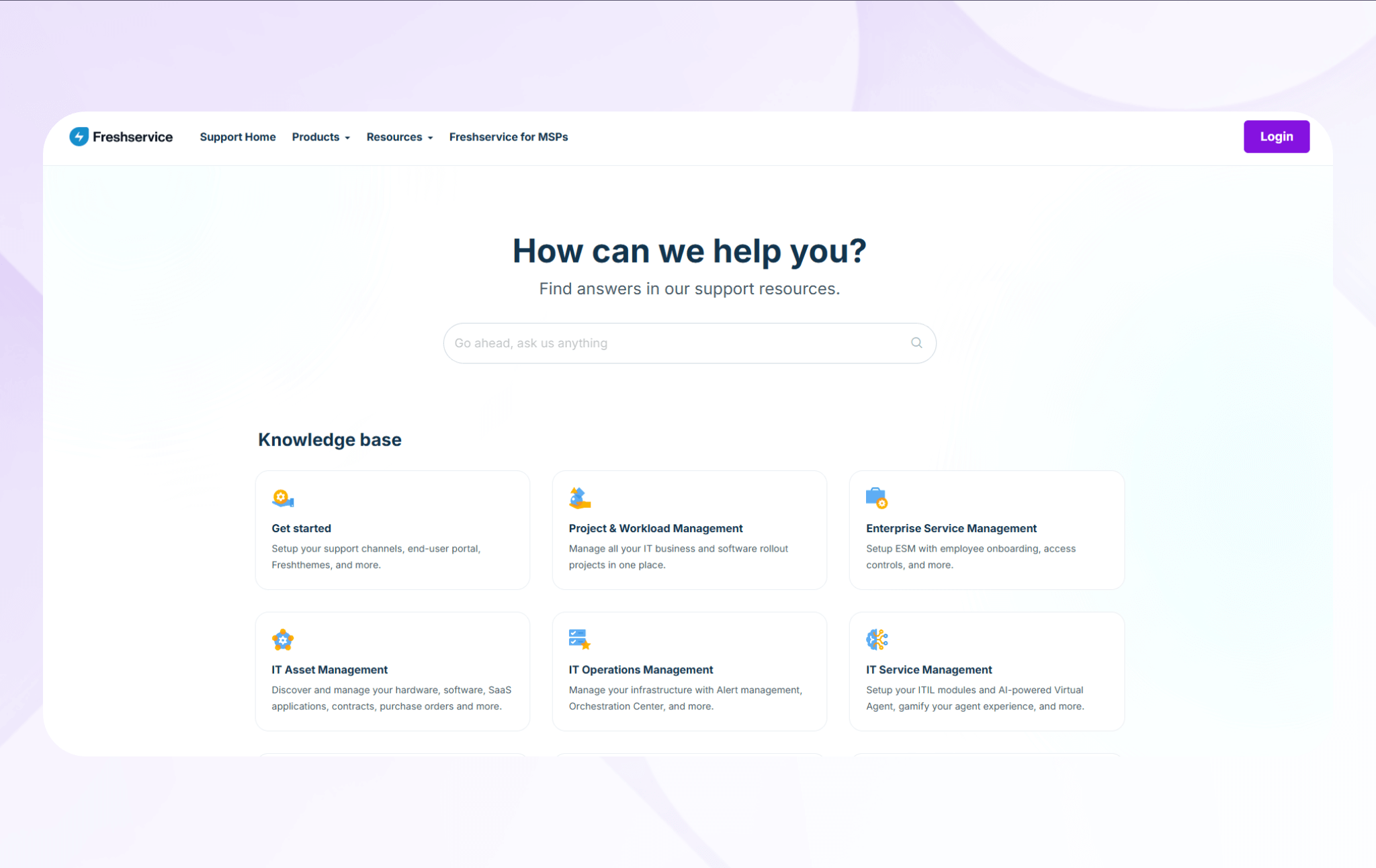
What it does: Freshservice, by Freshworks, is a cloud-based ITSM platform that provides ITIL (Information Technology Infrastructure Library)‑aligned incident, service request, change, and asset management.
Who it’s for: IT teams that need incident, change, and asset management without the cost and complexity of a full ServiceNow deployment.
During testing, I used Freshservice to handle standard IT service desk tasks without adding custom integrations. I migrated incident and request workflows from a legacy ServiceNow system using CSV imports and webhook automations. After that, I submitted tickets and routed approvals without redesigning the workflows.
I also tested change management and asset tracking across multiple departments with role-based access controls. Using prebuilt templates, I could handle approval chains faster than scripting.
Advantages Over ServiceNow
- Faster setup: Typically deploys in weeks, not months, with minimal configuration and no dedicated ServiceNow specialists required.
- Lower admin burden: Cloud delivery and simpler configuration can reduce ongoing maintenance overhead and can lessen reliance on external consultants.
- Predictable pricing: Clear per‑agent subscription tiers with more transparent pricing.
Pros
- Quick time-to-value: Teams usually become productive fast thanks to an intuitive UI and out‑of‑the‑box ITSM workflows.
- Solid core ITSM: Covers incidents, requests, changes, and assets without unnecessary enterprise bloat
Cons
- Weaker CMDB (Configuration Management Database) depth: Asset and configuration management is less advanced than ServiceNow or other ServiceNow competitors.
Pricing
Freshservice pricing starts at $29/month per agent.
The Bottom Line
Choose Freshservice when your team needs core IT service management set up quickly. If a highly customized ServiceNow system would require too much time, money, and maintenance, Freshservice makes more sense.
3. Jira Service Management: Best for Jira-Centric Teams
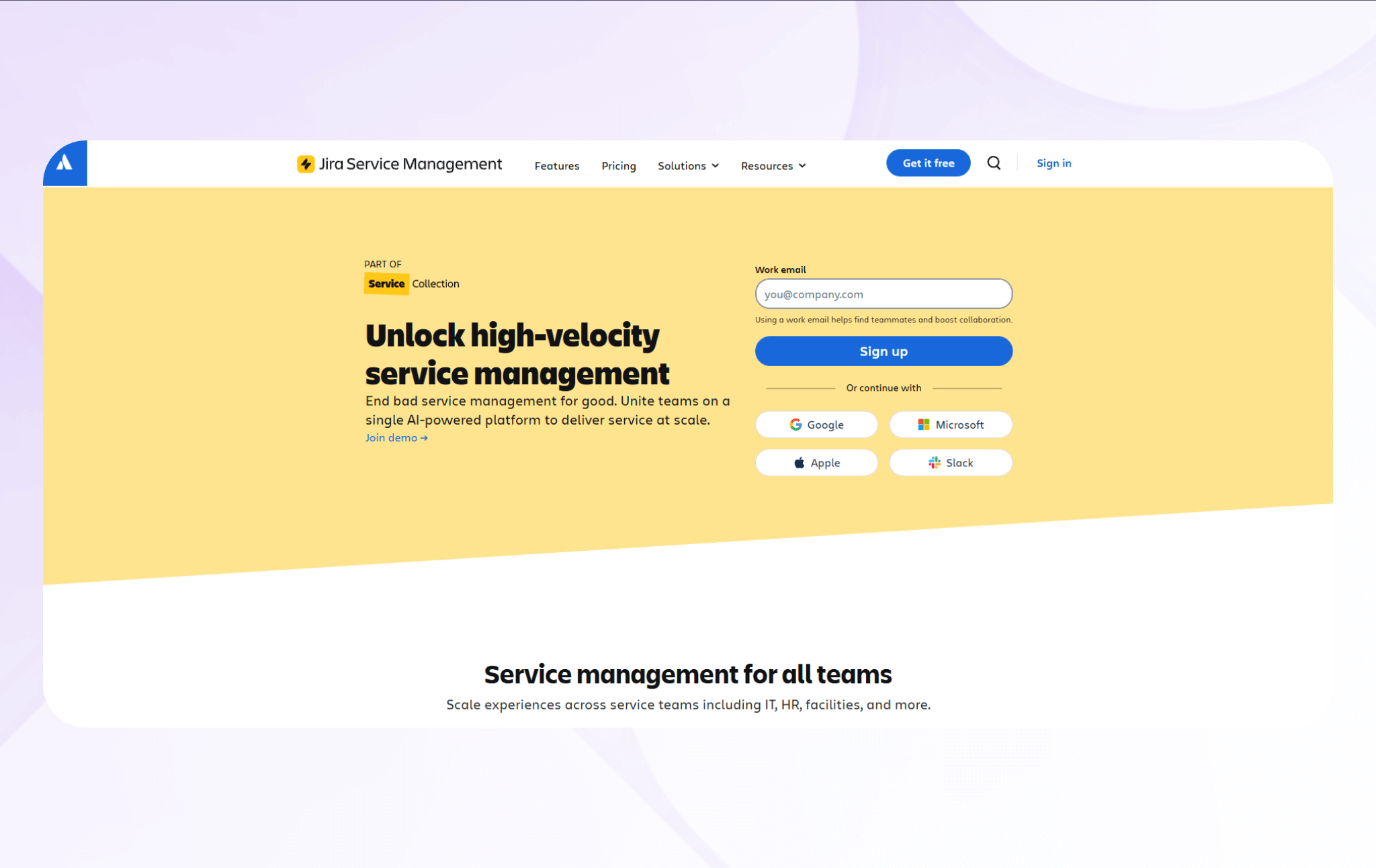
What it does: Jira Service Management is an ITSM platform from Atlassian, built on the Jira ecosystem and tightly integrated with Jira Software.
Who it’s for: Engineering-led organizations already using Jira that want modern ITSM with strong DevOps alignment, without a complex ITIL-heavy system.
I tested Jira Service Management by setting up incident queues and change management workflows with Jira’s built-in automation tools and issue types. The system let me create tickets that linked directly to Jira Software epics and triggered status updates without using custom integrations or middleware.
Next, I assessed knowledge base deployment and SLA tracking for internal IT requests outside engineering workflows. The self-service portal handled basic request cataloging and approval routing through Jira's permission schemes.
Advantages Over ServiceNow
- Native Jira integration: Keeps most IT and development work inside a single Atlassian ecosystem.
- Agile-first workflows: Implement ITIL practices in a lighter, DevOps-friendly way.
- Lower operational overhead: Often easier to configure and administer than heavily customized ServiceNow instances, especially for teams already familiar with Jira.
Pros
- Strong DevOps alignment: Incidents, changes, and tickets connect directly to development work.
- Familiar interface: Existing Jira users usually require minimal retraining.
Cons
- Less suitable for non-tech teams: Non-technical, business-heavy organizations may find it too developer-centric
Pricing
Jira pricing starts at $20/month per agent.
The Bottom Line
For organizations already familiar with Jira, Jira Service Management is a strong ServiceNow alternative.
4. BMC Helix: Best for Enterprise-Grade Replacement
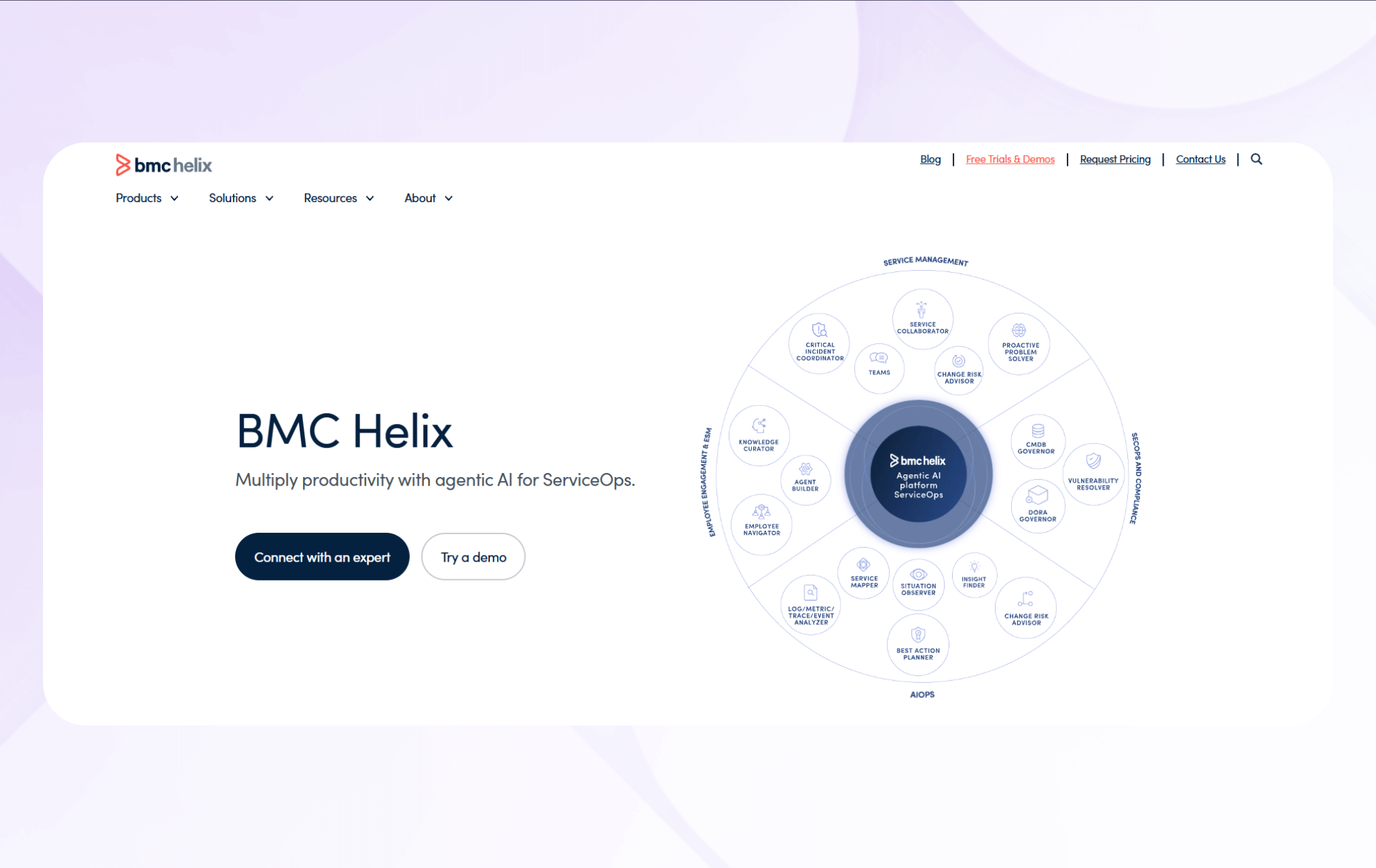
What it does: BMC Helix delivers ITIL‑aligned incident, change, problem, and asset management with advanced automation and multi‑cloud service management at scale.
Who it’s for: Large enterprises that need similar power provided by ServiceNow but want a different vendor or licensing structure.
I tested BMC Helix by replicating implementations rather than simplifying them. First, I set up workflows with multi-level rules and custom approval steps. The platform handled complex scenarios and connected to databases through API connections, but I needed to use coding.
To test the predictive features, I set up incident categories and automated ticket routing across several sample service desks. The system used AI to suggest possible fixes and escalate high-priority tickets when volume increased.
Advantages Over ServiceNow
- Comparable ITIL depth: Provides ITIL‑aligned incident, change, problem, and asset management features.
- Strong automation: AI-driven workflows reduce manual work in large, complex IT environments.
- Multi-cloud focus: Designed for enterprises operating across diverse cloud infrastructures.
Pros
- Scalability: Handles large ticket volumes and complex organizational structures reliably.
- Mature platform: Proven in highly regulated, large-scale environments.
Cons
- Longer deployments: Time-to-value is slower than many SaaS competitors.
Pricing
Contact BMC Helix for a custom quote.
The Bottom Line
BMC Helix is a suitable ServiceNow alternative for enterprises that prioritize control, depth, and multi‑cloud ITSM over simplicity and speed of deployment.
5. ManageEngine ServiceDesk Plus: Best Value at Scale
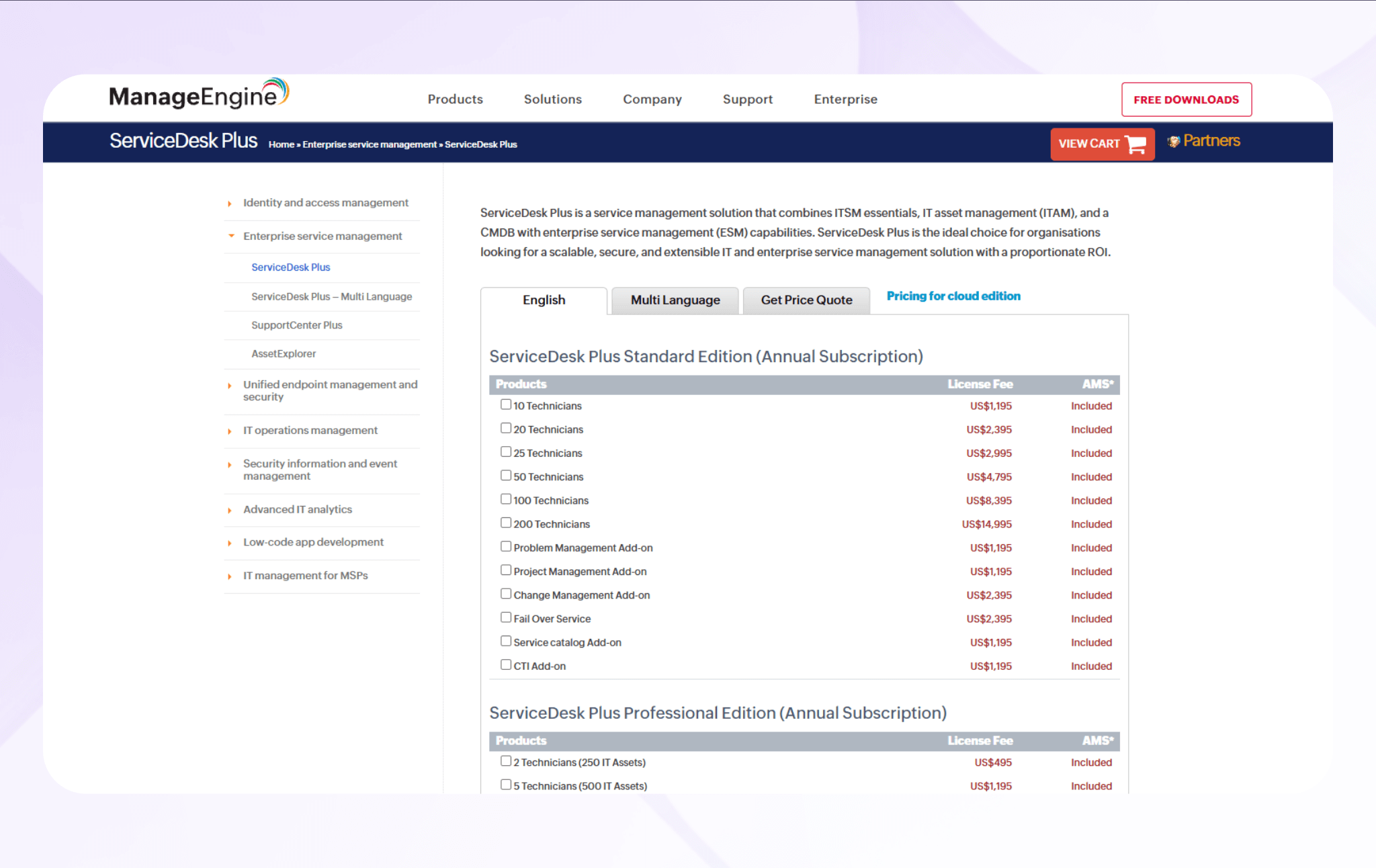
What it does: ManageEngine ServiceDesk Plus operates as an all-in-one ITSM platform and ESM platform that combines IT service management essentials, IT asset management, and CMDB.
Who it’s for: Organizations seeking a scalable, secure, and extensible IT and enterprise service management solution.
When I tested ServiceDesk Plus, I configured incident management with SLA tracking, automated escalations, and multi-tier approval routing using built-in workflow templates. The system handled ticket assignment rules and integrated with Active Directory for user provisioning without custom scripting.
I also tested hardware and software asset management with purchase order tracking and contract renewal alerts. The platform maintained configuration item relationships and generated compliance reports through its native CMDB and could cover asset lifecycle management.
Advantages Over ServiceNow
- Broad feature coverage: Combines ITSM with ITAM (IT Asset Management), CMDB, and built‑in project management in higher tiers.
- Project management module: Built-in project and task tracking with resource association, so IT projects can be managed in the same platform as tickets and assets.
- On‑premises deployment option: Self‑hosted edition for organizations with strict data residency, security, or infrastructure control requirements.
Pros
- Strong asset management: Asset tracking and CMDB are more powerful than those of many mid-market competitors
- Cost-effective scaling: Suitable for growing teams without exponential price increases
Cons
- Configuration effort: Setup is more involved than other ServiceNow competitors
Pricing
Contact the ServiceDesk Plus team for a custom quote.
The Bottom Line
ManageEngine ServiceDesk Plus offers a more flexible deployment than ServiceNow, making it a strong value choice for growing organizations that prefer to manage their systems on-prem.
6. Ivanti Neurons: Best for Automation-Heavy IT Teams
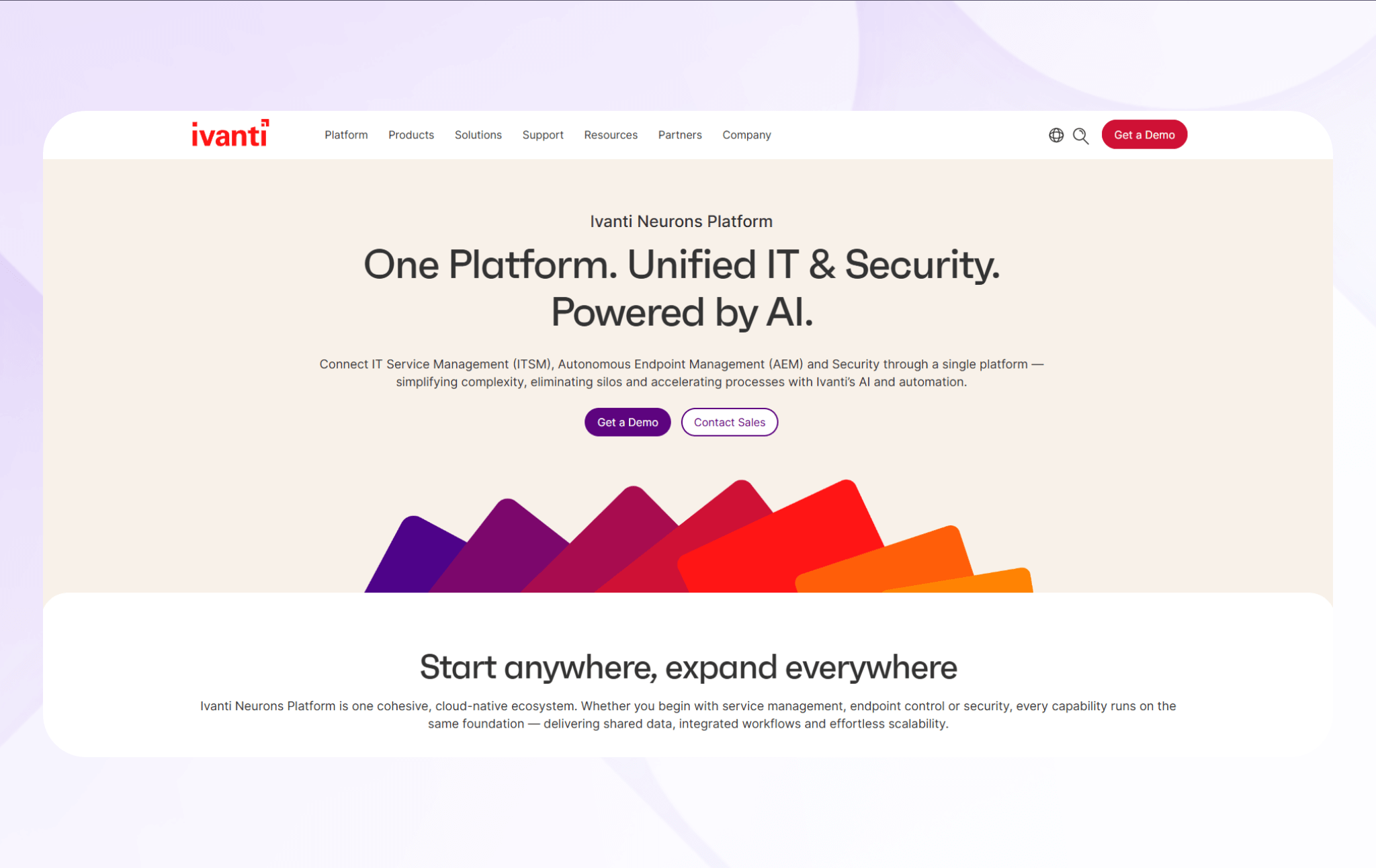
What it does: Ivanti Neurons offers an AI-driven ITSM and endpoint management solution that’s focused on proactive issue detection and automated remediation.
Who it’s for: IT teams managing large and diverse device fleets that want predictive automation alongside IT service management.
During testing, I deployed automation bots to monitor our system’s space, application health, and compliance across sample devices. The platform detected the threshold violations that I set up for assessment. It then executed remediation scripts without creating tickets or requiring technician involvement.
I also tested traditional ITSM workflows for incidents that required human judgment and cross-team collaboration. Ivanti's service desk handled ticket routing and SLA tracking through standard ITIL processes, sending each ticket to the appropriate specialist.
Advantages Over ServiceNow
- Proactive automation: Identifies and resolves issues before users submit tickets.
- Endpoint focus: Strong device visibility and control beyond traditional ITSM tools.
- Real-time insights: Uses real-time data and your custom settings to drive faster response and resolution.
Pros
- Reduced downtime: Automation prevents common incidents from escalating.
- Endpoint visibility: Stronger device-level insights than ServiceNow.
Cons
- Not ITSM-only: Teams wanting pure ITSM may find it overbuilt.
Pricing
Contact the Ivanti team for a custom quote.
The Bottom Line
Ivanti Neurons combines predictive analytics and endpoint security into a cohesive ITSM platform. It suits organizations that want to proactively manage IT operations while maintaining strong device and data security.
7. HaloITSM: Best for Modern, Lightweight ITSM
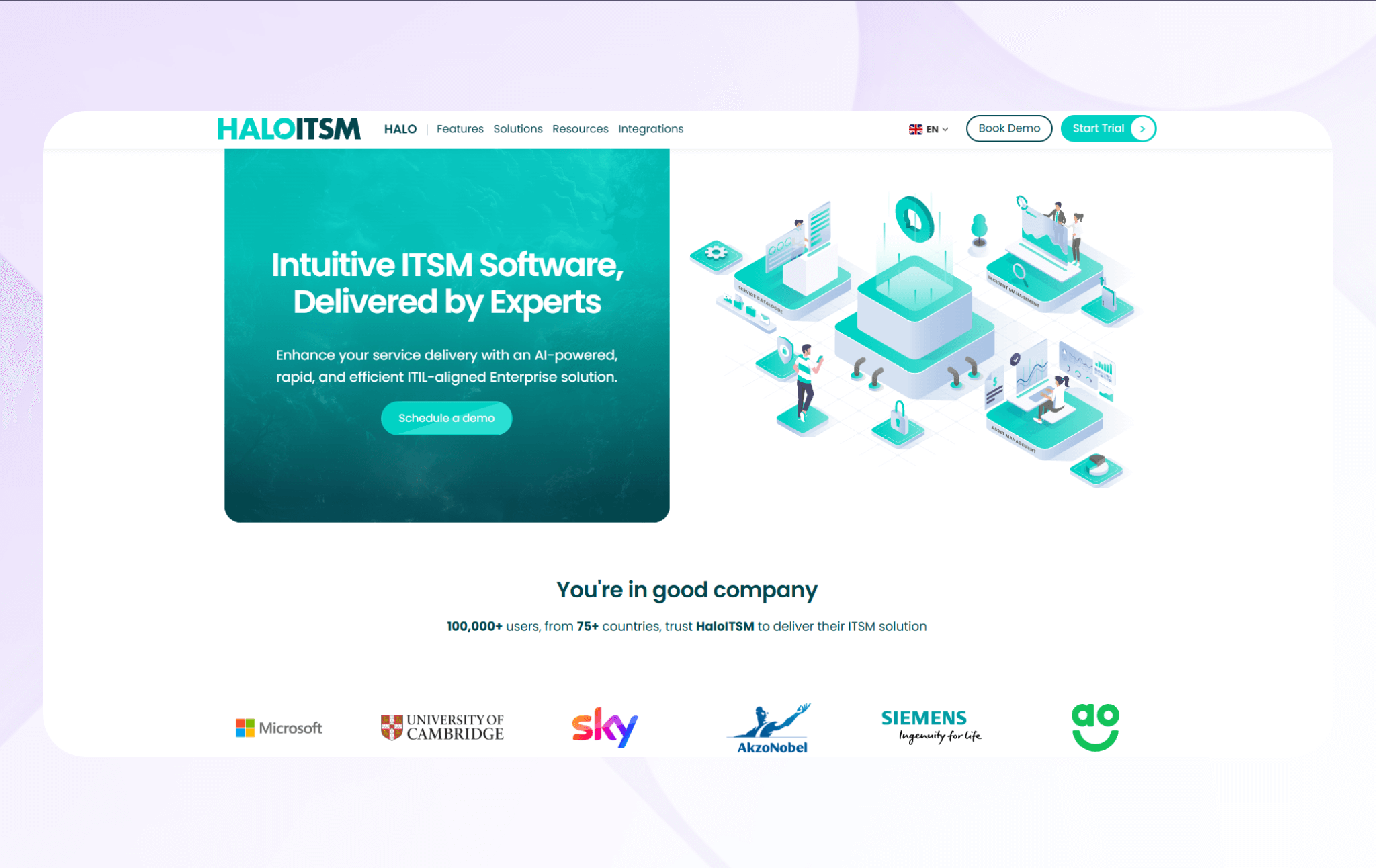
What it does: Halo ITSM offers strong automation, a clean UI, and fast configuration for large organizations.
Who it’s for: Mid‑market and enterprise IT teams that want broad, ITIL‑aligned ITSM capabilities in a more agile, less complex package than ServiceNow.
I tested Halo by setting up an incident management system that automatically categorized tickets and tracked contract deadlines. The drag-and-drop tools helped me build the system faster, and I used code to create custom rules based on asset type and business impact.
The system routed all my sample tickets based on keyword triggers and department assignments without custom code or business rules. I also assessed how Halo could process standard ITIL change types. It handled most common scenarios effectively.
Advantages Over ServiceNow
- Faster configuration: Workflows and automations are typically set up faster and with less complexity than in heavily customized ServiceNow environments.
- Lower admin overhead: Easier to manage than traditional enterprise ITSM platforms.
- Modern UX: Cleaner, more intuitive interface simplifies navigation.
Pros
- Strong automation engine: Handles complex workflows without heavy scripting.
- Smooth interface: Modern design improves navigation compared to older enterprise platforms.
Cons
- Less enterprise pedigree: Not as proven in massive global deployments
Pricing
Contact the HaloITSM team to get a custom quote.
The Bottom Line
HaloITSM suits teams that want to move away from large ITSM suites like ServiceNow while prioritizing speed, simplicity, and modern usability.
Special Mentions
The next 13 ServiceNow competitors didn’t make my top 7, but many businesses looking for an alternative should consider them, too. These tools offer ITSM strengths like problem and change workflows, intuitive service request portals, and multi-channel ticket intake.
8. Zendesk: Best for Customer Support–Led IT Teams
Zendesk combines IT ticketing with customer support workflows inside an omnichannel help desk platform. It centralizes email, chat, voice, and web tickets into one interface so teams can respond faster. New agents can get started quickly because the interface feels simple and does not require heavy setup.
Pricing
Zendesk pricing starts at $25/month per agent.
9. SolarWinds Service Desk: Best for Small IT Teams Needing Simplicity
SolarWinds Service Desk offers a cloud-based, AI-powered ITSM platform providing a full ITIL suite (incident, problem, change, release), service catalog, and IT asset management. Teams can deploy and set up core ITSM workflows quickly without long timelines.
Pricing
SolarWinds pricing starts at $7/month per node.
10. SysAid: Best for IT Teams Focused on Asset Management
SysAid combines IT service management with built-in asset tracking in a single platform. It works well for organizations prioritizing visibility into IT assets alongside ticketing. Teams don’t need third-party tools or add-ons to manage assets.
Pricing
Contact SysAid to get a custom quote.
11. TeamDynamix: Best for Higher Education and Public Sector
TeamDynamix blends ITSM with project and portfolio management for education and government organizations. Its workflows best suit academic and public-sector use.
Pricing
Contact TeamDynamix for a custom quote.
12. HappyFox: Best for Simple Help Desk Needs
HappyFox provides a help desk platform focused on ticketing, automation, and self-service. It targets small to mid-sized teams that value ease of use over ITSM depth. The system also lets businesses adjust ticket flows to match their daily operational needs.
Pricing
Contact the HappyFox team for a custom quote.
13. Microsoft Dynamics 365 Customer Service: Best for Microsoft-Centric Organizations
Microsoft Dynamics 365 Customer Service combines CRM and service workflows within the Microsoft ecosystem. It fits teams already using Microsoft tools.
Pricing
Contact the Microsoft Team for a custom quote.
14. Kaseya VSA: Best for MSPs and Endpoint Management
Kaseya VSA combines IT service management with remote monitoring and endpoint automation. It works for service providers and internal IT teams that need to manage and secure large numbers of endpoints from a unified platform.
Pricing
Contact the Kaseya team for a custom quote.
15. Zoho Desk: Best for Budget-Conscious Support Teams
Zoho Desk delivers help desk and ticketing functionality within the low-code Zoho ecosystem. It works best for small teams managing basic service requests. But, it’s not designed to function as a full ITSM or ServiceNow-class replacement.
Pricing
Zoho Desk pricing starts at $9/month per user.
16. Spiceworks Service Desk: Best for Very Small IT Teams
Spiceworks Service Desk offers basic ticketing and IT support tools for small organizations. It targets teams with minimal ITSM requirements. Teams can start using the platform almost immediately because it’s so simple.
Pricing
Contact the Spiceworks team and get a custom quote.
17. Front: Best for Shared Inbox–Driven IT Support
Front manages IT requests through shared inboxes and collaborative messaging. It works when IT support is email-centric rather than process-driven. But Front isn’t built for structured ITSM workflows or governance-heavy environments.
Pricing
Front pricing starts at $35/month per seat.
18. Help Scout: Best for Email-Based IT Support
Help Scout focuses on simple, email-based ticketing with a customer-friendly interface. It suits teams that want minimal process overhead. The platform’s simple design improves usability for agents and requesters.
Pricing
Help Scout pricing starts at $30/month per user.
How I Tested ServiceNow Competitors
I identified 30 ServiceNow competitors and focused on real-world deployment scenarios like migrating actual workflows and configuring automation rules to determine my top 18.
Here’s what I looked for:
- Deployment speed and configuration complexity: I measured time from initial setup to productive ticket resolution, tracking how many technical specialists each launch required.
- Automation capability: Some teams leave ServiceNow because customization requires developers or consultants. I built workflows with multi-level escalations and conditional routing rules to see if non-technical admins could modify them on their own.
- ITIL process coverage and workflow depth: I evaluated each platform’s core IT service management features to see if it could replace ServiceNow or only handle basic ticketing. I set up incident management, change approval workflows, asset tracking, and CMDB relationships to find gaps.
I also considered these additional factors:
- Asset management and CMDB functionality: I tested how other platforms maintained configuration item relationships, tracked hardware lifecycles, and generated compliance reports.
- Integration ecosystem: I tested native integrations and reviewed the API documentation to see if developers needed to build custom connections.
My process involved using a set of sample incidents, requests, and user data for testing. I aimed to mimic a real-world workflow setup and launch for each ServiceNow alternative.
Which ServiceNow Competitor Should You Choose?
Each of my top ServiceNow competitors serves different organizational needs and technical capabilities. Here's how to pick the right one for your situation:
Choose Blaze If You:
Need to build custom internal tools and portals that mirror some ServiceNow-style workflows, and want non‑developers to maintain them on a no‑code platform.
Choose Freshservice If You:
Want core ITSM without too much customization depth.
Choose Jira Service Management If You:
Already run Jira Software and need incident management integrated with development workflows.
Choose BMC Helix If You:
Need full IT service management with built-in asset management and system setup in one place.
Choose ManageEngine ServiceDesk Plus If You:
Need service management that follows ITIL best practices and offers the same depth and enterprise-level features as ServiceNow.
Choose Ivanti Neurons If You:
Manage thousands of endpoints where repetitive device issues dominate tickets, and want automation and self‑healing to justify a broader ITSM and endpoint platform.
Choose HaloITSM If You:
Currently use ServiceNow mostly for basic tickets and standard workflows, and want a lighter, easier-to-manage ITSM tool.
Choose Zendesk If You:
Run customer support operations that handle IT requests and need omnichannel ticketing rather than dedicated ITIL workflows.
Choose SolarWinds Service Desk If You:
Lead a small or mid‑sized IT team that needs a straightforward, cloud ITSM deployment without long timelines or enterprise complexity.
Choose SysAid If You:
Prioritize asset tracking visibility alongside ticketing and want native integration without requiring third-party tools or add-ons.
Choose TeamDynamix If You:
Operate in higher education or public sector environments requiring academic service models and integrated project management workflows.
Choose HappyFox If You:
Need straightforward help desk ticketing with fast onboarding and value ease of use over ITSM framework depth.
Choose Microsoft Dynamics 365 Customer Service If You:
Already use Microsoft tools and need customer service workflows integrated with Power Platform and Azure services.
Choose Kaseya VSA If You:
Manage large endpoint fleets as an MSP or internal IT team and need remote monitoring, automation, and integrations with service management in a unified platform.
Choose Zoho Desk If You:
Run a small support team on a limited budget and need basic ticketing integrated with other Zoho applications.
Choose Spiceworks Service Desk If You:
Lead a very small IT team with minimal ITSM requirements and need free core ticketing functionality immediately.
Choose Front If You:
Manage IT requests primarily through email and need shared inbox collaboration rather than structured ITSM governance frameworks.
Choose Help Scout If You:
Handle support mainly through email with minimal process overhead, and want a clean, customer-friendly interface for basic ticketing.
Avoid ServiceNow Alternatives If You:
Run massive global ITIL deployments requiring extreme customization depth, have thousands of complex integrations, or already maintain an optimized ServiceNow implementation.
Why You Should Pick Blaze as a ServiceNow Alternative
If you’re looking for a ServiceNow competitor that lets you create your own custom workflows and internal apps with developers, look no further than Blaze. We created Blaze so non-technical users could create and maintain their own software without any programming.
Here’s why more businesses go with Blaze:
- Speed with built-in security: Launch internal workflows much faster than traditional ServiceNow deployments while keeping enterprise-grade security controls in place.
- No-code flexibility: Blaze’s drag-and-drop builder enables non-technical teams to build ticketing systems, approval flows, and automation logic, with no coding needed.
- Configurable enterprise workflows: Design approval processes, case management flows, and service request systems tailored to your operations without writing scripts.
Schedule a free demo today and learn why Blaze is one of the best ServiceNow competitors.
Frequently Asked Questions
1. Which ServiceNow Alternatives Are Best for No-Code/Low-Code Customization?
Blaze, Freshservice, and HaloITSM serve as strong ServiceNow alternatives for no-code and low-code customization. All 3 offer visual workflow builders and ready-made templates for IT service management processes. HaloITSM supports custom scripting, while Blaze and Freshservice let non-technical users build automations and workflows with little or no coding.
2. Can ServiceNow Competitors Support ITIL-Aligned Incident, Change, and Asset Management?
Yes, several ServiceNow competitors provide full ITIL‑aligned modules. BMC Helix and ManageEngine ServiceDesk Plus offer incident, change, problem, and asset management. And, although Blaze doesn’t include native ITIL modules, teams can use its no-code tools to build custom incident workflows, approval processes, and support systems that match their needs.
3. How Do ServiceNow Alternatives Compare in Deployment Speed and Setup Complexity?
Many alternatives deploy faster and with less complexity. Freshservice and HaloITSM often go live in weeks to a few months. Blaze lets teams build custom workflows in days using a no‑code builder. SolarWinds Service Desk and HappyFox are easy to configure for smaller teams but have fewer advanced enterprise ITSM features.
The Secure No-Code & AI Platform
Supercharge your team's operations and performance with better apps and tools.
Create custom apps fast
Secure & HIPAA compliant
Streamline complex workflows

The Secure No-Code Platform
Build apps with best-in-class security.
Related Articles
Discover related guides on healthcare no-code development, HIPAA compliance, security, integrations, and launching apps faster.
%20(1).png)
Hospital App Development: Features, Steps, and Costs in 2026
Hospital app development costs range from $1,000 to over $1 million. Compare needed features, EHR integrations, development steps, and the 3 build approaches.
%20(1).png)
EHR Implementation Cost Breakdown
This EHR implementation cost breakdown reveals upfront, ongoing, and hidden expenses. Compare costs from client projects and research to help you budget.
%20(1).png)
7 Top White Label Telehealth Platforms + How to Pick (2026)
I reviewed seven white-label telehealth platforms to see how they compare. Explore pricing, branding, integrations, and the best fits available.