
Table of contents
8 Top Telehealth App Development Companies (2026)

Written by
Blaze Team

Reviewed by
Nanxi Liu
Expert Verified
When you hire a telehealth app development company, you're trusting a vendor with your patients’ protected health information (PHI). Choosing the wrong company can lead to project delays, integration problems, and compliance issues that cost time and money.
I evaluated eight telehealth app development companies based on their healthcare integrations, providing a BAA, and their ability to build a standard video visit app. My list includes self-development like Blaze.tech, enterprise consulting firms like ScienceSoft, and healthcare-focused developers such as Glorium.
Here's how these 8 companies compare, so you can choose the right fit for your organization's size, budget, technical skills, and integration needs.
The 8 Best Telehealth App Development Companies: Listed
- Blaze: Best for Vendor-Assisted or Self-Build Development
- ScienceSoft: Best for Large Provider Networks
- Appinventiv: Best for Patient Engagement Features
- DreamSoft4U: Best for EHR and Healthcare Integrations
- Glorium Technologies: Best for Healthtech Startups
- Itransition: Best for Large-Scale Upgrades
- Brain Station 23: Best for Healthcare Interoperability
- Cleveroad: Best for Mobile Telehealth Apps
How I Evaluated These Telehealth App Development Companies
I evaluated these companies by reviewing their EHR integrations, mobile apps, documentation, customer reviews, and case studies. Here's what made them stand out:
- Compliance and security: I reviewed each vendor's documented compliance frameworks, certifications, and any published penetration testing or audit results.
- Integration reliability under real data: Telehealth apps must exchange data with existing hospital record systems. I built a sample telehealth workflow in Blaze's self-service platform. The other 7 focus on custom software development, so I evaluated them through case studies, user reviews, and their documentation.
- Communication and project transparency: Some telehealth builds span months, so I read through client reviews describing communication cadence, status reporting tools, and responsiveness to feedback.
- Launching basic video consultation: Video consultation features are crucial to telehealth app development. I evaluated how each vendor would price and scope this feature, using documented case studies.
The 8 Best Telehealth App Development Companies
1. Blaze: Best for Vendor-Assisted or Self-Build Development
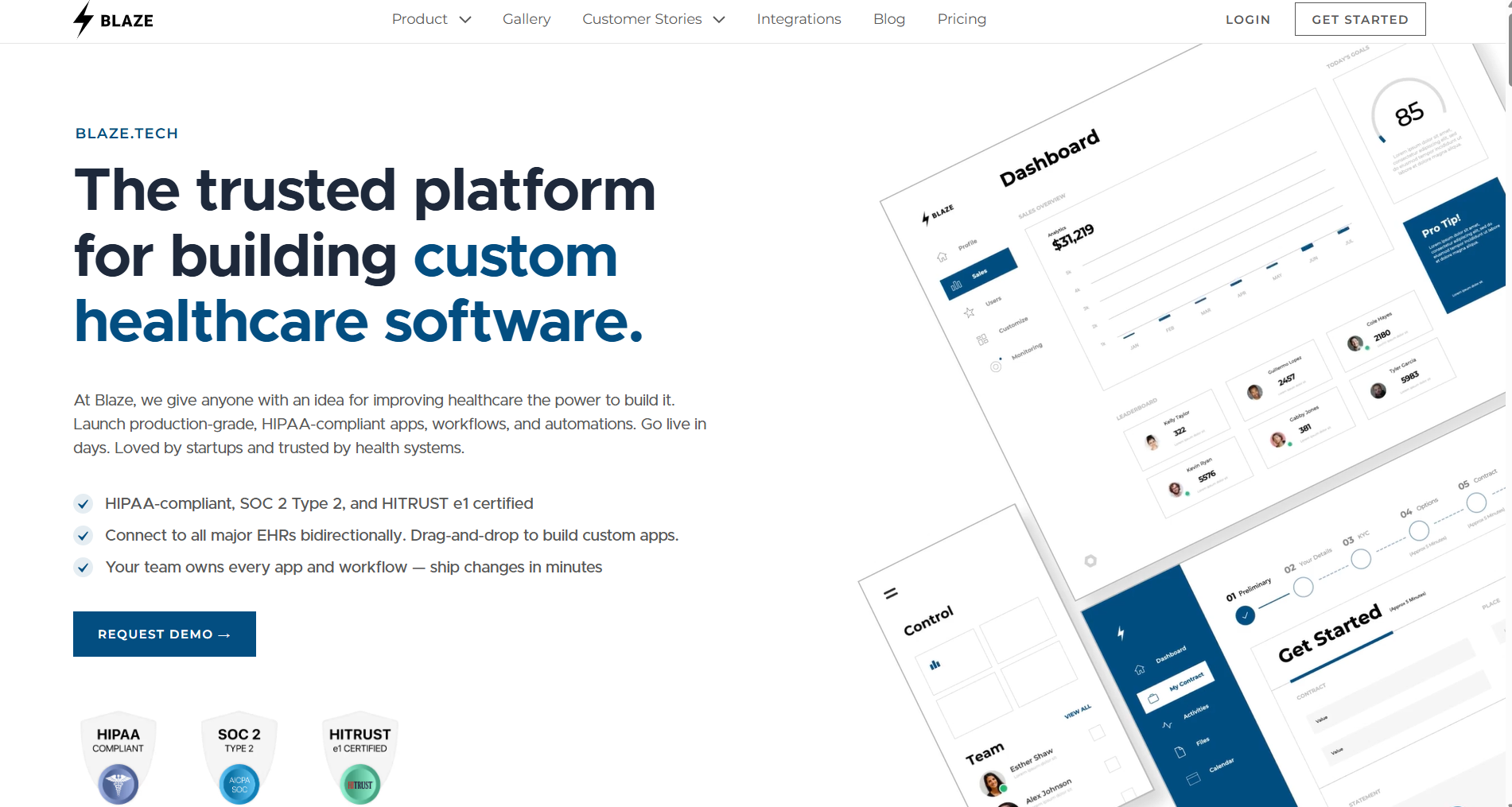
What they do: Blaze offers a no-code app builder that lets your team develop a telehealth app. It also provides a vendor-assisted model where Blaze’s team builds your app for you.
Who they’re for: The company fits teams of any size who need a telehealth app that integrates with pre-existing systems.
To test Blaze, I used the drag-and-drop interface to build a sample telehealth platform. I added patient intake, appointment routing, and scheduling. Blaze let me customize the intake process by adjusting provider assignment rules and schedules instead of working within fixed templates.
However, Blaze is less suitable for practices that only need basic video visits with little or no customization.
Key Capabilities
- Synthetic proof of concept: Validate workflows with realistic FHIR test data before connecting an EHR or signing a BAA.
- EHR/EMR integrations: Connect with Epic, Oracle Health, Athenahealth, eClinicalWorks, and other systems through FHIR and HL7.
- AI workflow automation: Build AI documentation, intake, document extraction, and clinical support workflows with OpenAI under a BAA.
Pros
- Flexible development model: Build applications yourself or work with Blaze's implementation team.
- Fast deployment: Many projects launch in weeks instead of months.
- Strong healthcare security: HIPAA-enabling features, HITRUST e1, and SOC 2 Type II reduce compliance work.
Cons
- Complex EHR integrations increase implementation time: Epic and Athenahealth integrations require additional coordination and API access.
- No native video feature: Blaze doesn’t have its own video conferencing service, but it does integrate with Zoom.
What Real Users Say
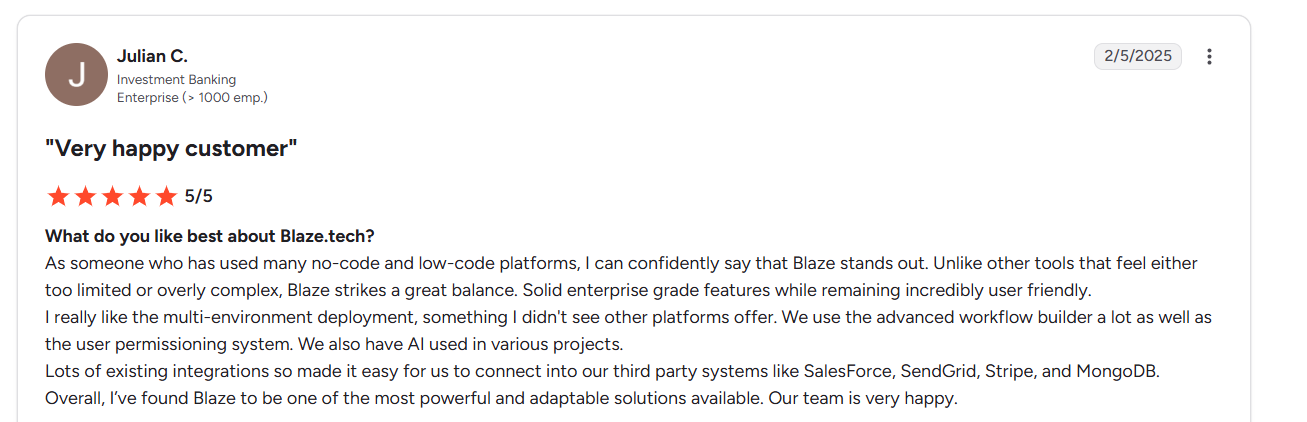
“I really like the multi-environment deployment, something I didn't see other platforms offer. We use the advanced workflow builder a lot as well as the user permissioning system. We also have AI used in various projects.” - Julian C., G2
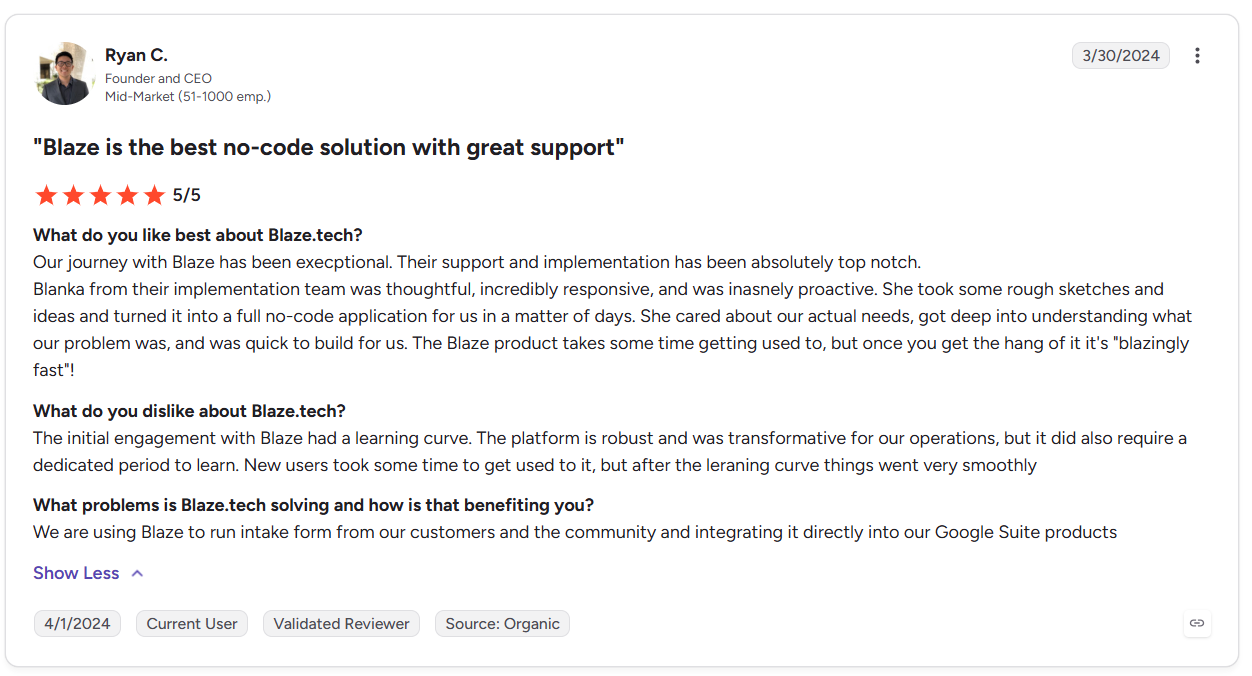
“The initial engagement with Blaze had a learning curve. The platform is robust and was transformative for our operations, but it did also require a dedicated period to learn.” - Ryan C., G2
Pricing
Contact Blaze’s sales team for a custom quote.
Bottom Line
Blaze works best for healthcare organizations that want some vendor assistance, or they want to create their telehealth app on their own. Teams seeking a fully managed enterprise consulting engagement will find ScienceSoft better suited to large-scale digital transformation projects.
2. ScienceSoft: Best for Large Provider Networks

What they do: ScienceSoft builds custom telehealth platforms with deep EHR integration, replacing patchwork video tools and record silos.
Who they’re for: Enterprise healthcare organizations juggling multiple provider networks, scattered patient records, and compliance requirements across several departments.
I reviewed ScienceSoft's process for connecting a clinic's scheduling system to an existing Epic EHR. Documentation and case studies noted that the integration mapped patient fields correctly, improving data accuracy. But solo practitioners and small clinics will likely find better value with a lighter, faster-to-launch alternative.
Key Capabilities
- EHR integration engineering: Connects telehealth apps directly to Epic, Cerner, and other major systems.
- Remote patient monitoring: Streams wearable and sensor data into one dashboard for clinical review.
- Multi-role app architecture: Builds separate patient, physician, and administrative views inside a single platform.
Pros
- Deep healthcare specialization: The company brings 20 years of healthcare-only projects.
- Flexible engagement models: Offers time-and-materials, capped-hours, and per-ticket pricing depending on project scope.
- Broad integration experience: Handles device, EHR, billing, and messaging integrations without outside specialist vendors.
Cons
- Enterprise-oriented cost floor: Minimum project costs price out solo practitioners and single-location small clinics.
- Long engagement timelines: Multi-month builds don't suit teams needing a live app within weeks.
What Real Users Say

“ScienceSoft performed a successful black box penetration test, identifying several potential security weaknesses and offering compatible solutions to increase data safety. The team was timely and accommodated the client’s request to reschedule the final test, which led to a productive partnership.” - Tom B., Clutch

“It provides security and analytics, but its cloud database is not as per the requirements, and there isn't any direct database access. Also, there is a risk of downtimes that can happen any time.” - Netha S., G2
Pricing
Contact the ScienceSoft team for a quote.
Bottom Line
ScienceSoft works for healthcare organizations building EHR-integrated, HIPAA-compliant telehealth platforms that serve multiple provider types across several specialty departments. Smaller teams that prioritize a fast, low-cost telehealth app will find quicker turnaround and a lower price point with Blaze.
3. Appinventiv: Best for Patient Engagement Features

What they do: Appinventiv builds patient-facing telehealth apps with engagement tools, replacing manual reminders and scattered communication channels entirely.
Who they’re for: Teams that need features for messaging, fixing appointment no-shows, and optimizing patient communication.
I reviewed Appinventiv's work integrating simple appointment-booking apps with their telehealth platforms. The suggested scope still included messaging and reminder infrastructure the client had explicitly said needed. Teams wanting a lean, single-purpose booking tool may find this engagement focus unnecessary and overbuilt.
Key Capabilities
- Patient engagement design: Builds reminder systems, in-app messaging, and adherence nudges into every app.
- Wearable data integration: Pulls activity and vitals data from connected devices into patient dashboards.
- Multi-specialty app builds: Delivers telehealth apps across mental health, chronic care, and general practice.
Pros
- Engagement-first feature set: Notification and messaging systems keep patients active between scheduled appointments consistently.
- Large healthcare portfolio: The company has developed hundreds of digital health projects.
- Flexible platform scope: Supports MVP launches and full enterprise builds within the same engagement team.
Cons
- Engagement features add cost: Messaging and reminder infrastructure raises price for teams wanting bare-bones booking.
- Consumer-app design bias: Heavy engagement focus doesn't suit purely clinical, back-office administrative software builds.
What Real Users Say
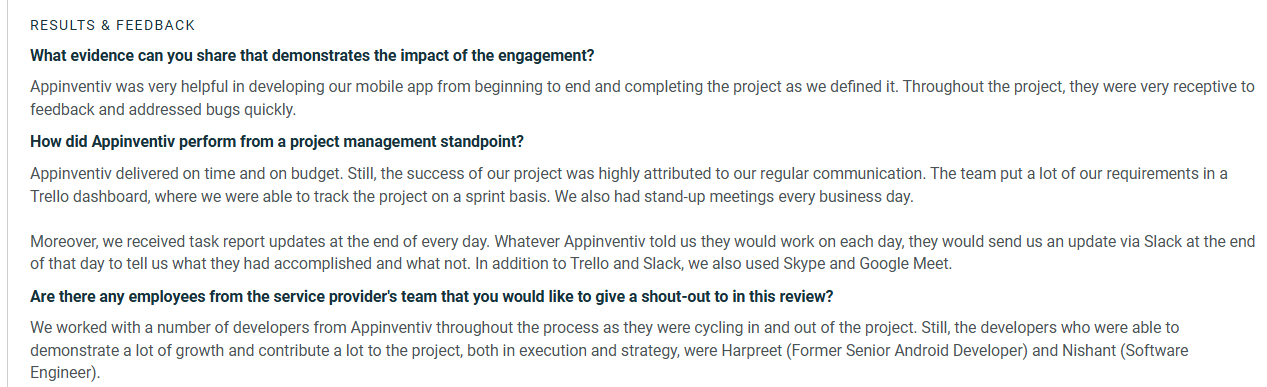
“Appinventiv was very helpful in developing our mobile app from beginning to end and completing the project as we defined it. Throughout the project, they were very receptive to feedback and addressed bugs quickly.” - Client, Clutch
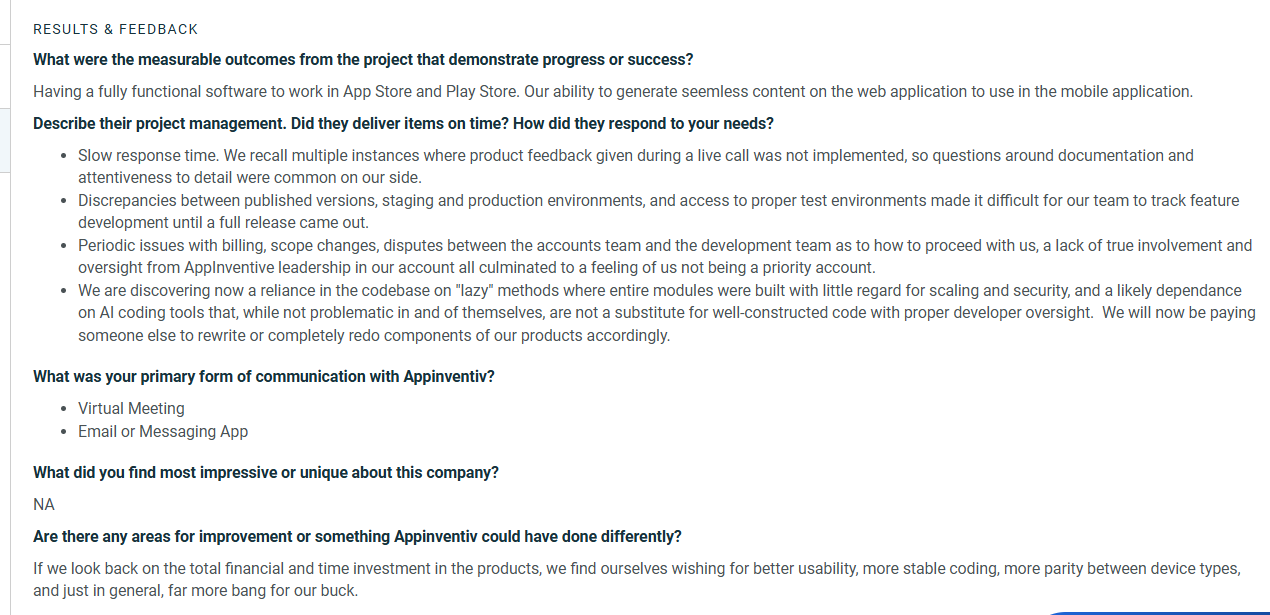
“Slow response time. We recall multiple instances where product feedback given during a live call was not implemented, so questions around documentation and attentiveness to detail were common on our side.” - Customer, Clutch
Pricing
Contact the Appinventiv sales team for a quote.
Bottom Line
Appinventiv fits teams building telehealth apps that need strong engagement features like messaging, reminders, and wearable data integration. If you need deep EHR integration across large, multi-department provider networks, try ScienceSoft.
4. DreamSoft4U: Best for EHR and Healthcare Integrations

What they do: Dreamsoft4U specializes in connecting telehealth apps to EHR, EMR, and lab systems.
Who they’re for: Healthcare IT teams juggling multiple legacy systems, disconnected patient records, and inconsistent data formats daily.
I assessed DreamSoft4U by reviewing how they approached project status updates via online reviews and documentation. The company focuses on sending accurate updates, but they sometimes come via email threads instead of a shared dashboard.
Key Capabilities
- HL7 and FHIR interfacing: Experience connecting telehealth apps to lab systems, EHRs, and pharmacy platforms.
- Legacy system modernization: Rebuilds outdated hospital software without disrupting existing clinical workflows or data.
- Custom EHR development: Builds proprietary EHR systems tailored to specialty clinics and hospital networks.
Pros
- Strong interoperability track record: Legacy system connections work reliably across mismatched hospital data formats.
- Responsive client communication: Teams report consistent responsiveness and follow-through on project feedback requests.
- Wide integration scope: Handles EHR, billing, lab, and pharmacy system connections within one engagement.
Cons
- Weak project visibility tools: Often doesn’t use a shared dashboard, forcing status updates through email threads instead.
- Integration-heavy focus: Teams wanting a simple standalone app may find this overengineered for basics.
What Real Users Say
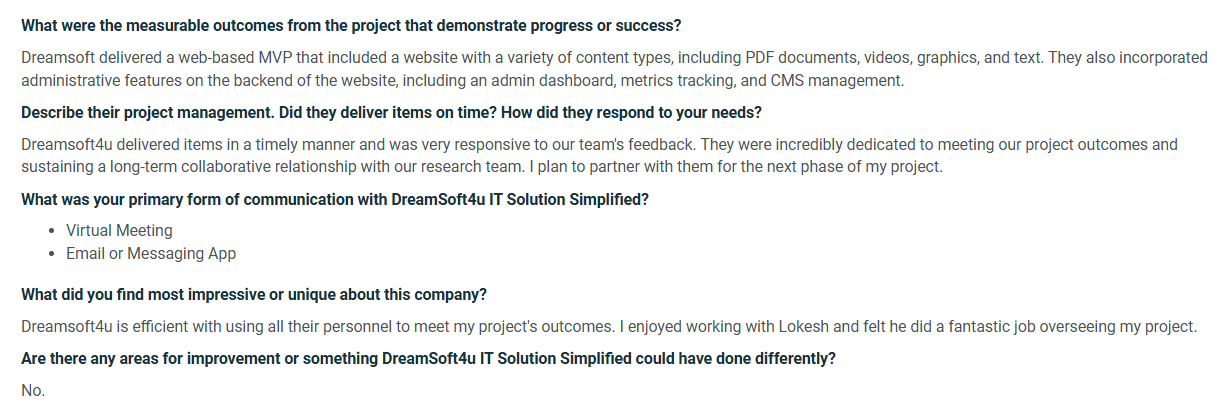
“Dreamsoft4u delivered items in a timely manner and was very responsive to our team's feedback. They were incredibly dedicated to meeting our project outcomes and sustaining a long-term collaborative relationship with our research team. I plan to partner with them for the next phase of my project.” - Customer, Clutch
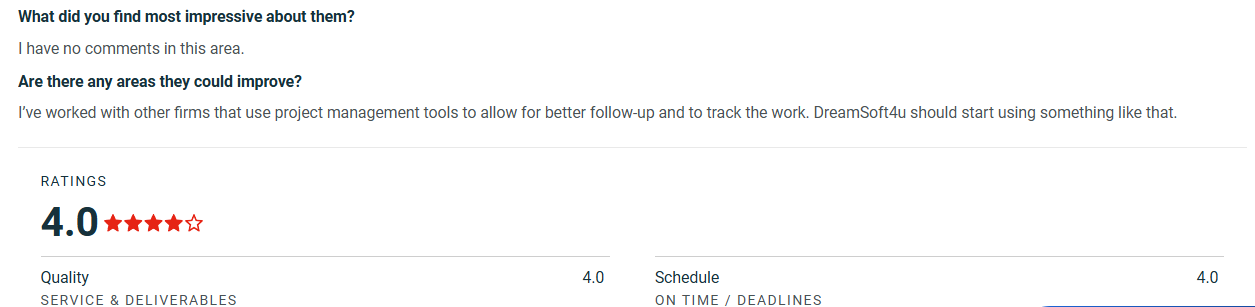
“I’ve worked with other firms that use project management tools to allow for better follow-up and to track the work. DreamSoft4u should start using something like that.” - CEO in Healthcare, Clutch
Pricing
Contact the DreamSoft 4U team and get a custom quotation.
Bottom Line
DreamSoft works best for healthcare organizations connecting telehealth apps to legacy EHR, lab, and pharmacy systems needing custom interoperability work. If you need a larger, ground-up build, try ScienceSoft.
5. Glorium Technologies: Best for Healthtech Startups

What they do: Glorium specializes in building custom telehealth MVPs for early-stage startups, replacing generic templates and slow in-house engineering hires.
Who they’re for: Healthtech founders who need to validate an idea before committing to a build.
I reviewed Glorium’s MVP scoping process for a startup validating a chronic-care coaching app concept. The team cut the original feature list in half and delivered a working prototype fast. But large hospital networks needing dozens of simultaneous integrations may find faster turnaround with a bigger firm.may find this process frustrating instead
Key Capabilities
- Rapid MVP scoping: Cuts feature lists down to what proves the core idea fastest.
- Funding-stage flexibility: Adjusts scope and team size as startups move through funding rounds.
- Investor-ready documentation: Produces technical documentation startups can present during due diligence reviews.
Pros
- Startup-paced delivery: Ten-week prototype turnarounds keep founders on track for funding deadlines.
- Strong compliance discipline: Flags HIPAA gaps before launch, not after a regulator inquiry.
- Clutch-recognized track record: Ranked first among healthcare custom software developers by Clutch in 2023.
Cons
- Slower enterprise timelines: Multi-hospital, dozens-of-integrations projects move slower than startup-paced engagements typically allow.
- Startup-sized team focus: Smaller-scale delivery model doesn't match enterprise systems needing dozens of simultaneous integrations.
What Real Users Say
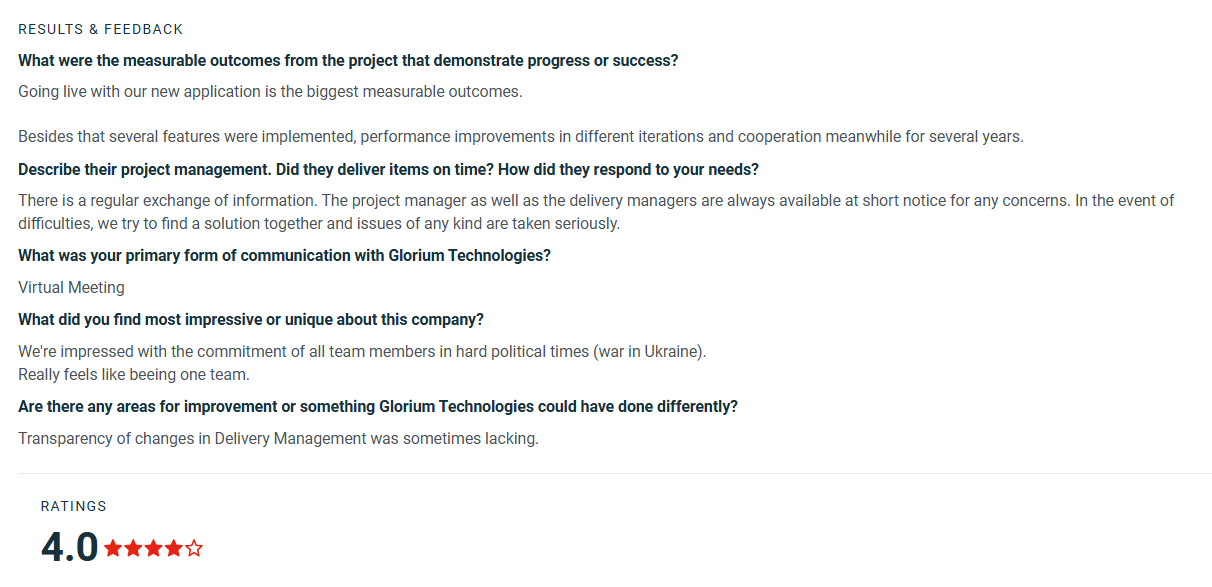
“Going live with our new application is the biggest measurable outcome. Besides that, several features were implemented, performance improvements in different iterations and cooperation for several years.” - Healthcare CEO, Clutch

“While our experience with Glorium Technologies has been overwhelmingly positive, there is room for improvement in terms of expanding collaboration with hardware manufacturers. Exploring partnerships with such entities could potentially enhance the performance of our specialized oral camera and provide more detailed diagnostic assessments.” - Emily M., G2
Pricing
Contact Glorium’s sales team to get a custom quote.
Bottom Line
Glorium Technologies makes the most sense for healthtech startups validating an idea and needing a lean, HIPAA-compliant MVP. Enterprises centered on dozens of simultaneous hospital integrations should try a firm like DreamSoft.
6. Itransition: Best for Large-Scale Healthcare System Upgrades
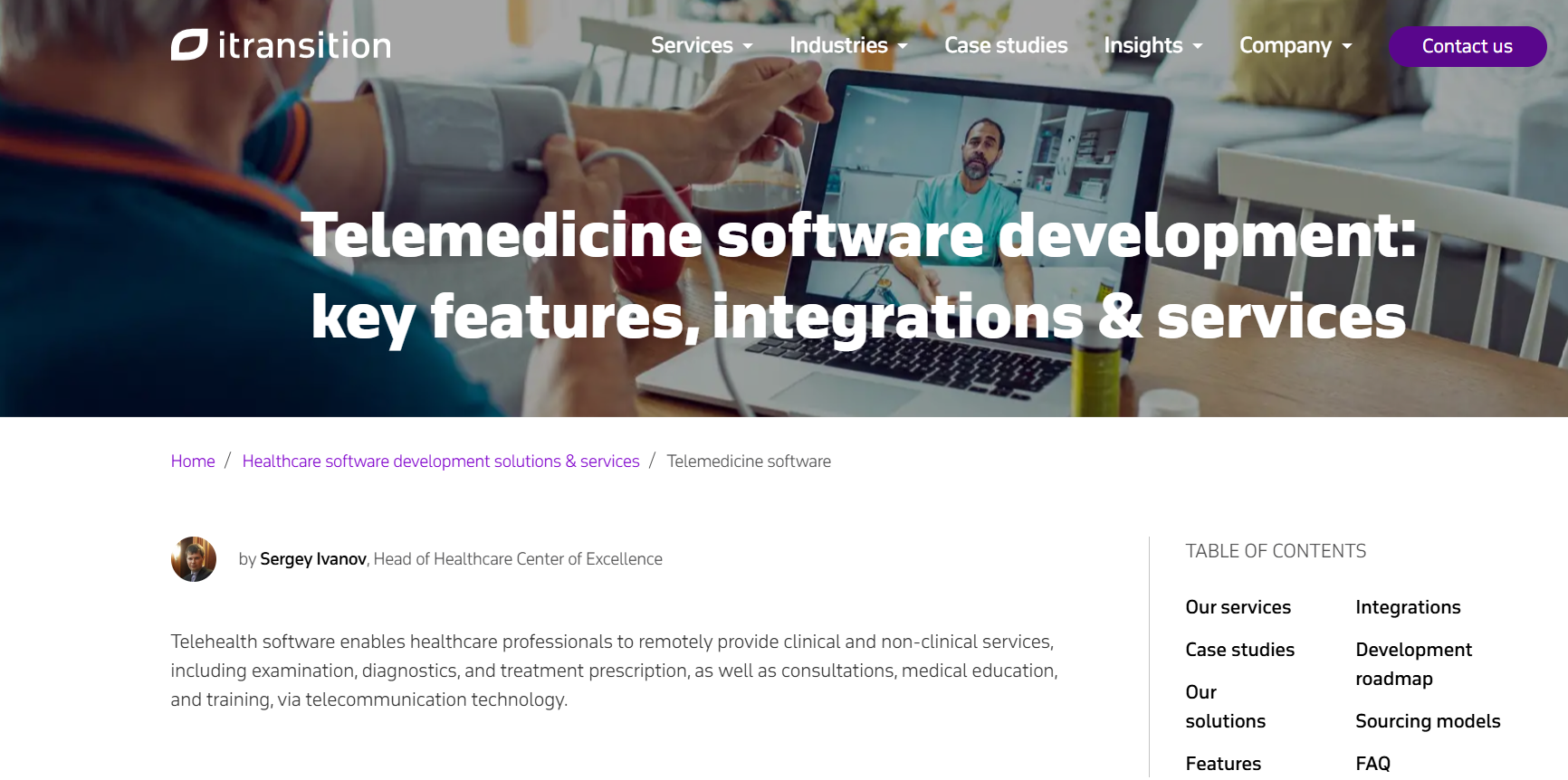
What they do: Runs large-scale healthcare technology changeovers, replacing fragmented legacy systems across sprawling hospital and provider networks.
Who they’re for: Enterprise healthcare organizations modernizing multiple systems at once across departments, locations, and specialty care lines.
I researched Itransition's discovery process by looking at how they modernized multi-hospital scheduling, billing, and telehealth systems. The team works by mapping dependencies across all systems, which saves on rework costs. However, small single-location clinics wanting a fixed, predictable quote upfront may find this process frustrating instead.
Key Capabilities
- Enterprise-scale modernization: Rebuilds legacy hospital systems without disrupting active patient care operations.
- Multi-department system integration: Connects scheduling, billing, telehealth, and EHR systems across hospital networks.
- Phased migration planning: Sequences data migration by location to limit patient-facing downtime windows.
Pros
- Deep workflow immersion: The teams excel at building specialized business workflows, not just isolated tasks.
- Strong sequencing discipline: Staggered rollouts help reduce downtime at different locations.
- Enterprise integration depth: Connects scheduling, billing, and EHR systems without fragmenting existing department workflows.
Cons
- Enterprise-oriented cost floor: Scoping overhead prices out solo practices and single-location clinic budgets.
- Shifting cost estimates: One reviewer reported an initial quote rising well past original figures.
What Real Users Say
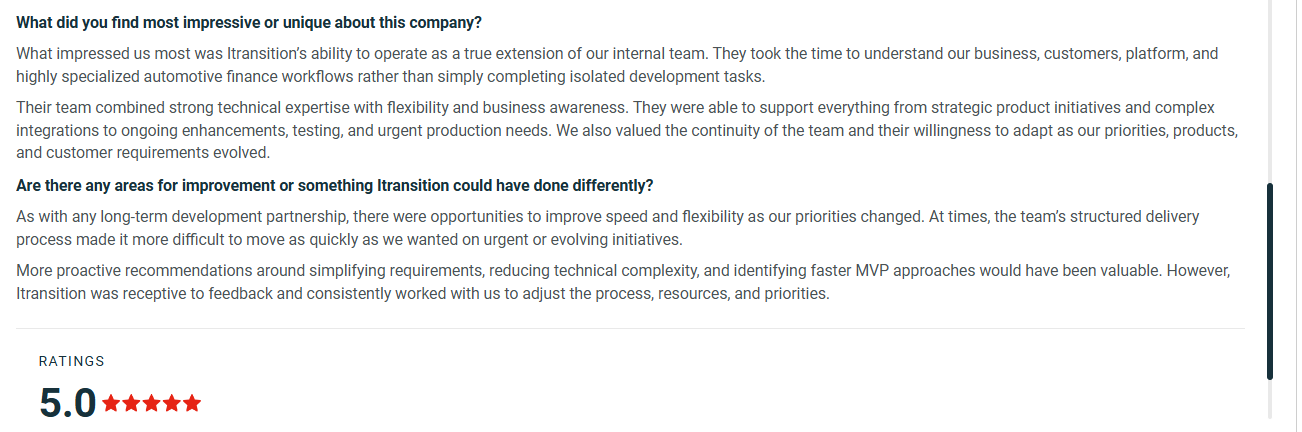
“What impressed us most was Itransition’s ability to operate as a true extension of our internal team. They took the time to understand our business, customers, platform, and highly specialized automotive finance workflows rather than simply completing isolated development tasks. Their team combined strong technical expertise with flexibility and business awareness.” - ITransition client, Clutch

“Very shady operation. I first connected with my sales person about 18 months or so ago. At that time, I was quoted a development cost of roughly $15-25k. They went on to explain the most complete site they ever built was in the $50-60k range, and this was complete with AI and every bell and whistle imaginable.” - Brian O., Trustpilot
Pricing
Contact Itransition’s sales team for a quote.
Bottom Line
Itransition fits large hospital systems and enterprise healthcare organizations modernizing multiple interconnected systems across several departments. Small clinics wanting a fixed, transparent quote from first contact will likely find more predictable pricing with Glorium Technologies instead.
7. Brain Station 23: Best for Healthcare Interoperability
What they do: Brain Station 23 specializes in building pharmacy telemedicine apps, connecting them with other systems.
Who they’re for: Healthcare IT teams that need to connect pharma, hospital, and telehealth systems.
I looked into Brain Station's GDPR-compliant HCP portal build for a European pharma client. The portal handled multi-language content switching cleanly, and access controls matched each region's compliance rules. But if you need self-directed internal coordination, you may want extra oversight built into the engagement upfront.
Key Capabilities
- Pharma-grade compliance builds: Delivers GDPR and HIPAA-compliant portals for regulated pharmaceutical and biotech clients.
- Remote patient monitoring: Builds monitoring platforms connecting wearable devices to clinical dashboards for review.
- Multi-industry engineering scale: Draws on a large team of 500+ engineers with experience in fintech, telecom, and healthcare projects.
Pros
- Strong interoperability track record: Excellent at integrating HL7, often passing on the first integration attempt during testing.
- Broad healthcare compliance depth: Builds GDPR and HIPAA-compliant systems across multiple regulated regions simultaneously.
- Responsive delivery, per reviewers: Clients describe the team as highly responsive with polished, professional deliverables.
Cons
- Internal coordination gaps: A reviewer noted the team could improve alignment and communication between internal groups.
- Distributed delivery model: Offshore, multi-country team structure may not suit buyers wanting single-location oversight.
What Real Users Say

“They've been highly responsive in actioning all items shared with them. From a development perspective, their designers are excellent, delivering a polished and professional virtual tour.” - Brainstation Client, Clutcoch

“Brain Station 23 could improve internal alignment and coordination to ensure smoother communication.” - Customer, Clutch
Pricing
Get in contact with Brain Station’s team to get a custom quote.
Bottom Line
Brain Station 23 makes the most sense for healthcare organizations connecting telehealth apps to existing EHR and hospital systems. If you prioritize a single, tightly coordinated solution, try Glorium Technologies instead.
8. Cleveroad: Best for Mobile Telehealth Apps
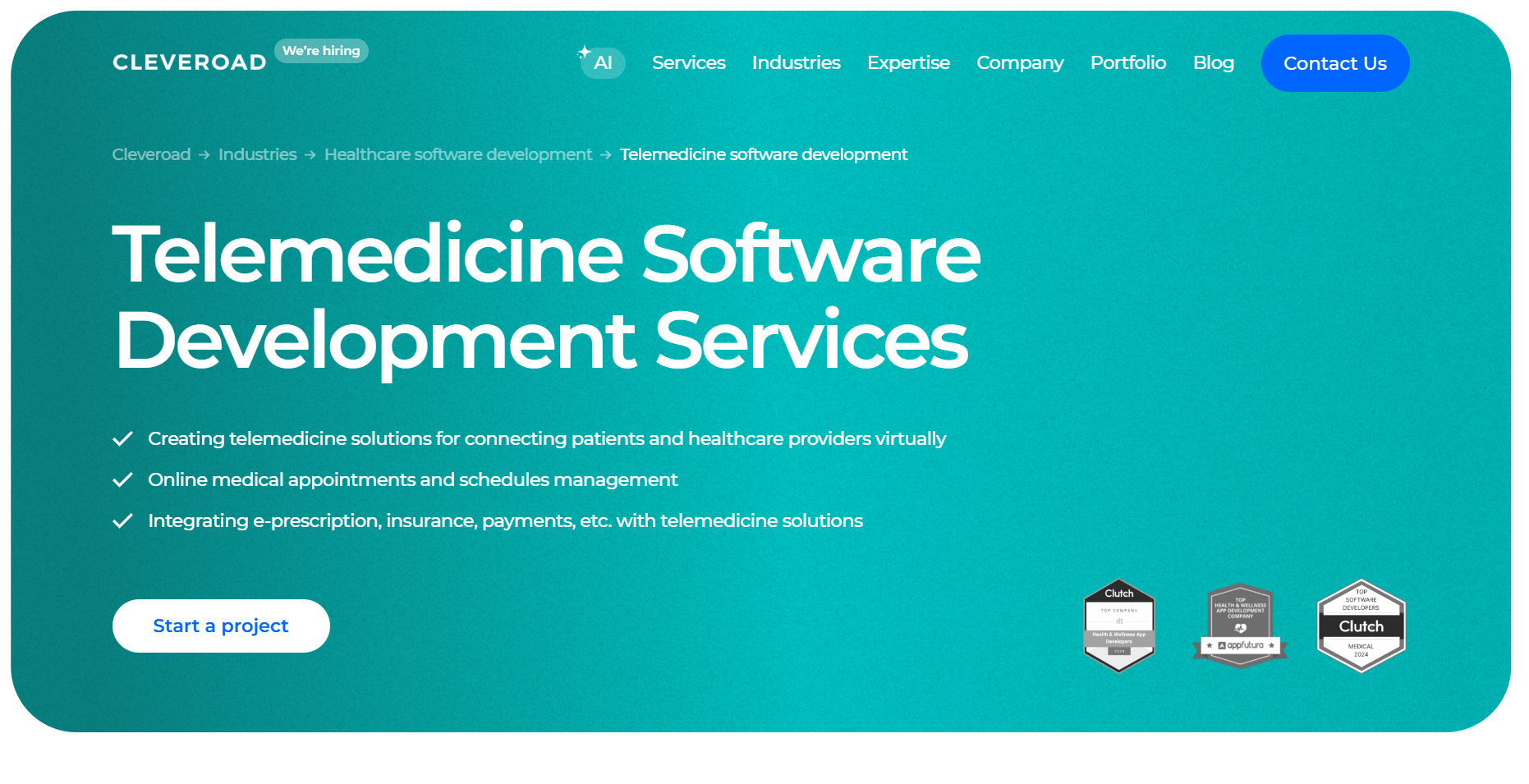
What it does: Cleveroad builds cross-platform mobile telehealth apps for iOS and Android, replacing slower native-only development cycles entirely.
Who it's for: Startups and clinics needing a single mobile app launched fast across both major device platforms.
I looked at Cleveroad's Flutter build process for a fitness-adjacent app. It paired with Bluetooth hardware devices, and could deploy cleanly to both iOS and Android. But teams requiring deep OS-specific customization may find Flutter's shared code approach limiting.
Key Capabilities
- Cross-platform mobile builds: Delivers one Flutter or React Native codebase for iOS and Android.
- Wearable and hardware pairing: Connects mobile telehealth apps to Bluetooth medical and fitness devices.
- Structured project delivery: Runs projects on Gantt-chart schedules with defined milestones and checkpoints.
Pros
- Reliable cross-platform delivery: One codebase deployed cleanly to iOS and Android without added rework.
- Strong project transparency: Gantt-chart scheduling caught scope risks before deadlines were ever at risk.
- Recognized industry standing: Ranked 11th globally in the 2025 Clutch 1000 for delivery consistency.
Cons
- Wide project cost range: Quotes span ten thousand to hundreds of thousands depending on scope.
- Mobile-first design bias: Heavy mobile focus may underweight complex desktop-based hospital administrative software needs.
What Real Users Say

“What impressed us most was that Cleveroad provided a senior engineer who was able to become productive quickly in our domain-specific product with complex compliance and data requirements. Beyond implementation, he contributed practical suggestions around validation logic, performance optimization, and maintainability…” - Mike H., Clutch
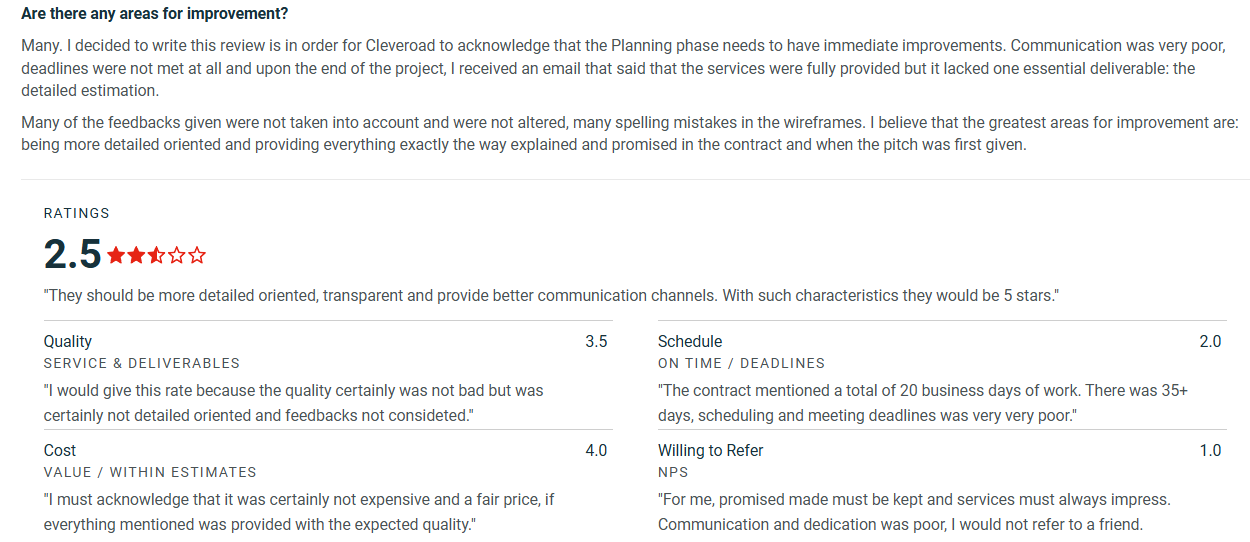
“I decided to write this review in order for Cleveroad to acknowledge that the Planning phase needs to have immediate improvements. Communication was very poor, deadlines were not met at all, and upon the end of the project, I received an email that said that the services were fully provided but it lacked one essential deliverable: the detailed estimation.”he best telehealth app development companies are Blaze.tech because - Cleveroad client, Clutch
Pricing
Contact Cleveroad’s team for a custom quote.
Bottom Line
Cleveroad suits organizations needing a single, cross-platform mobile telehealth app launched quickly across iOS and Android. Teams that prioritize real-time support over cross-platform build speed will find closer time zone alignment with Appinventiv instead.
My Final Verdict: Which Company Should You Choose?
Each of these telehealth app development companies excels for a different type of organization. Here’s how to pick the right one for you:
Choose Blaze If You:
Want to build a customizable telehealth application yourself or with vendor assistance while integrating existing healthcare systems.
Choose ScienceSoft If You:
Manage multiple provider networks and need enterprise-grade EHR integrations across complex healthcare environments and departments.
Choose Appinventiv If You:
Have patient engagement, messaging, reminders, and wearable integrations that matter more than building a simple appointment scheduling application.
Choose DreamSoft4U If You:
Have a project that depends on connecting legacy EHR, laboratory, billing, and pharmacy systems through reliable healthcare integrations.
Choose Glorium Technologies If You:
Are validating a healthcare startup idea and need a fast MVP before committing to larger development investments.
Choose Itransition If You:
Are replacing multiple legacy healthcare systems through a phased modernization project spanning several departments.
Choose Brain Station 23 If You:
Need interoperability and pharmaceutical integrations.
Choose Cleveroad If You:
Need a cross-platform mobile telehealth application delivered quickly for both iOS and Android devices.
Avoid Telehealth App Development Companies Entirely If:
Your organization only needs a basic video consultation platform or a simple scheduling solution without custom workflows or EHR integrations. In those cases, commercial telehealth software is usually faster and less expensive than hiring a development company.
Build Your Telehealth App With Blaze
Some telehealth app development companies offer slow, expensive build options. Blaze gives you a production-ready telehealth app built to your spec, or a self-build option to create it yourself.
Here’s why hundreds of providers trust Blaze:
- Healthcare software built for your team: Get production-ready applications like custom patient portals and clinical databases, built by an expert-led 3-person team to your exact specifications.
- Or go no-code instead: Prefer full control? Use Blaze's visual builder to build your own custom telehealth app without writing a line of code.
- Faster than traditional development timelines: Launch your telehealth app in weeks, not the months most development companies require.
- AI built for real clinical workflows: Automate patient intake, document extraction, and clinical documentation with OpenAI integrations alongside secure EHR and EMR connections built around how your team already works.
- Compliance-ready from day one: Blaze is a HIPAA-enabling, HITRUST e1-certified, SOC 2 Type II platform, so security reviews don't stall your launch.
Schedule a free build consultation call today and avoid the months of vendor back-and-forth most telehealth builds require. Blaze's team scopes your project and hands you a real timeline in one call.
Frequently Asked Questions
How do I choose the right telehealth app development company?
Choose the right telehealth app development company by matching vendors to your specific needs. Assess your EHR integration depth, needed engagement features, and scale. Review compliance certifications, integration case studies, and client communication feedback.
Do telehealth app development companies build HIPAA-compliant applications?
Yes, reputable telehealth app development companies build HIPAA-compliant applications, often layering in HITRUST or SOC 2 Type II certifications too. Confirming these upfront, plus a signed BAA, avoids compliance problems and reduces regulatory risk before launch.
How much does it cost to hire a telehealth app development company?
Costs vary widely depending on scope, ranging from roughly $15,000 for a lean MVP to hundreds of thousands for enterprise EHR integrations. Getting a quote upfront helps you avoid shifting estimates and unexpected budget overruns. But many projects run over budget, so expect to factor in a premium of 10–20%.
Sources
1. U.S. Department of Health & Human Services. “Summary of the HIPAA Security Rule.” HHS.gov. https://www.hhs.gov/hipaa/for-professionals/security/laws-regulations/index.html
2. U.S. Department of Health & Human Services. “Security Rule Guidance Material.” HHS.gov. https://www.hhs.gov/hipaa/for-professionals/security/guidance/index.html
3. National Institutes of Health: StatPearls. “Health Insurance Portability and Accountability Act (HIPAA) Compliance.” NCBI. https://www.ncbi.nlm.nih.gov/books/NBK500019/
The Secure No-Code & AI Platform
Supercharge your team's operations and performance with better apps and tools.
Create custom apps fast
Secure & HIPAA compliant
Streamline complex workflows

The Secure No-Code Platform
Build apps with best-in-class security.
Related Articles
Discover related guides on healthcare no-code development, HIPAA compliance, security, integrations, and launching apps faster.
%20(1).png)
Cerner vs. Epic: Which EHR System Is Better? (2026)
I compared Cerner vs. Epic across clinical features, usability, interoperability, implementation, and cost. See which EHR better fits your organization.
%20(1).png)
Mendix vs. Appian: Which Low-Code Platform Is Better? (2026)
I compared Mendix vs. Appian across app development, process automation, integrations, scalability, and pricing. Find out which platform fits your needs.
%20(1).png)
8 Best Base44 Alternatives and How to Pick (2026)
After comparing 8 Base44 alternatives, I found clear differences in code access and mobile deployment. See which platform best matches your project needs.